How to Design a Stunning Flower Bed with Annuals in SEQ
 Trevor Dixon
Introduction
Nothing transforms a garden quite like a brilliantly designed flower bed. Whether it frames a front entrance, borders a pathway or becomes the centrepiece of a backyard retreat, a thoughtfully planted display of annual flowers delivers instant colour, texture and personality.
South East Queensland offers exceptional opportunities for growing annuals thanks to its warm subtropical climate. With careful planning and plant selection, a flower bed can remain vibrant for months, evolving into a living masterpiece that changes gracefully throughout the season.
The secret lies not simply in choosing beautiful flowers, but in designing with purpose.
Understanding South East Queensland's Growing Conditions
Before selecting plants, it is essential to understand the environment in which they will grow.
South East Queensland experiences warm, humid summers, mild winters and generous sunshine throughout much of the year. While these conditions encourage vigorous growth, they also create challenges such as intense summer heat, heavy rainfall, occasional dry periods and increased fungal pressure.
Successful flower beds embrace these conditions rather than fight them.
Annuals suited to the region should demonstrate:
- Excellent heat tolerance
- Good resistance to humidity-related diseases
- Strong flowering performance
- Adaptability to local soils
Choosing plants that naturally thrive in SEQ significantly reduces maintenance while increasing flowering longevity.
Planning Your Flower Bed
Outstanding gardens begin long before the first plant enters the ground.
Choose the Right Location
Observe how sunlight moves across your garden during the day.
Most flowering annuals flourish with at least six hours of direct sunlight. However, areas receiving gentle morning sun and filtered afternoon shade often perform exceptionally well during Queensland's hottest months.
Avoid locations where water regularly pools after rain.
Determine Size and Shape
Curved garden beds soften landscapes and create natural movement.
Formal gardens often benefit from symmetrical rectangular or geometric beds, while cottage-style gardens embrace flowing curves and irregular forms.
Consider viewing angles from both inside and outside the home.
Prepare the Soil
Healthy soil creates healthy flowers.
Incorporate generous quantities of compost and organic matter before planting. This improves drainage in clay soils while increasing moisture retention in sandy ground.
Well-prepared soil supports stronger root systems, healthier foliage and longer-lasting blooms.
Selecting the Best Annuals for SEQ
A successful flower bed relies upon thoughtful layering.
Tall Feature Plants
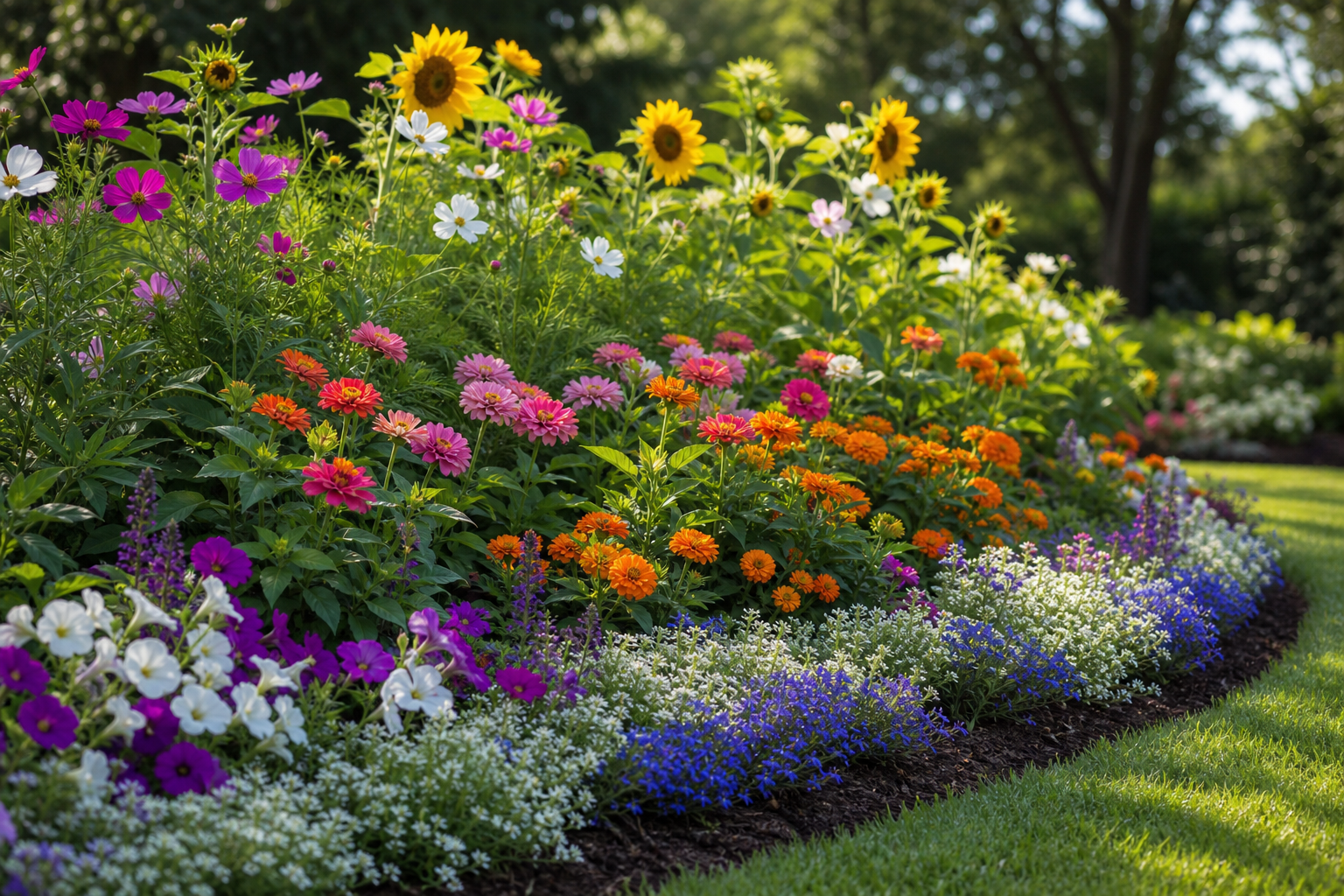
Begin with dramatic focal points positioned toward the rear or centre of the bed.
Excellent choices include:
- Sunflowers
- Cosmos
- Cleome
- Tall Salvias
These plants establish vertical structure while drawing the eye upward.
Medium Fillers
The middle layer creates abundance.
Ideal selections include:
- Zinnias
- Marigolds
- Angelonia
- Petunias
- Dianthus
These varieties produce generous flowering displays while bridging the transition between tall specimens and edging plants.
Low Edging Plants
The front of the border benefits from compact growers.
Popular options include:
- Alyssum
- Lobelia
- Portulaca
- Verbena
- Dwarf Petunias
Their lower habit creates a polished finish while softening hard edges.
Choosing Colour Combinations
Colour determines mood.
Warm palettes featuring reds, oranges and yellows generate energy and excitement.
Cool palettes combining blues, purples and whites evoke calm sophistication.
For dramatic contrast, pair complementary colours. For elegance, work within neighbouring tones on the colour wheel.
Repeating key colours throughout the bed creates rhythm and visual cohesion.
Designing for Maximum Visual Impact
Professional-looking flower beds rarely happen by accident.
Apply the Thriller, Filler and Spiller Principle
This timeless design concept works beautifully in both garden beds and containers.
- Thrillers provide height and drama.
- Fillers create density and abundance.
- Spillers soften edges and introduce movement.
Together they create balance and natural flow.
Layer Heights Carefully
Arrange plants according to mature height rather than their size at planting.
Tall plants belong behind medium growers.
Medium plants transition into low edging varieties.
This layering ensures every flower remains visible throughout the season.
Introduce Texture
Flowers alone do not create interest.
Contrast fine foliage with broad leaves.
Mix upright flower spikes with rounded blooms and trailing growth.
Texture gives the garden dimension long after individual flowers fade.
Repeat Plant Groupings
Avoid scattering individual plants throughout the bed.
Instead, repeat groups of three, five or seven plants.
This repetition produces harmony while allowing the eye to move naturally through the landscape.
Planting and Establishment
Once the design is complete, careful planting ensures lasting success.
Dig planting holes slightly wider than each root ball.
Position plants at the same depth they occupied in their pots.
Firm soil gently around the roots before watering deeply.
Apply organic mulch immediately after planting.
Mulch conserves moisture, moderates soil temperature, suppresses weeds and gradually improves soil structure as it decomposes.
During the first few weeks, maintain consistent soil moisture while roots establish.
Caring for Your Annual Flower Bed
Even low-maintenance gardens appreciate occasional attention.
Fertilising
Use a balanced slow-release fertiliser when planting.
Supplement with liquid fertiliser every few weeks during peak flowering to encourage continuous bloom production.
Deadheading
Removing faded flowers redirects the plant's energy toward producing new blooms rather than seeds.
Many annuals respond with spectacular repeat flowering.
Watering
Deep watering encourages stronger root development than frequent light irrigation.
Water early in the morning to minimise evaporation and reduce disease risk.
Pest and Disease Management
Inspect plants regularly.
Good air circulation, healthy soil and proper watering practices prevent many common problems before they develop.
Remove damaged foliage promptly and encourage beneficial insects by maintaining a diverse planting palette.
Common Mistakes to Avoid
Even experienced gardeners occasionally make these errors.
Overcrowding
Plants need room to mature.
Crowding restricts airflow, increases humidity around foliage and encourages disease.
Ignoring Mature Size
Small seedlings quickly become substantial plants.
Always space according to mature dimensions.
Overwatering
Wet soil is just as damaging as dry soil.
Allow the soil surface to begin drying before watering again.
Choosing Unsuitable Plants
Select annuals proven to perform in South East Queensland's subtropical conditions.
Climate-appropriate choices consistently outperform more delicate alternatives.
Conclusion
A spectacular flower bed is never the result of chance.
It begins with thoughtful planning, intelligent plant selection and careful attention to colour, texture and proportion. Annuals offer extraordinary flexibility, allowing gardeners to reinvent their landscapes each season while enjoying months of uninterrupted floral brilliance.
Whether creating a bold statement at the front entrance or a peaceful retreat filled with soft pastel blooms, the possibilities are virtually endless. Experiment with combinations, observe what flourishes in your own garden and refine your design each season.
Before long, your annual flower bed will become one of the most admired features of your South East Queensland landscape—a vibrant celebration of colour, creativity and the joy of gardening.