Hardy Vines That Tolerate Drought in South East Queensland
 Trevor Dixon
Introduction
South East Queensland is renowned for its lush subtropical landscapes, yet prolonged dry periods and water restrictions have become an increasingly familiar part of gardening. While lawns often fade and thirsty ornamentals struggle, carefully selected climbing plants continue to flourish, bringing colour, texture and shade to outdoor spaces with surprisingly little water.
Drought-tolerant vines offer one of the smartest investments for modern gardens. They maximise vertical space, soften hard structures, attract wildlife and reduce heat around buildings—all while demanding remarkably little attention once established.
Understanding Drought in South East Queensland
SEQ enjoys warm summers, mild winters and highly variable rainfall. Some years deliver abundant summer storms, while others are defined by extended dry spells and below-average rainfall.
Gardens designed around drought-resilient species cope far better with these fluctuations. Rather than constantly replacing stressed plants, homeowners can establish landscapes that remain attractive throughout the year with significantly less irrigation.
Success begins with selecting vines naturally adapted to Australia's climate or proven performers in subtropical gardens. Many native climbers become surprisingly resilient once their root systems are established.
What Makes a Vine Drought Tolerant?
Not every climber copes equally with water shortages. The most resilient species share several important characteristics.
Deep Root Systems
Many hardy climbers develop extensive roots that search deep into the soil profile, accessing moisture long after the surface has dried.
Efficient Foliage
Thicker leaves, waxy coatings and smaller leaf surfaces help minimise water loss through transpiration while maintaining healthy growth.
Adaptability
Drought-tolerant vines generally cope with poor soils, high temperatures and reflected heat from fences, walls and paved surfaces. These characteristics make them excellent choices for challenging positions throughout South East Queensland.
The Best Hardy Drought-Tolerant Vines for SEQ
Native Wisteria (Hardenbergia violacea)
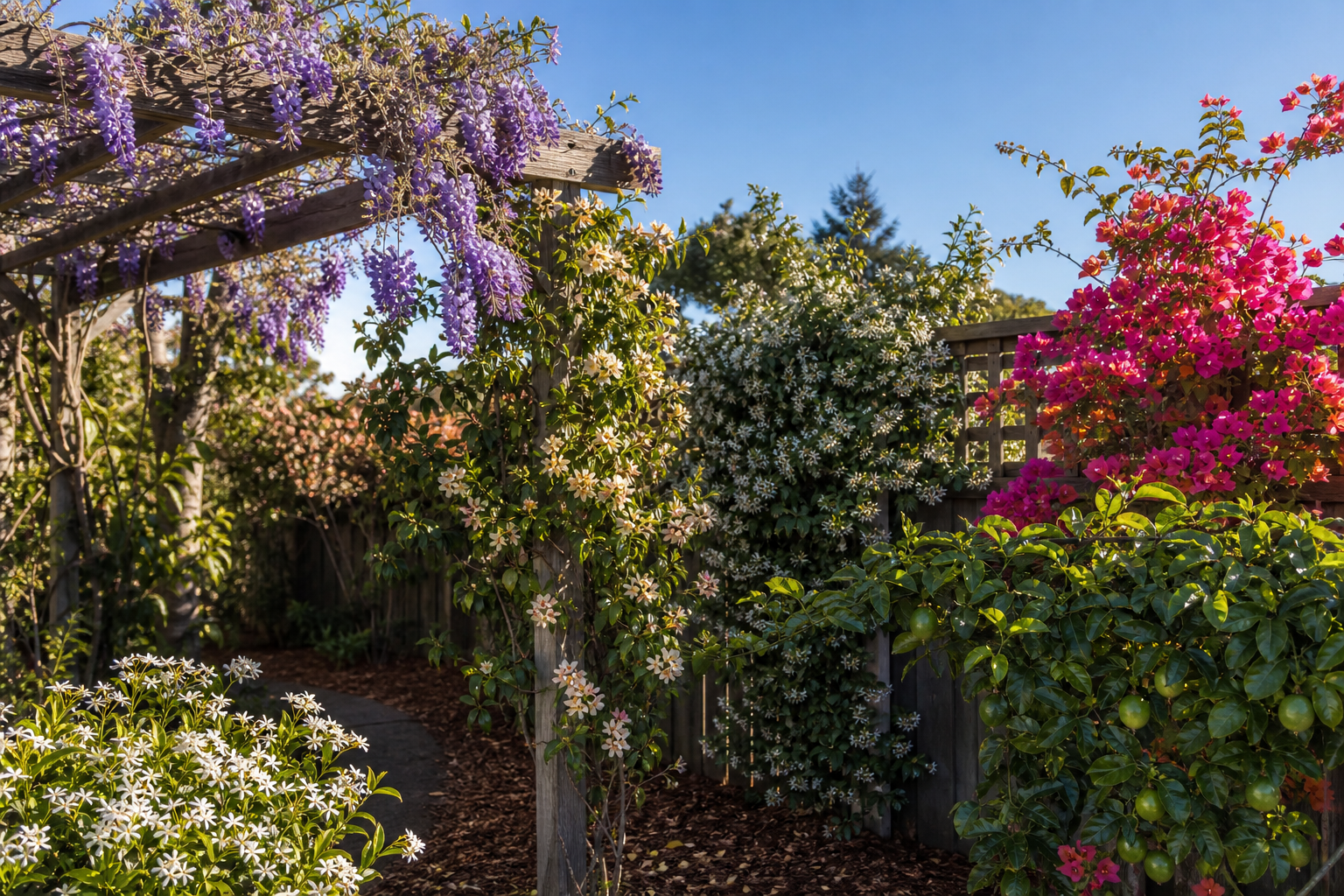
Native Wisteria remains one of Australia's finest climbing plants. Its spectacular sprays of purple flowers brighten late winter and spring, while its evergreen foliage provides year-round interest.
Once established, it tolerates drought, coastal conditions and relatively poor soils, making it ideal for fences, pergolas and screening.
Wonga Vine (Pandorea pandorana)
The Wonga Vine combines elegant cream and pink flowers with glossy evergreen foliage. It grows vigorously without becoming overwhelming and performs exceptionally well across subtropical regions.
Its adaptability to varying soil types and relatively low water requirements make it one of the most dependable native screening climbers.
Native Jasmine (Jasminum simplicifolium)
For gardeners seeking fragrance with resilience, Native Jasmine offers both. Sweetly scented white flowers appear through the warmer months, while the plant tolerates drought remarkably well after establishment.
Its restrained growth habit also makes maintenance considerably easier than many exotic climbers.
Bougainvillea
Few vines rival Bougainvillea for surviving intense heat. Brilliant displays of colourful bracts appear repeatedly throughout the warmer months, particularly when grown in full sun.
Ironically, slightly dry conditions often encourage heavier flowering than excessive irrigation, making this climber particularly suited to water-wise gardens.
Star Jasmine (Trachelospermum jasminoides)
Star Jasmine provides glossy evergreen foliage and intensely fragrant white flowers while displaying impressive drought tolerance once mature.
It excels as a living privacy screen, wall cover or pergola climber and requires only occasional pruning to maintain its shape.
Passionfruit
Passionfruit requires regular watering while establishing and during fruit production, but mature vines develop considerable drought tolerance compared with many fruiting plants. The combination of edible harvests, lush foliage and attractive flowers makes it one of the most rewarding productive climbers for SEQ gardens.
Planting for Water Efficiency
Even drought-tolerant vines need thoughtful establishment.
Prepare planting holes with generous amounts of compost to improve moisture retention while maintaining good drainage. Apply a thick layer of organic mulch around the root zone, keeping it clear of the stem.
During the first 12 to 18 months, water deeply but infrequently. This encourages roots to grow downward instead of remaining near the surface.
Once established, most hardy vines require only occasional supplementary watering during prolonged drought.
Designing a Water-Wise Vertical Garden
Vertical gardening offers remarkable advantages in hot climates.
Pergolas covered with evergreen vines naturally cool outdoor entertaining areas by filtering harsh afternoon sunlight. Living green walls reduce radiant heat from fences and masonry, while climbing screens provide privacy without requiring valuable ground space.
Combining drought-tolerant climbers with native shrubs, grasses and mulch creates cohesive landscapes that remain attractive despite challenging weather conditions.
Maintaining Healthy Vines During Dry Weather
Water conservation doesn't mean neglect.
Prune vines after flowering to encourage fresh growth and maintain airflow. Remove damaged stems promptly and inspect plants periodically for pests or signs of stress.
Avoid excessive nitrogen fertiliser, which encourages lush growth that demands more water. Instead, apply balanced slow-release fertiliser during active growth and replenish mulch annually.
Healthy, well-maintained vines naturally withstand drought far better than neglected specimens.
Conclusion
Drought need not diminish the beauty of South East Queensland gardens. With intelligent plant selection and thoughtful garden design, climbing plants can continue to provide vibrant flowers, cooling shade and evergreen structure despite challenging conditions.
Whether it's the spectacular blooms of Native Wisteria, the resilience of Bougainvillea or the elegance of Native Jasmine, drought-tolerant vines demonstrate that sustainable gardening never requires sacrificing beauty. By investing in hardy climbers today, you'll create a landscape that remains productive, colourful and resilient for many seasons to come.