Creating a Water-Wise Landscape: Strategies for Drought-Prone Areas
 Trevor Dixon
Introduction
Water has become one of the most valuable resources in modern landscaping. As droughts become more frequent and rainfall patterns less predictable, creating landscapes that flourish with minimal irrigation is no longer simply an environmental choice—it is a practical necessity. Water-wise landscaping combines thoughtful design, efficient irrigation, healthy soils, and carefully selected plants to create gardens that remain attractive while significantly reducing water consumption.
A truly water-wise landscape doesn't look barren or lifeless. Quite the opposite. It is vibrant, resilient, and designed to work with nature instead of constantly fighting against it.
Planning a Drought-Resilient Landscape
Evaluating Climate, Soil, and Sun Exposure
Every successful landscape begins with observation. Before planting a single shrub or installing an irrigation line, evaluate the site's natural characteristics.
Study how sunlight moves across the property throughout the day. Identify windy areas, slopes, drainage patterns, and shaded spaces. Examine soil texture and drainage capacity. These factors influence how much supplemental irrigation your landscape will require.
Planning first prevents expensive mistakes later.
Designing with Water Efficiency in Mind
A water-wise design groups landscape features according to function and water demand. Entertainment spaces, lawns, gardens, pathways, and planting beds should all have clearly defined purposes.
Reducing unnecessary lawn areas immediately lowers irrigation requirements. Replacing portions of turf with attractive planting beds, mulched areas, or permeable pathways creates visual interest while reducing maintenance.
Smart design is the first irrigation system.
Hydrozoning for Smarter Water Use
Hydrozoning involves grouping plants with similar water requirements together. Rather than watering the entire landscape equally, each irrigation zone receives precisely the amount of moisture its plants require.
This simple concept dramatically improves irrigation efficiency while preventing both overwatering and underwatering.
Choosing Drought-Tolerant Plants
Native Plants and Climate-Adapted Species
Plants naturally adapted to local conditions require far less supplemental irrigation once established. Native species have evolved to survive local rainfall patterns, temperatures, and soil conditions.
These plants generally develop deeper root systems, greater heat tolerance, and improved drought resilience than many exotic ornamentals.
Nature often provides the best blueprint.
Selecting Trees, Shrubs, Ground Covers, and Grasses
A diverse landscape performs better than one dominated by thirsty lawns.
Consider drought-tolerant trees for shade, hardy shrubs for structure, ornamental grasses for movement, and resilient ground covers to suppress weeds while protecting soil moisture. Layering vegetation also reduces soil temperatures and improves water retention.
Creating Beauty with Less Water
Water-wise landscapes can be every bit as colourful and inviting as traditional gardens.
By combining contrasting foliage textures, seasonal flowers, natural stone, and architectural plants, a drought-tolerant garden becomes visually dynamic while demanding remarkably little irrigation.
Building Healthy Soil for Water Conservation
Improving Soil Structure with Organic Matter
Healthy soil functions like a sponge.
Incorporating compost and organic matter improves water-holding capacity in sandy soils while increasing drainage and aeration in clay soils. Healthy soil stores moisture where plant roots can access it rather than allowing valuable water to run off or drain away.
Better soil means better irrigation efficiency.
Mulching to Reduce Evaporation
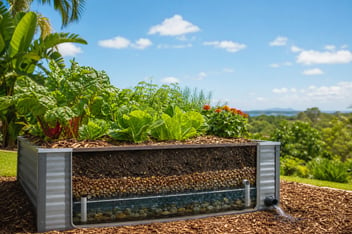
Mulch is one of the simplest yet most powerful water conservation tools available.
Organic mulches moderate soil temperature, suppress weeds, reduce evaporation, and gradually improve soil as they decompose. Studies and gardening experts consistently recommend mulching as one of the most effective ways to reduce irrigation requirements.
A few centimetres of mulch can save thousands of litres of water each year.
Preventing Soil Compaction
Compacted soils restrict water infiltration and root development.
Regular soil improvement, avoiding unnecessary traffic, and incorporating organic matter allow irrigation water to penetrate deeply where plants actually need it.
Installing Efficient Irrigation Systems
Drip Irrigation and Micro-Irrigation
Traditional overhead sprinklers often lose considerable water through evaporation and wind drift.
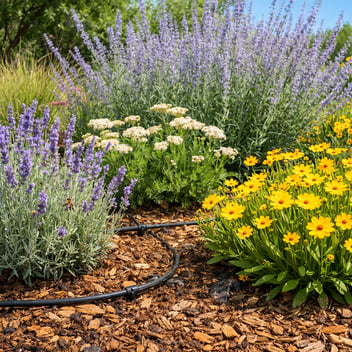
Drip irrigation delivers water slowly and directly to plant roots, minimising waste while maintaining ideal soil moisture. Micro-irrigation systems provide similar efficiency for shrubs, flower beds, and vegetable gardens.
Every drop serves a purpose.
Smart Irrigation Controllers and Moisture Sensors
Modern irrigation technology has transformed landscape management.
Weather-responsive controllers automatically adjust watering schedules according to rainfall and temperature, while soil moisture sensors prevent unnecessary irrigation when adequate moisture already exists. These systems improve plant health while significantly reducing water use.
Technology makes conservation effortless.
Watering at the Right Time
Timing is as important as the irrigation system itself.
Watering early in the morning minimises evaporation, allows moisture to penetrate deeply into the soil, and reduces disease risks associated with prolonged leaf wetness. Deep, infrequent watering encourages stronger root systems capable of tolerating extended dry periods.
Reducing Water Loss Throughout the Landscape
Minimising Turf Areas
Lawns are among the thirstiest components of most landscapes.
Reducing turf to functional areas while replacing unused sections with drought-tolerant plantings dramatically lowers irrigation demand without sacrificing beauty. Xeriscaping principles commonly reduce outdoor water use by 30–50%.
Capturing Rainwater
Rainwater harvesting allows nature to contribute directly to landscape irrigation.
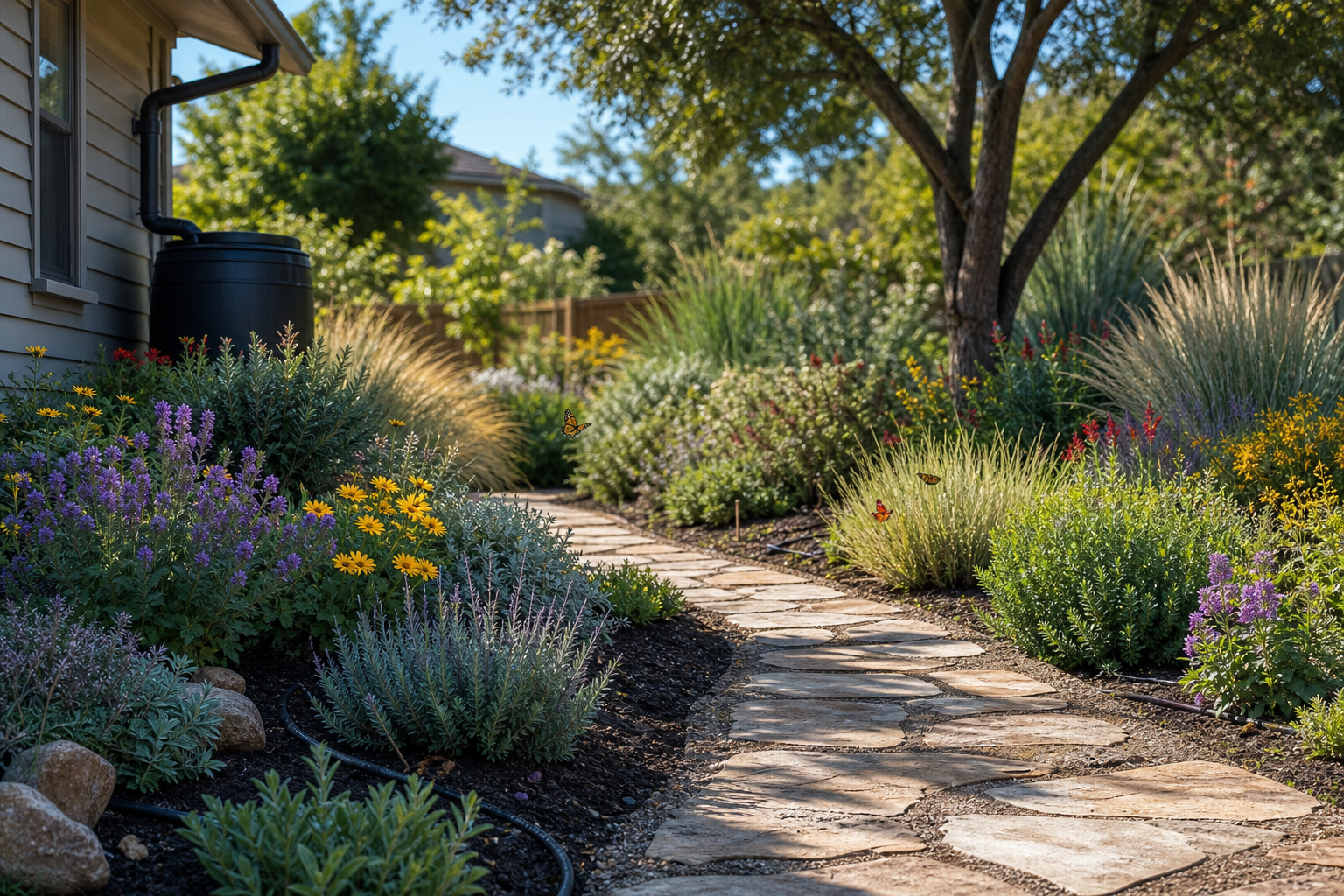
Rain barrels, tanks, swales, and rain gardens capture rainfall for later use while reducing stormwater runoff. Every litre collected is a litre that doesn't need to come from the mains supply.
Managing Runoff and Improving Infiltration
Slow-moving water benefits landscapes far more than rapidly flowing water.
Permeable pathways, contour planting, and improved soil structure allow rainfall to soak into the ground where plants can use it instead of disappearing into drains.
Seasonal Maintenance for Water-Wise Gardens
Adjusting Irrigation Through the Seasons
Plants require varying amounts of water throughout the year.
During cooler months or rainy periods, irrigation schedules should be reduced accordingly. During prolonged heatwaves, temporary increases may be necessary, particularly for newly established plants.
Responsive irrigation conserves water without compromising plant health.
Pruning, Mulching, and Monitoring Plant Health
Routine maintenance improves water efficiency.
Refreshing mulch, removing damaged growth, monitoring soil moisture, and observing signs of plant stress help maintain a balanced irrigation program while preventing unnecessary water use.
Detecting Leaks and Improving Efficiency
Even the best irrigation system becomes inefficient if leaks develop.
Regular inspections of valves, drip lines, and sprinkler heads ensure every litre of water reaches its intended destination.
Common Water-Wise Landscaping Mistakes
Overwatering Drought-Tolerant Plants
Ironically, drought-tolerant plants often suffer more from excessive watering than from dry conditions.
Once established, these species typically require surprisingly little supplemental irrigation.
Mixing Plants with Different Water Needs
Combining thirsty annuals with drought-adapted shrubs forces irrigation systems into compromise.
Hydrozoning eliminates this problem by allowing each planting area to receive appropriate watering.
Ignoring Soil Conditions
No irrigation system can compensate for poor soil management.
Healthy soils, proper drainage, and organic matter remain the foundation of every successful water-wise landscape.
Conclusion
Creating a water-wise landscape is not about depriving plants of moisture. It is about delivering the right amount of water, in the right place, at the right time.
By combining drought-tolerant plants, healthy soils, efficient irrigation, hydrozoning, mulching, and thoughtful design, homeowners can create landscapes that remain lush, colourful, and resilient while using dramatically less water.
The result is more than a beautiful garden. It is a sustainable landscape that works in harmony with nature, withstands drought with confidence, and conserves one of our planet's most precious resources for generations to come.