Drought-Tolerant Shrubs That Thrive in SEQ Conditions
 Trevor Dixon
Introduction
South East Queensland is renowned for its subtropical beauty, yet its climate presents gardeners with an intriguing paradox. Summers can be intensely hot, rainfall is often seasonal rather than consistent, and extended dry periods are becoming increasingly common. The solution is not to abandon lush gardens, but to embrace shrubs that have evolved—or adapted—to flourish under these challenging conditions.
Drought-tolerant shrubs provide more than water savings. They offer enduring beauty, attract native wildlife, require less maintenance and remain resilient even when rainfall becomes scarce. A thoughtfully selected collection of hardy shrubs allows your garden to remain vibrant while conserving one of our most precious resources.
Understanding Drought in SEQ
Summer Heat and Seasonal Rainfall
South East Queensland enjoys long growing seasons thanks to its warm climate. However, this same warmth accelerates evaporation and places considerable stress on plants during extended dry spells. Even gardens receiving respectable annual rainfall can experience weeks of little or no meaningful precipitation.
Periods of drought are often punctuated by intense storms that deliver significant rainfall in a short time. Shrubs must therefore tolerate both prolonged dryness and sudden saturation. Queensland recommends selecting waterwise plants suited to local conditions, including many Australian natives that perform well once established.
Drought-Tolerant Does Not Mean Drought-Proof
A common misconception is that drought-tolerant shrubs never require watering.
Every shrub needs regular irrigation while establishing its root system. During the first year, consistent watering encourages roots to penetrate deeply into the surrounding soil. Once established, however, these shrubs become remarkably self-sufficient, relying primarily on natural rainfall.
What Makes a Shrub Drought-Tolerant?
Deep Root Systems
Many resilient shrubs invest heavily below ground before accelerating above it. Deep, expansive roots allow plants to access moisture stored well beneath the soil surface.
Small or Leathery Leaves
Nature wastes nothing.
Many drought-adapted shrubs possess narrow, waxy or leathery foliage that minimises water loss through transpiration. Silver or grey foliage reflects sunlight, reducing leaf temperature and moisture loss even further. Similar characteristics are recognised as common adaptations among heat- and drought-resilient plants.
Efficient Water Use
Native Australian shrubs have evolved remarkable physiological mechanisms that enable them to survive with surprisingly little supplemental water. Rather than growing continuously, many simply slow their growth until favourable conditions return.
Adaptability
The best drought performers are rarely fussy. They tolerate sandy soils, rocky landscapes and low-fertility sites, making them ideal choices for many South East Queensland gardens.
Top Drought-Tolerant Shrubs for South East Queensland
Grevillea
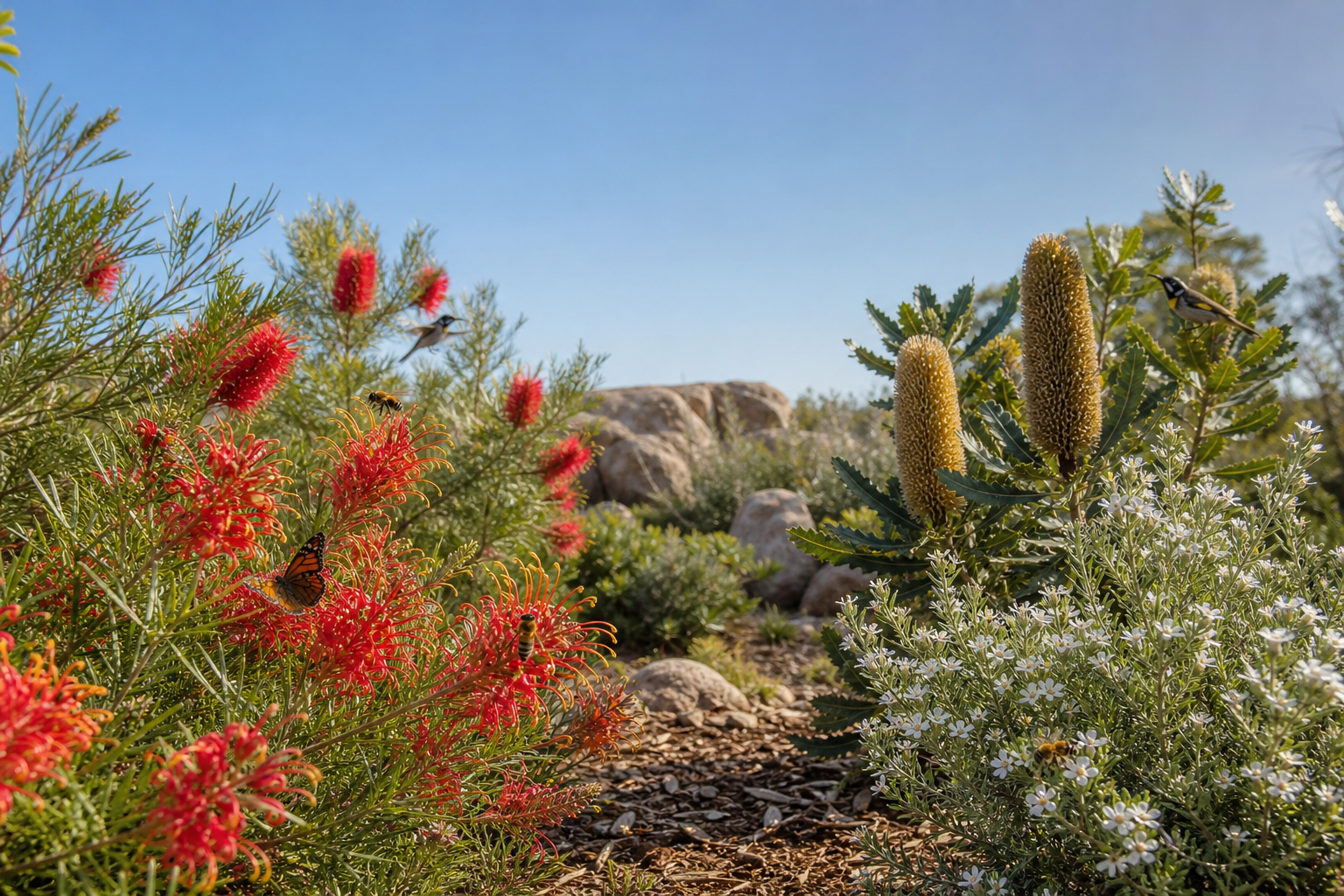
Grevilleas are among Australia's finest drought performers. Their intricate flowers bloom across much of the year, attracting honeyeaters, native bees and butterflies. Available in forms ranging from compact groundcovers to substantial screening shrubs, there is a Grevillea for almost every landscape.
Once established, they require remarkably little water while continuing to produce spectacular floral displays. Queensland also recommends Grevillea as a waterwise native suitable for dry conditions.
Westringia fruticosa
Often known as Coastal Rosemary, Westringia is one of the most versatile shrubs available.
Its soft grey-green foliage, delicate white flowers and naturally rounded habit make it equally suited to formal hedging or informal coastal gardens. Salt tolerance, drought resistance and minimal pruning requirements make it a dependable performer throughout SEQ.
Callistemon (Bottlebrush)
Bottlebrushes deliver vibrant crimson flowers while demanding very little in return.
Their nectar-rich blooms support birds and pollinating insects, while their adaptability allows them to perform well in gardens experiencing fluctuating rainfall. Brisbane City Council recommends Bottlebrush species among suitable native shrubs for local gardens.
Banksia spinulosa
The Candlestick Banksia combines architectural foliage with striking cylindrical flowers that appear over extended periods.
This adaptable shrub tolerates dry spells once established and thrives in well-drained soils while providing exceptional habitat value for native wildlife.
Correa Species
Correas provide welcome colour during cooler months when many other shrubs rest.
Their tubular flowers attract honeyeaters, while their modest water requirements make them valuable additions to waterwise landscapes. Queensland lists Correa among native plants suitable for dry conditions once established.
Acacia fimbriata
Brisbane Golden Wattle brings sunshine into the landscape each winter.
Fast-growing, resilient and surprisingly adaptable, this attractive native produces masses of fluffy yellow flowers while tolerating extended dry periods once established. Acacia is also recommended by Queensland as a drought-tolerant native choice.
Eremophila Species
Few shrubs embody drought resilience quite like the Emu Bushes.
Their colourful tubular flowers attract birds throughout the flowering season, while their silver foliage reflects heat and conserves moisture. Many species thrive in poor sandy soils with minimal irrigation.
Melaleuca Species
Paperbarks and Honey Myrtles combine ornamental flowers with exceptional resilience.
Many species tolerate both drought and periods of heavy rainfall, making them particularly suited to South East Queensland's variable climate.
Establishing Drought-Tolerant Shrubs Successfully
Improve the Soil First
Even hardy shrubs appreciate a healthy start.
Incorporating compost into planting holes improves soil structure and encourages rapid root establishment.
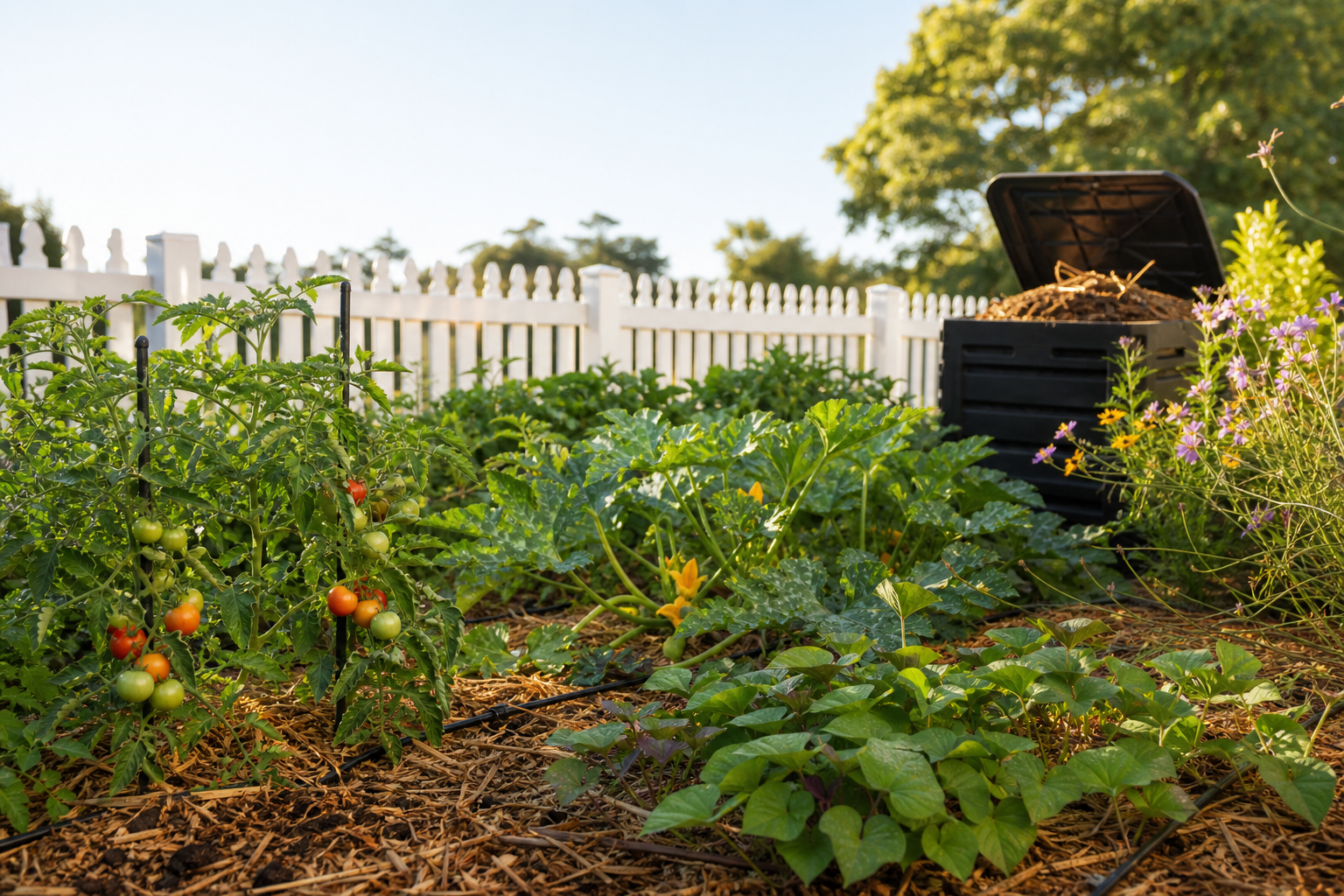
Mulch Generously
Organic mulch is invaluable.
It suppresses weeds, moderates soil temperatures and significantly reduces evaporation during hot weather.
Water Deeply
During establishment, water thoroughly but less frequently.
Deep watering encourages roots to travel downward instead of remaining near the surface where soils dry quickly.
Designing a Water-Wise Landscape
Group shrubs with similar water requirements together.
Replace thirsty lawn areas with mulched garden beds.
Use rocks, gravel pathways and drought-tolerant groundcovers to reduce maintenance while enhancing visual appeal.
Layer shrubs of varying heights to create a landscape that feels lush despite using relatively little water.
Common Mistakes to Avoid
Many gardeners inadvertently overwater drought-tolerant shrubs, encouraging shallow roots and reducing resilience.
Avoid excessive fertiliser, which often stimulates soft growth requiring additional moisture.
Choose plants suited to your soil type and provide adequate spacing for airflow and mature growth.
Conclusion
A drought-resilient garden need not be sparse or uninspiring.
With thoughtful plant selection, careful establishment and smart waterwise practices, South East Queensland gardens can remain colourful, textured and vibrant throughout even the driest seasons.
By embracing shrubs such as Grevilleas, Westringias, Bottlebrushes, Banksias, Correas and Emu Bushes, you create a landscape that is both environmentally responsible and exceptionally beautiful—a garden that flourishes when others struggle.