Understanding Turf Weeds: Identification and Control Strategies
 Trevor Dixon
Introduction — Why Turf Weeds Demand Attention
Weeds are opportunists. They creep in quietly, colonising weak spots, stealing nutrients, sunlight, and water from your turf. What begins as a few scattered intruders can rapidly escalate into a full-scale invasion. A pristine lawn becomes mottled, uneven, and stressed.
Understanding weeds is not about eradication alone. It is about strategy. Identification first. Control second. Prevention always.
The Three Core Weed Categories Every Turf Owner Must Know
Every turf weed falls into one of three essential categories. Recognising these groups simplifies what can otherwise feel like botanical chaos.
Broadleaf weeds: Distinct leaves and visible flowers
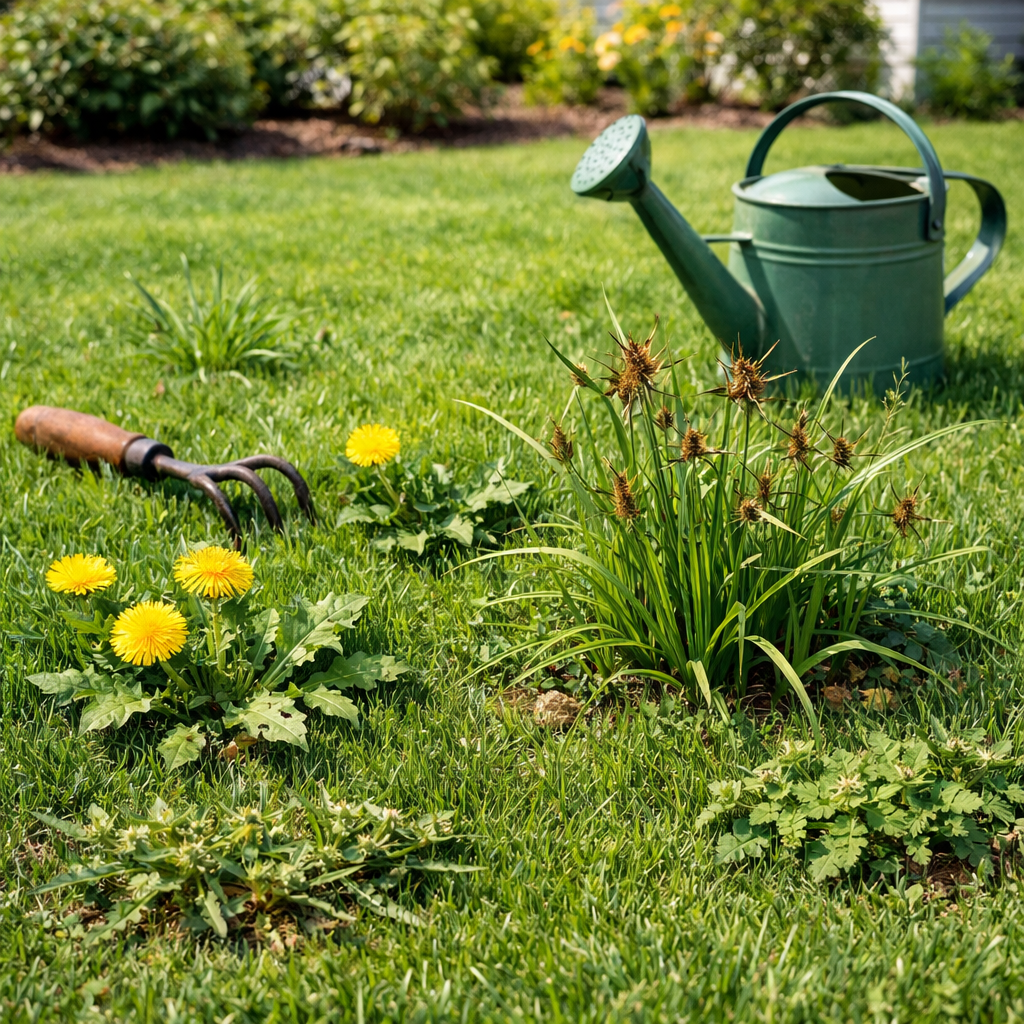
Broadleaf weeds are the easiest to spot. They feature wide, veined leaves and often produce noticeable flowers — think dandelion or clover. These weeds compete aggressively for nutrients and space.
Grassy weeds: Masters of disguise within turf
Grassy weeds blend in seamlessly with your lawn. They mimic turf structure with narrow blades and fibrous roots, making detection difficult. Their similarity often allows them to spread unnoticed until they dominate.
Sedges: The stubborn outliers with unique traits
Sedges are neither grass nor broadleaf. They are tougher, faster-growing, and notoriously resilient. With triangular stems and underground rhizomes, they are among the hardest weeds to control.
Common Turf Weeds in Australian Lawns
Australian lawns, particularly in subtropical regions, host a familiar cast of invaders.
Nutgrass pierces through turf with aggressive underground growth. Bindii lurks low, delivering painful surprises underfoot. Oxalis spreads quickly with clover-like leaves. Winter grass thrives in cooler months, while clover quietly fixes nitrogen yet disrupts uniform turf appearance.
Each weed has its own rhythm. Some erupt in summer heat. Others dominate winter dormancy. Understanding these seasonal behaviours gives you a decisive advantage.
How to Identify Turf Weeds Like a Professional
Identification is more than observation — it is interpretation.
Look closely at leaf shape. Are they broad or blade-like? Examine growth habit. Does it spread laterally or grow upright? Inspect root systems. Taproots signal persistence; fibrous roots suggest rapid spread.
Lifecycle matters. Annual weeds germinate, seed, and die within a year. Perennials return relentlessly, often stronger each season.
Correct identification determines everything. Apply the wrong treatment, and the weed thrives while your turf suffers.
Why Weeds Invade Turf Lawns
Weeds are not the problem. They are the symptom.
A lawn under stress invites invasion. Thin turf exposes soil. Compacted ground suffocates roots. Poor mowing scalps the grass. Irregular watering weakens resilience.
Nature fills voids. When turf falters, weeds advance.
Environmental triggers also play a role. Heat, moisture imbalance, and nutrient deficiencies create ideal conditions for weed establishment.
Prevention First: Building a Weed-Resistant Lawn
The strongest defence is not chemical — it is biological dominance.
A dense, healthy lawn crowds out weeds before they germinate. Thick turf blocks sunlight from reaching weed seeds.
Maintain proper mowing height. Taller grass shades soil and suppresses weed growth. Water deeply, not frequently. Feed the soil, not just the grass.
Healthy soil fosters vigorous turf. Vigorous turf leaves no room for invaders.
Manual and Cultural Control Methods
Sometimes, the simplest methods are the most effective.
Hand removal works best for isolated weeds, especially when roots are extracted completely. Aeration relieves compaction, giving turf the upper hand. Dethatching removes organic barriers that hinder growth.
Timing is critical. Remove weeds before they seed. Interrupt their lifecycle, and you disrupt future infestations.
Consistent cultural practices reduce reliance on chemical intervention.
Targeted Chemical Control Strategies
When weeds persist, precision becomes essential.
Pre-emergent herbicides prevent seeds from germinating. They are proactive tools, best applied before seasonal outbreaks.
Post-emergent herbicides target existing weeds. Selective options eliminate weeds while preserving turf. Non-selective treatments are reserved for severe infestations.
The key lies in accuracy. Misuse damages turf and wastes effort. Effective control always begins with correct identification.
Integrated Weed Management for Long-Term Success
No single method wins the war.
Integrated Weed Management combines cultural practices, manual removal, and selective chemical use. It is adaptive. It evolves with seasons, weather, and turf condition.
Monitor your lawn regularly. Adjust strategies as needed. Address problems early.
Consistency, not intensity, defines success.
Conclusion — From Reactive to Proactive Turf Care
Weed control is not about chasing problems. It is about preventing them.
A thriving lawn becomes self-defending. Dense, resilient, and balanced, it resists invasion naturally.
Shift the mindset. Focus less on killing weeds and more on strengthening turf.
Because in the end, the healthiest lawn doesn’t fight weeds — it simply leaves no space for them to exist.