Understanding the Damage Caused by Aphids in SE Queensland
 Trevor Dixon
Introduction
Few insects can multiply as quickly—or cause as much frustration—as aphids. These minute sap-feeding pests may seem insignificant individually, yet their collective impact can transform a flourishing garden into a landscape of curled leaves, weakened stems, and disappointing harvests.
South East Queensland's subtropical climate provides almost ideal conditions for aphids. Mild winters, humid summers, and extended growing seasons allow colonies to reproduce almost continuously. Instead of disappearing with cold weather, aphids often remain active throughout the year, waiting for fresh growth to emerge before launching another wave of attack.
Understanding the damage these insects cause is the first step towards protecting vegetables, ornamentals, fruit trees, and native plants.
What Are Aphids?
Aphids are tiny insects belonging to the family Aphididae. Most species measure between one and four millimetres long and are pear-shaped with long antennae and delicate legs. Depending on the species, they may appear green, black, brown, yellow, grey, pink, or even white.
Unlike chewing insects, aphids possess specialised piercing mouthparts. These needle-like stylets penetrate plant tissue and tap directly into the phloem, allowing the insects to siphon nutrient-rich sap.
Some of the most common aphids found throughout South East Queensland include:
- Green Peach Aphid
- Cotton Aphid
- Cabbage Aphid
- Rose Aphid
- Oleander Aphid
One remarkable feature of aphids is their extraordinary reproductive ability. During favourable weather, females can produce live young without mating, allowing populations to increase exponentially within days. Warm temperatures accelerate this process even further.
Why Aphids Thrive in SE Queensland
The climate of South East Queensland is almost tailor-made for aphids.
Warm temperatures encourage rapid breeding, while lush seasonal growth provides an endless supply of tender shoots rich in sap. Gardens filled with roses, citrus, vegetables, hibiscus, and flowering annuals offer a continual buffet.
Following periods of rain, plants produce vigorous new growth. Aphids quickly colonise these soft tissues, establishing dense feeding colonies before gardeners even notice their presence.
Heavy applications of nitrogen fertiliser can inadvertently make matters worse. Rapidly growing, succulent foliage is especially attractive to aphids and supports faster reproduction.
The Direct Damage Aphids Cause
Sap Extraction
Every aphid feeds by withdrawing plant sap.
While one insect causes little concern, thousands feeding simultaneously place considerable stress on a plant. Valuable sugars, amino acids, and water are continually removed, forcing the plant to divert energy away from growth, flowering, and fruit production.
Seedlings and young plants are particularly vulnerable because they possess limited reserves.
Distorted Growth
One of the earliest symptoms of aphid feeding is distorted foliage.
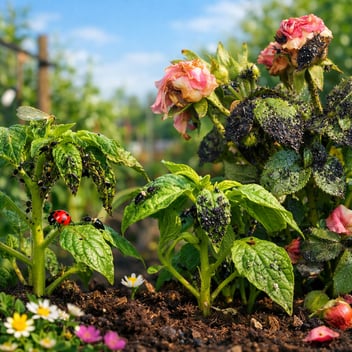
New leaves curl tightly. Shoots twist. Flower buds fail to develop properly, while fresh stems become misshapen.
Common symptoms include:
- Curled leaves
- Yellowing foliage
- Wilting shoots
- Reduced flowering
- Stunted growth
- Poor fruit development
Plants under continuous attack become increasingly susceptible to heat stress, drought, and disease.
Secondary Problems Created by Aphids
Honeydew and Sooty Mould
As aphids consume enormous quantities of sap, excess sugars pass through their digestive system and are excreted as a sticky substance known as honeydew.
This sugary coating settles across leaves, stems, fruit, paving, and outdoor furniture.
Soon afterwards, black sooty mould fungi begin colonising the honeydew. Although these fungi do not infect plant tissue directly, they block sunlight from reaching the leaves, reducing photosynthesis and further weakening the plant. Whiteflies and other sap-feeding pests create similar honeydew problems.
Plant Virus Transmission
Perhaps the greatest danger posed by aphids lies beyond their feeding.
Many aphid species act as vectors for plant viruses. As they move from infected plants to healthy ones, they transmit viral diseases capable of severely reducing crop quality and yields.
Virus symptoms often include:
- Mottled leaves
- Yellow streaking
- Severe distortion
- Reduced flowering
- Misshapen fruit
- Poor overall vigour
Once a plant is infected, there is rarely a cure.
Plants Most at Risk
Aphids attack hundreds of plant species.
Vegetables commonly affected include:
- Tomatoes
- Capsicums
- Lettuce
- Broccoli
- Cabbage
- Kale
- Beans
- Cucumbers
Ornamental plants are equally susceptible.
Roses, hibiscus, gardenias, salvias, chrysanthemums, and many flowering annuals frequently host large colonies. Citrus trees, stone fruit, and young avocado trees can also suffer significant infestations during periods of active growth.
Tender new foliage is always the preferred target.
Recognising an Infestation Early
Routine inspection remains one of the most effective management tools.
Look closely beneath leaves and around developing shoots.
Common warning signs include:
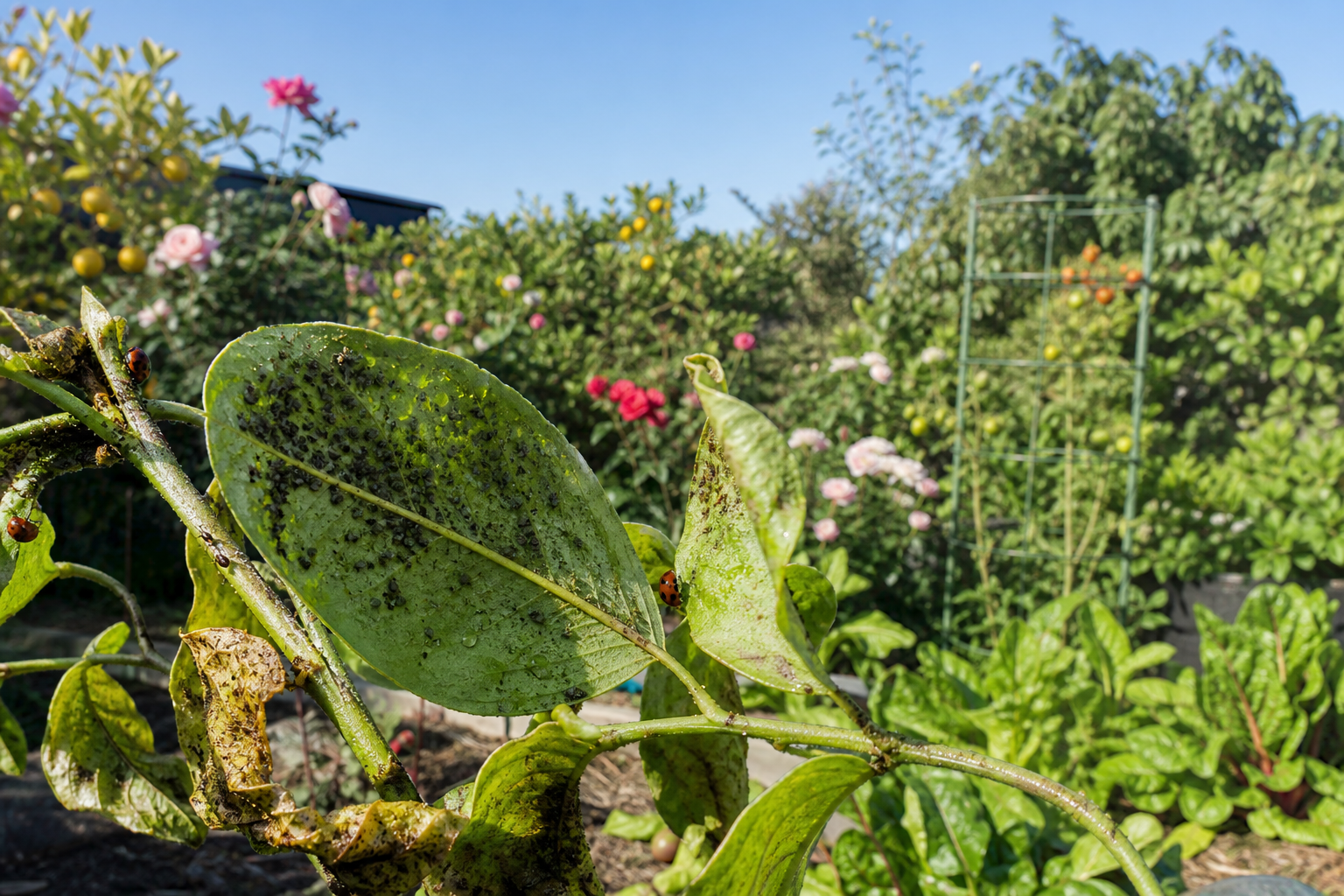
- Clusters of tiny insects
- Sticky leaf surfaces
- Black sooty mould
- Curling leaves
- Yellowing foliage
- Deformed flower buds
- Ants moving repeatedly up and down stems
Ants deserve special attention. They actively protect aphids from predators because they feed on the honeydew the aphids produce.
Their presence often signals an infestation before the aphids themselves become obvious.
Natural Predators That Help Control Aphids
Fortunately, aphids have many natural enemies.
Ladybird beetles and their larvae consume remarkable numbers of aphids. Green lacewing larvae—often called aphid lions—are equally efficient predators.
Other valuable allies include:
- Hoverfly larvae
- Parasitic wasps
- Predatory bugs
- Spiders
Encouraging these beneficial insects by planting nectar-rich flowering plants and reducing broad-spectrum insecticide use allows nature to provide ongoing pest suppression.
Healthy biodiversity creates a far more resilient garden.
Preventing Serious Aphid Damage
Successful aphid management begins long before infestations appear.
Healthy plants naturally resist pest pressure more effectively than stressed specimens.
Gardeners can reduce problems by:
- Avoiding excessive nitrogen fertilisers
- Watering consistently
- Pruning overcrowded growth
- Removing heavily infested shoots promptly
- Inspecting plants weekly
- Encouraging beneficial insects
- Maintaining good airflow
Rather than attempting to eliminate every aphid, the objective should be maintaining ecological balance.
A small aphid population can sustain beneficial insects that prevent major outbreaks later.
Conclusion
Aphids may be among the smallest insects in the garden, but their capacity for destruction is immense. Through sap feeding, honeydew production, virus transmission, and rapid reproduction, they can quickly compromise the health of vegetables, ornamentals, fruit trees, and native plants.
Fortunately, informed gardeners possess the advantage. Regular inspections, healthy growing practices, and support for beneficial insects can prevent minor infestations from becoming major problems.
In South East Queensland, where aphids remain active for much of the year, vigilance is the gardener's greatest asset. By recognising the earliest warning signs and working alongside nature's own pest controllers, it is possible to enjoy thriving, productive gardens with far fewer aphid-related setbacks.