The Perfect South East Queensland Salad Garden
 Trevor Dixon
Understanding the Subtropical Rhythm of South East Queensland
South East Queensland moves to its own botanical cadence. Summers are humid, often torrential, and unapologetically warm. Winters, by contrast, are mild and forgiving, offering a reprieve that many leafy greens relish. This oscillation between abundance and intensity demands attentiveness.
Humidity is both ally and adversary. It accelerates growth yet invites fungal mischief. Rainfall can nourish deeply, but it can just as easily leach nutrients from unprepared soils. A successful salad garden here does not resist the climate—it collaborates with it, bending to its rhythm while harnessing its generosity.
Designing a Salad Garden for Year-Round Harvest
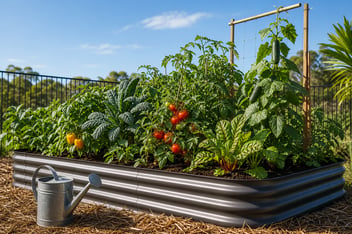
A thoughtfully orchestrated layout is the difference between sporadic harvests and a perpetual feast. Raised beds, gently elevated, offer superior drainage during heavy rains while allowing roots to breathe.
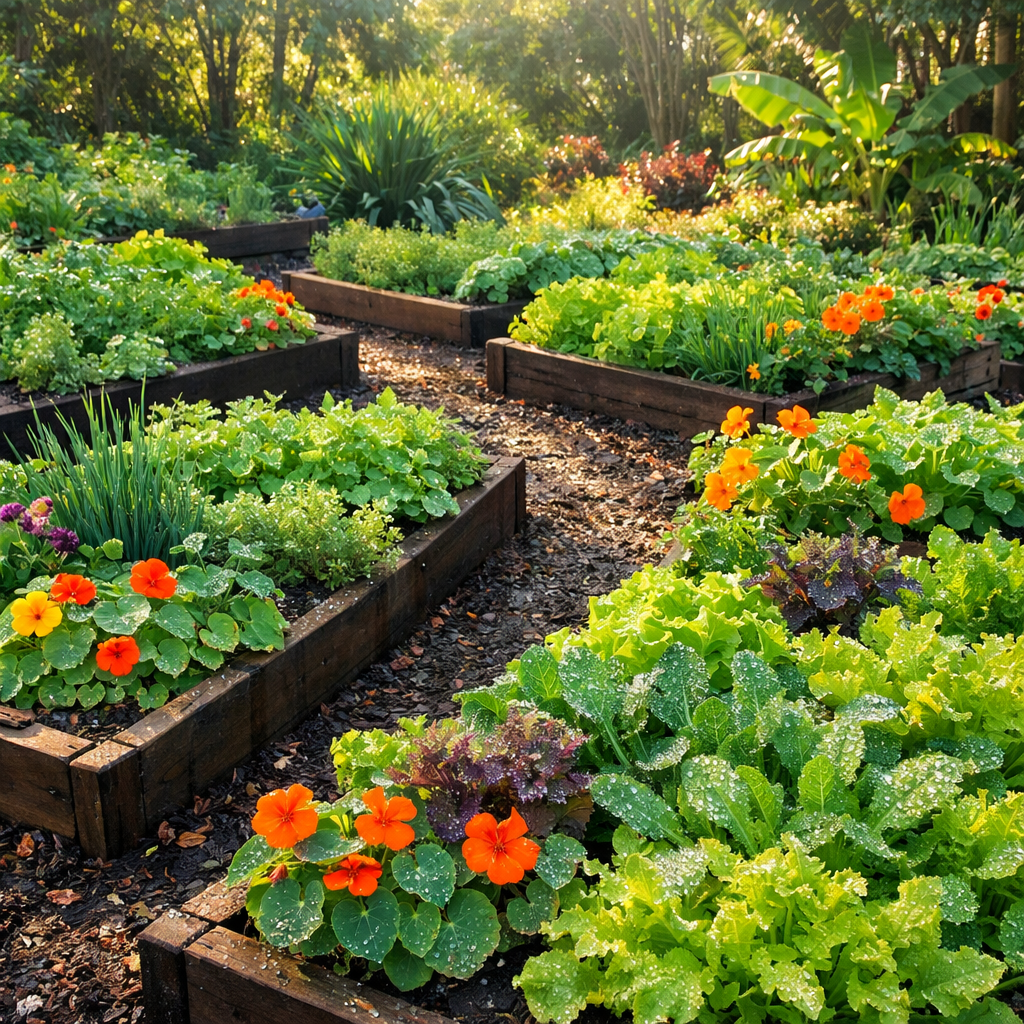
Interplanting is where the garden begins to hum with quiet intelligence. Fast-growing lettuces can nestle between slower crops like kale or silverbeet. While one matures, the other quietly expands. Diversity is not chaos—it is orchestration.
Paths should be deliberate. Access matters. A garden that invites frequent harvesting becomes one that thrives under constant, gentle stewardship.
Choosing the Best Salad Greens for SEQ Conditions
Not all greens are created equal under the Queensland sun. Fragile European lettuces often falter, bolting at the first whisper of heat. Instead, resilience becomes the guiding principle.
Cos lettuce, rocket, mizuna, and mustard greens flourish with surprising vigour. Warrigal greens, a native powerhouse, offer both nutrition and tenacity. Asian greens—tatsoi, pak choy, and gai lan—embrace the warmth rather than resist it.
Speed is your ally. Quick-growing varieties reduce exposure to pests and climatic extremes. In this environment, agility often trumps longevity.
Soil Preparation: Cultivating a Living Foundation
Beneath every thriving salad garden lies an ecosystem unseen. Soil is not inert—it is alive, teeming with microbial symphonies that dictate plant health.
Rich organic matter is essential. Compost, aged manure, and decomposed mulch create a friable texture that drains well yet retains moisture. Sandy soils, common in parts of SEQ, benefit immensely from this enrichment, transforming from lifeless substrates into fertile loams.
Microbial life must be nurtured, not disturbed. Avoid excessive tilling. Feed the soil, and it will feed the plants. It is a quiet pact, but one that yields remarkable abundance.
Watering Wisely in a Subtropical Climate
Water is both necessity and nuance. Overwatering invites root rot and fungal disease, while neglect leads to bitterness and stress.
Early morning irrigation is ideal. It allows foliage to dry as the day warms, reducing disease pressure. Drip irrigation or soaker hoses deliver moisture precisely where it is needed—at the roots—without waste.
Mulch becomes indispensable. It moderates temperature, reduces evaporation, and shields the soil from the relentless sun. In a climate of extremes, moderation is everything.
Pest Management the Natural Way
A balanced garden rarely suffers catastrophic pest invasions. Diversity attracts allies—ladybirds, lacewings, and predatory wasps—that quietly manage potential outbreaks.
Interplanting herbs such as basil, coriander, and dill introduces both aroma and defence. These plants confuse pests, masking the scent trails that lead them to their targets.
When intervention is necessary, gentle solutions prevail. Neem oil, soap sprays, and manual removal maintain equilibrium without disrupting the broader ecosystem. Control, not eradication, is the goal.
Succession Planting for Continuous Supply
A salad garden should never stand still. As one crop reaches maturity, another must be poised to take its place.
Planting small batches every one to two weeks ensures continuity. This staggered approach prevents overwhelming harvests followed by barren gaps. It is a rhythm—steady, predictable, and immensely rewarding.
Seasonal awareness is key. Summer demands heat-tolerant varieties, while winter opens the door to more delicate greens. Adaptation ensures longevity.
Harvesting Techniques for Maximum Yield
The act of harvesting is both practical and poetic. Done correctly, it extends the life of the plant and multiplies yield.
The cut-and-come-again method is particularly effective. By harvesting outer leaves and allowing the core to remain intact, plants continue producing for weeks, sometimes months. It is a gentle, ongoing dialogue between gardener and plant.
Harvest early. Morning-picked greens are crisp, hydrated, and bursting with flavour. Delay diminishes quality. Precision enhances it.
Enhancing Flavour with Herbs and Edible Flowers
A salad garden need not be confined to greens alone. Herbs introduce complexity—peppery, citrusy, aromatic notes that transform the ordinary into the exceptional.
Parsley, chives, mint, and Vietnamese coriander weave layers of flavour through every harvest. Edible flowers—nasturtiums, calendula, and violas—add both colour and intrigue, elevating the visual and culinary experience.
Beyond aesthetics, these additions invite pollinators. Bees and butterflies bring vitality, ensuring the garden remains not just productive, but alive.
A Garden That Gives Without Ceasing
The perfect South East Queensland salad garden is not a static creation. It evolves. It responds. It flourishes through attentiveness and understanding.
It offers abundance—not in sporadic bursts, but in a steady, generous flow. Leaves crisp with vitality. Flavours layered and vibrant. A garden that feeds not just the body, but the senses.
And once established, it becomes something more than a garden. It becomes a rhythm of living.