Seasonal Mulching: Adapting Your Strategy for SEQ Weather Patterns
 Trevor Dixon
Introduction
South East Queensland enjoys one of Australia's most favourable gardening climates. Mild winters, warm springs and long, humid summers allow an extraordinary diversity of plants to flourish. Yet beneath this horticultural abundance lies a climate of extremes. Intense summer heat, torrential rainfall, dry winter spells and unpredictable seasonal transitions continually challenge both soil and plants.
Successful gardeners recognise that mulching is not a once-a-year task.
Instead, mulch should evolve alongside the seasons, responding to changing temperatures, rainfall patterns and plant growth cycles. A dynamic mulching strategy keeps soil healthier, conserves water, suppresses weeds and creates an environment where plants can perform at their best regardless of the weather.
The Role of Mulch Throughout the Year
Moisture Conservation
Water is one of the most valuable resources in every garden. During South East Queensland's hotter months, bare soil can lose remarkable quantities of moisture through evaporation.
Mulch dramatically slows this process by shading the soil surface and reducing exposure to drying winds. Organic mulches help maintain consistent soil moisture, allowing irrigation and rainfall to penetrate deeply while remaining available to plant roots for longer.
The result is healthier plants and significantly improved water efficiency.
Soil Temperature Regulation
Temperature fluctuations influence every biological process beneath the soil.
During summer, mulch insulates the ground from direct solar radiation, keeping root systems cooler and reducing plant stress. Throughout winter, the same mulch layer acts as thermal insulation, reducing rapid overnight cooling and creating a more stable environment for root development.
Consistent temperatures promote consistent growth.
Weed Suppression
Every exposed patch of soil represents an invitation for weeds.
Mulch limits sunlight reaching weed seeds, dramatically reducing germination. Fewer weeds mean less competition for water, nutrients and sunlight, allowing desirable plants to establish more vigorously throughout every season.
Soil Health and Microbial Activity
Organic mulch continuously feeds the soil.
As bacteria, fungi and earthworms decompose mulch, they create humus that improves soil structure, increases moisture retention and enhances nutrient availability. Healthy soil biology becomes increasingly active beneath a well-maintained mulch layer, creating a self-sustaining ecosystem that benefits plants year after year.
Spring Mulching
Preparing Garden Beds for Vigorous Growth
Spring marks the beginning of rapid plant growth across South East Queensland.
Before growth accelerates, remove winter weeds, lightly cultivate compacted areas where appropriate and replenish mulch that has decomposed during the cooler months. Fresh mulch establishes an ideal environment for expanding root systems.
Preparation in spring influences performance throughout the entire growing season.
Replenishing Mulch After Winter
Winter rainfall and natural decomposition often reduce mulch depth.
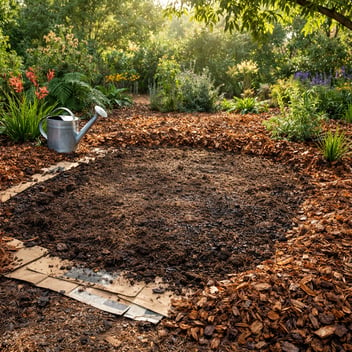
Inspect garden beds carefully and restore mulch to approximately 5–8 centimetres, depending on the material used. Replenishing rather than replacing existing mulch preserves valuable organic matter already incorporated into the soil.
Supporting Flowering and Vegetable Gardens
Spring vegetables and flowering ornamentals respond particularly well to freshly mulched soil.
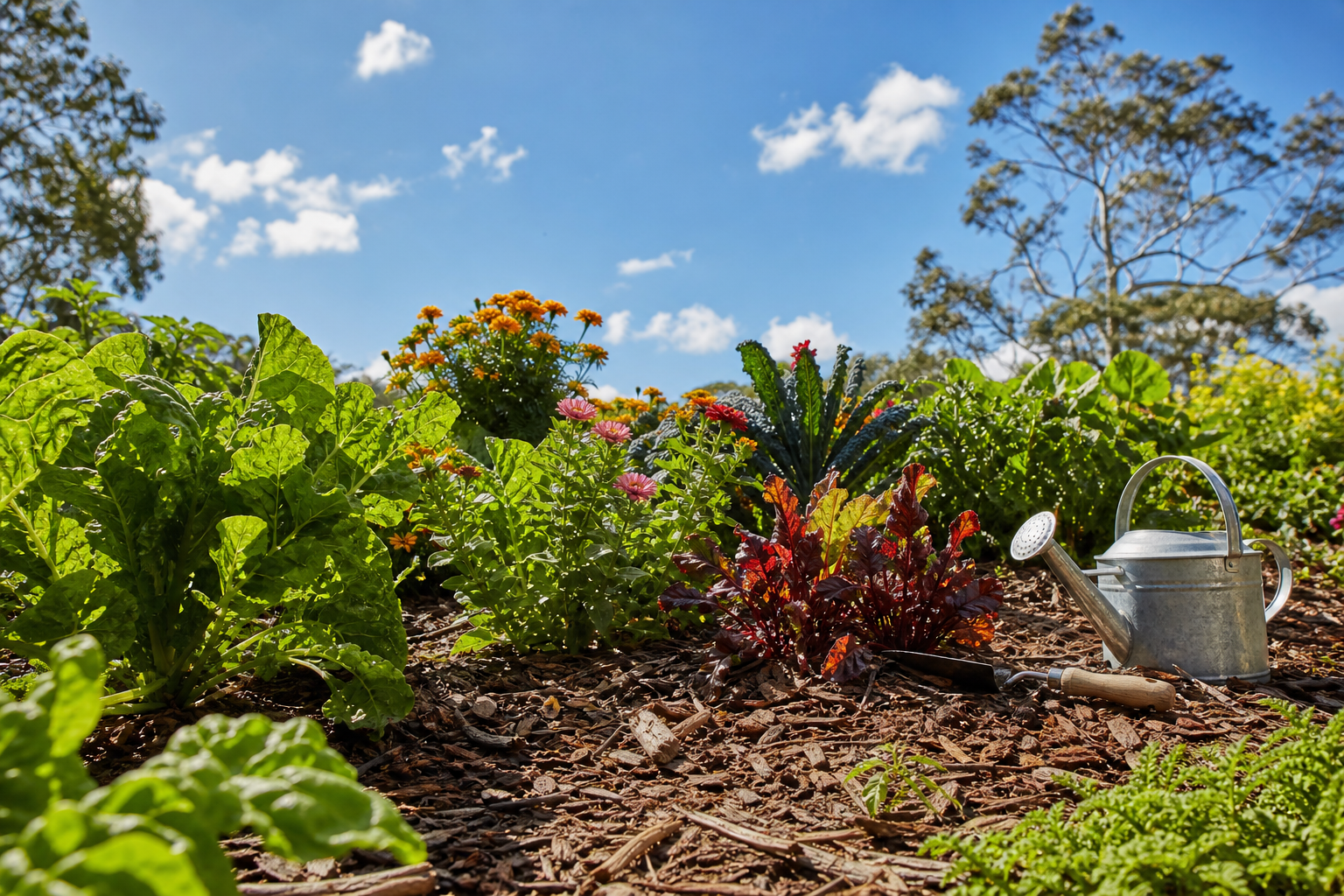
Consistent moisture and reduced weed competition allow plants to direct more energy toward flowering, fruit production and healthy foliage development.
Summer Mulching
Protecting Soil from Extreme Heat
Summer brings prolonged sunshine and elevated temperatures.
Without mulch, soil surfaces may become excessively hot, placing considerable stress on shallow feeder roots. A generous mulch layer acts as a protective shield, reducing temperature extremes and helping plants maintain healthy growth even during heatwaves.
Reducing Evaporation During Hot Weather
Evaporation is relentless during South East Queensland summers.
Mulch substantially reduces water loss, extending the benefits of every irrigation cycle and allowing gardeners to water less frequently while maintaining healthy soil moisture.
Every litre conserved represents improved sustainability.
Managing Heavy Summer Storms
Summer storms arrive suddenly and often intensely.
Mulch cushions the impact of heavy rainfall, reducing soil erosion, limiting nutrient loss and preventing soil compaction caused by raindrop impact. Water infiltrates gradually rather than running across exposed surfaces.
Autumn Mulching
Rebuilding Depleted Mulch Layers
By autumn, organic mulch has often decomposed considerably.
This natural breakdown enriches the soil but reduces the protective layer. Autumn provides an ideal opportunity to restore mulch depth before cooler weather arrives.
Fresh mulch enters winter ready to perform.
Improving Soil Before Winter
Adding compost beneath autumn mulch gives microorganisms an abundant food source throughout the cooler months.
Earthworms continue incorporating organic matter into the soil profile, gradually improving fertility before spring returns.
Healthy soil never stops working.
Encouraging Earthworms and Beneficial Microbes
Autumn moisture combined with moderate temperatures creates ideal conditions for biological activity.
A rich organic mulch layer supports beneficial fungi, bacteria and earthworms that continually recycle nutrients and enhance soil structure.
Winter Mulching
Insulating Plant Roots
Although South East Queensland winters are relatively mild, overnight temperatures occasionally fall low enough to stress sensitive plants.
Mulch provides valuable insulation, reducing rapid temperature fluctuations around root systems and protecting newly established plants.
Managing Moisture During Drier Conditions
Winter generally brings lower evaporation rates but also less rainfall.
Mulch continues conserving valuable soil moisture while reducing the frequency of supplementary irrigation.
Healthy soil remains consistently hydrated.
Preparing Gardens for Spring
Winter maintenance pays dividends later.
Removing weeds, refreshing mulch and improving soil during the quieter months ensures gardens enter spring in excellent condition, ready for vigorous growth.
Choosing Seasonal Mulches
Organic Mulches for Year-Round Performance
Organic materials such as coarse woodchips, pine bark, sugar cane mulch, leaf mulch and compost provide continual improvements to soil health while offering excellent seasonal protection.
Each decomposes at a different rate, allowing gardeners to select materials suited to individual landscapes.
Selecting Mulch Based on Plant Types
Vegetable gardens often benefit from finer organic mulches that decompose quickly and release nutrients rapidly.
Shrubs, ornamental gardens and trees generally perform better beneath coarser bark products that provide longer-lasting protection.
Matching mulch to plant requirements maximises performance.
Refreshing Versus Replacing Mulch
Complete replacement is rarely necessary.
Existing mulch can usually be loosened and topped up with fresh material, preserving beneficial microorganisms while maintaining an effective protective layer.
Common Seasonal Mulching Mistakes
Applying Mulch Too Thickly
More mulch does not always produce better results.
Excessively deep mulch restricts oxygen movement, encourages excessive moisture retention and may create conditions favourable to fungal diseases.
Moderation remains essential.
Mulching Dry Soil
Mulch preserves existing moisture.
Applying mulch over dry soil simply traps dryness beneath the surface. Always water thoroughly before spreading fresh mulch to maximise its effectiveness.
Ignoring Seasonal Maintenance
Mulch gradually changes.
Storms redistribute it. Decomposition reduces its depth. Weeds occasionally emerge.
Regular seasonal inspections ensure mulch continues performing exactly as intended throughout the year.
Conclusion
Every season presents new opportunities to improve the health and resilience of South East Queensland gardens. Rather than viewing mulch as a static covering, successful gardeners treat it as an evolving component of an integrated soil management strategy.
By adapting mulch depth, refreshing organic materials, responding to seasonal weather patterns and maintaining healthy soil beneath the surface, gardens become increasingly resilient to drought, heavy rainfall, temperature extremes and weed invasion.
Seasonal mulching is more than maintenance.
It is an investment in healthier soil, stronger plants and beautiful gardens that continue to improve with every passing year.