Refrigeration vs. Room Temperature: Storage Tips for SEQ Produce
 Trevor Dixon
Introduction
South East Queensland rewards gardeners with an extraordinary abundance of fresh produce throughout the year. From fragrant herbs and leafy greens to tropical fruits and colourful vegetables, home gardens often produce more than can be enjoyed immediately. Yet one simple question continues to divide even experienced gardeners.
Should it go in the fridge?
The answer is rarely straightforward. Some produce flourishes in cool conditions, while others lose flavour, texture and aroma when exposed to low temperatures. Understanding the science behind storage allows gardeners to preserve freshness, reduce food waste and enjoy every harvest at its absolute best.
The Science Behind Produce Storage
Respiration and Ripening After Harvest
Harvesting does not stop a fruit or vegetable from living. Once picked, produce continues to respire, slowly converting stored sugars into energy. This natural process gradually reduces freshness, moisture and nutritional quality.
Temperature plays a critical role. Cooler conditions slow respiration and extend shelf life, while warm temperatures accelerate ripening and eventual spoilage.
However, refrigeration is not universally beneficial. Tropical fruits, in particular, are susceptible to chilling injury, where cold temperatures interfere with normal ripening and diminish flavour.
Understanding Ethylene Gas
Ethylene is an invisible plant hormone responsible for ripening many fruits.
Apples, bananas, tomatoes, mangoes and ripe avocados produce significant amounts of ethylene. Nearby vegetables such as lettuce, broccoli, carrots, cucumbers and leafy greens are highly sensitive to this gas and can spoil much faster if stored together.
Simply separating these foods can dramatically increase their storage life.
When Room Temperature Is the Better Choice
Fruits That Thrive Outside the Fridge
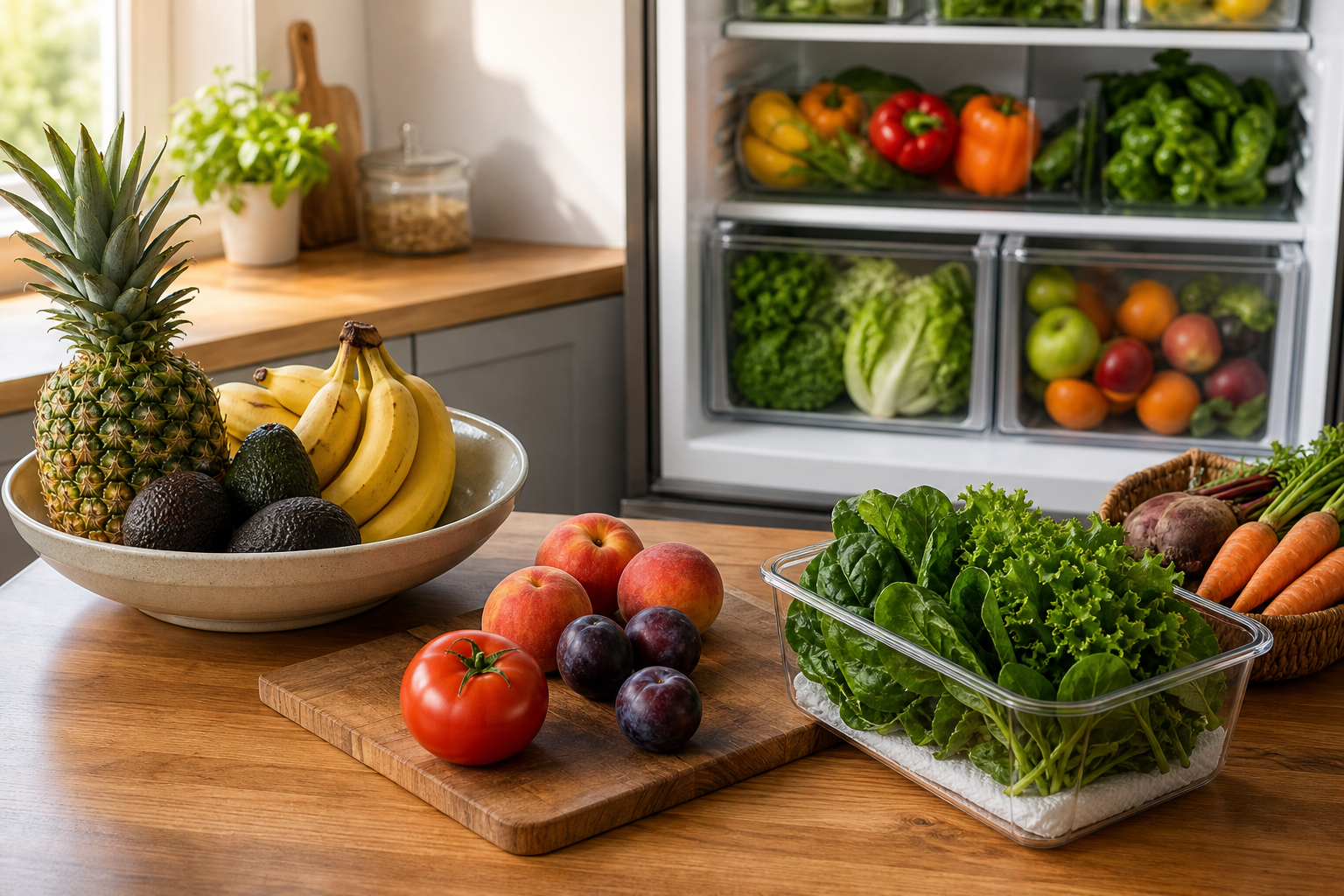
Many of SEQ's favourite fruits perform best on the kitchen bench until fully ripe.
These include:
- Bananas
- Mangoes
- Avocados
- Pawpaw
- Pineapple
- Tomatoes
- Stone fruit
Cold temperatures interrupt normal ripening, resulting in bland flavour, uneven texture and reduced aroma. Once fully ripe, some of these fruits may be refrigerated briefly to slow further softening.
Vegetables That Prefer Ambient Storage
Several vegetables also dislike refrigeration.
Store these in a cool, dry and well-ventilated location:
- Potatoes
- Sweet potatoes
- Garlic
- Onions
- Pumpkins
- Winter squash
Moist, enclosed environments encourage mould, sprouting and premature decay. Good airflow is essential.
When Refrigeration Is Essential
Leafy Greens and Herbs
Leafy vegetables rapidly lose moisture once harvested.
Lettuce, spinach, Asian greens, parsley, coriander and similar herbs remain crisp far longer when refrigerated. High humidity inside the crisper drawer helps prevent wilting while slowing respiration.
Wrapping greens loosely in paper towels before placing them inside breathable containers helps absorb excess moisture while maintaining freshness.
Root Vegetables and Moisture-Loving Produce
Many vegetables benefit from refrigeration after harvest.
These include:
- Carrots
- Beetroot
- Celery
- Broccoli
- Cauliflower
- Green beans
- Asparagus
Cool temperatures preserve texture while slowing moisture loss and fibre development.
Making the Most of Your Refrigerator
Using Crisper Drawers Correctly
Many households overlook one of the refrigerator's most valuable features.
Crisper drawers are designed specifically to manage humidity.
High-humidity drawers retain moisture and suit vegetables prone to wilting.
Low-humidity drawers allow ethylene gas to escape and are better suited to fruits that naturally produce large amounts of ethylene.
Learning this simple distinction can noticeably extend produce freshness.
High vs Low Humidity Storage
As a simple guide:
High Humidity
- Lettuce
- Herbs
- Spinach
- Broccoli
- Carrots
- Celery
Low Humidity
- Apples
- Pears
- Grapes
- Citrus
- Ripe avocados
Separating fruits from vegetables prevents unwanted ethylene exposure while optimising humidity.
Common Storage Mistakes
Mixing Ethylene Producers with Sensitive Produce
One ripe banana can dramatically shorten the life of nearby leafy greens.
Keep ethylene-producing fruits away from sensitive vegetables whenever possible. Separate crisper drawers or individual storage containers work exceptionally well.
Washing Produce Too Early
Fresh produce naturally carries a protective outer coating.
Washing immediately after harvest introduces excess moisture, encouraging mould and bacterial growth. Instead, wash fruits and vegetables just before use.
Overcrowding the Refrigerator
Air circulation is vital.
Packing produce tightly together traps moisture and restricts airflow, accelerating spoilage. Leave enough space for cool air to circulate freely around stored items.
Storage Guide for Popular SEQ Produce
Tropical Fruits
Bananas, mangoes, pawpaw and pineapple should remain at room temperature until ripe. Refrigeration may be used briefly afterwards if required.
Citrus
Lemons, limes and oranges can remain on the bench for several days but will last considerably longer when refrigerated after ripening.
Tomatoes
Allow tomatoes to ripen naturally on the kitchen bench. Refrigeration is best reserved for fully ripe fruit that needs a few extra days before use.
Avocados
Ripen at room temperature. Once soft, refrigerate to slow further ripening.
Herbs
Tender herbs stay freshest refrigerated inside containers with slightly damp paper towels.
Woody herbs such as rosemary and thyme tolerate room temperature for short periods but also refrigerate well.
Cucumbers
Store cucumbers in the refrigerator, but keep them separate from bananas, tomatoes and apples to prevent accelerated deterioration.
Root Crops
Carrots, beetroot and radishes remain crisp for much longer under refrigeration, ideally in high-humidity conditions.
Smart Tips to Reduce Waste
Rotate Produce Regularly
Practice the simple FIFO principle.
First In, First Out ensures older produce is consumed before newer harvests.
Monitor Ripeness Daily
Fresh produce changes quickly in SEQ's warm climate.
Inspect fruit bowls and refrigerators every day. Prompt use prevents unnecessary waste.
Freeze Surplus Harvests
If your garden suddenly produces more than you can eat, freezing is an excellent solution.
Blanch vegetables before freezing, and freeze herbs in olive oil using ice cube trays for convenient cooking portions.
Conclusion
The debate between refrigeration and room temperature has no universal answer. Every fruit and vegetable has evolved with unique storage preferences, and understanding those differences is the secret to preserving quality.
For South East Queensland gardeners, combining smart storage practices with knowledge of ethylene, humidity and temperature transforms the way produce is enjoyed. Fresher vegetables, sweeter fruit, reduced waste and longer-lasting harvests become the reward.
The best storage method is never the same for every crop. It is the one that respects the biology of the produce itself, allowing your garden's bounty to remain vibrant long after it leaves the soil.