Pest Patrol: Managing Overpopulation of Cane Toads in Your Garden
 Trevor Dixon
Introduction
The evening chorus of a South East Queensland garden should be a symphony of native frogs, insects, and birds. Yet in many suburban and rural landscapes, another voice has become increasingly dominant. The cane toad.
Originally introduced with good intentions, this invasive amphibian has become one of Australia's most persistent environmental challenges. Its remarkable adaptability, prolific breeding capacity, and toxic defence mechanisms have allowed it to flourish in areas where native species struggle.
For gardeners, understanding how to manage cane toads is no longer optional. It is an essential component of responsible landscape stewardship.
Understanding the Cane Toad
The cane toad is a master of survival. Introduced to Australia in 1935 to control agricultural pests, it quickly demonstrated an ability to thrive far beyond sugar cane fields.
Unlike many native amphibians, cane toads can breed in a wide variety of water bodies. A single female may produce tens of thousands of eggs in one breeding event. Given suitable conditions, populations can explode with astonishing speed.
Their success stems from resilience. They tolerate disturbed environments, urban development, fluctuating weather conditions, and a broad range of food sources. In many respects, they are perfectly adapted to modern suburban landscapes.
The Problems Caused by Cane Toad Overpopulation
An overabundance of cane toads creates a cascade of ecological consequences.
Native frogs often face direct competition for food and habitat. Young cane toads consume many of the same resources required by native amphibians. As populations increase, pressure on local ecosystems intensifies.
Their toxicity presents another serious issue. Dogs, cats, reptiles, and even some native predators can become severely ill after attempting to attack or consume cane toads. In some cases, exposure can be fatal.
The broader garden ecosystem also suffers. While cane toads consume insects, they do so indiscriminately. Beneficial insects can be affected alongside pest species, disrupting ecological balance rather than improving it.
Why Gardens Attract Cane Toads
Many gardens unintentionally provide ideal habitat for cane toads.
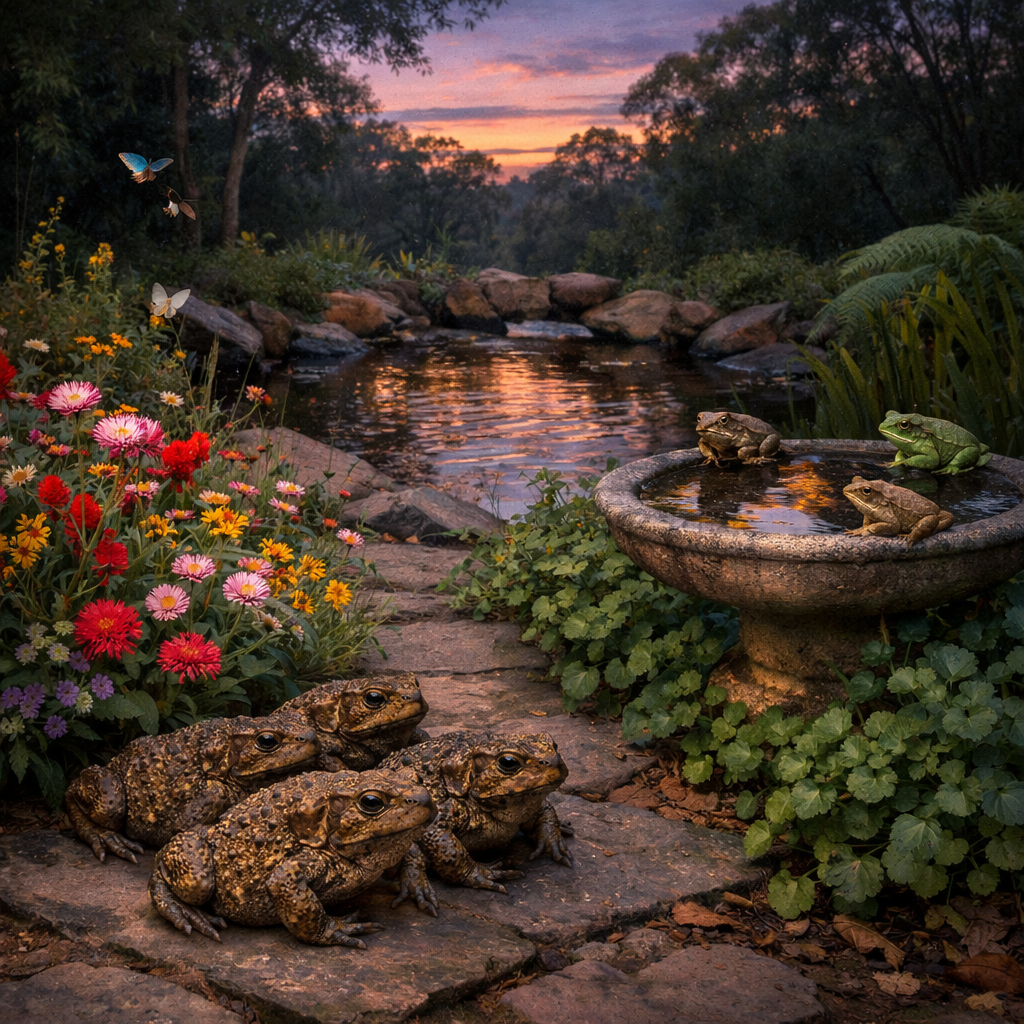
Water is the primary attraction. Bird baths, ponds, leaking taps, drainage depressions, and poorly maintained water features can all become breeding opportunities.
Shelter is equally important. Dense groundcovers, timber stacks, garden edging, rock walls, compost heaps, and piles of mulch provide cool, moist refuges during the day.
Food availability seals the deal. Gardens illuminated at night attract insects. Insects attract cane toads. A well-watered garden rich in insect life can become an all-you-can-eat buffet.
Identifying Cane Toad Hotspots
Effective management begins with observation.
Inspect shaded areas during the day. Cane toads frequently shelter beneath potted plants, retaining walls, dense vegetation, and garden debris.
During warmer months, monitor water bodies for long strings of black eggs, which are characteristic of cane toad breeding. Large congregations of tiny toadlets following rainfall are another strong indicator of a growing population.
Night-time inspections with a torch can reveal movement patterns and highlight areas where management efforts should be concentrated.
Humane and Responsible Management Strategies
The most successful approach combines habitat modification with responsible population management.
Removing unnecessary shelter reduces daytime hiding opportunities. Elevating pot plants, reducing clutter, and maintaining tidy garden beds make properties less attractive.
Water management is equally important. Repair leaks promptly. Prevent standing water from accumulating. Ensure ponds are designed to discourage breeding where practical.
When removal becomes necessary, gardeners should follow current local guidelines and regulations regarding humane cane toad management. Methods and recommendations can vary over time, making it important to consult up-to-date advice from relevant authorities.
Consistency is critical. Occasional efforts produce temporary results. Ongoing management creates lasting change.
Encouraging Native Wildlife to Reclaim the Garden
A healthy garden is not defined by the absence of wildlife. It is defined by the presence of the right wildlife.
Native frogs, birds, lizards, and beneficial insects all contribute to ecological resilience. By planting local native species, reducing chemical use, and providing suitable habitat, gardeners can support the return of indigenous fauna.
Biodiversity creates resistance. Diverse ecosystems are naturally more stable and better equipped to withstand invasive species pressures.
Every native frog that thrives represents a small victory for local ecology.
Preventing Future Infestations
Long-term success relies on thoughtful garden design.
Select plants that create habitat for desirable wildlife while avoiding excessive clutter. Design water features carefully. Maintain drainage systems. Manage outdoor lighting to reduce insect concentrations where practical.
Neighbourhood cooperation can amplify results dramatically. Cane toads do not recognise property boundaries. Coordinated action across streets and communities often produces far greater outcomes than isolated efforts.
Small improvements made consistently over time create meaningful ecological change.
Conclusion
Cane toads are one of the most challenging invasive species confronting South East Queensland gardeners. Their adaptability and reproductive capacity make complete eradication unrealistic in most areas.
However, effective management is entirely achievable.
By understanding what attracts cane toads, modifying garden conditions, encouraging native wildlife, and maintaining a proactive approach, gardeners can significantly reduce their impact. The result is a healthier, more balanced landscape where native species have the opportunity to flourish.
The goal is not merely to remove an unwanted visitor. It is to restore harmony. To create gardens that support the extraordinary biodiversity that makes South East Queensland unique.