Hedges and Living Fences: Privacy Features for Suburban Gardens
 Trevor Dixon
Introduction
As suburban blocks become increasingly compact, privacy has become one of the most coveted elements of modern garden design. Homeowners want outdoor spaces where they can unwind without feeling overlooked, entertain family and friends in comfort, and enjoy the simple pleasure of a peaceful garden retreat.
While timber and masonry fences certainly define property boundaries, they rarely soften the landscape or contribute to biodiversity. Living fences, by contrast, offer an elegant alternative. Dense hedges create natural walls of greenery that mature beautifully over time, filtering noise, providing shade, attracting wildlife, and introducing year-round colour and texture.
A thoughtfully designed hedge becomes far more than a boundary. It becomes a defining feature of the garden itself.
Why Choose Hedges Instead of Traditional Fences
Natural Beauty with Practical Benefits
Unlike conventional fencing, living hedges evolve with the seasons. Fresh spring growth, vibrant flowers, colourful berries, and rich evergreen foliage create an ever-changing landscape that feels alive.
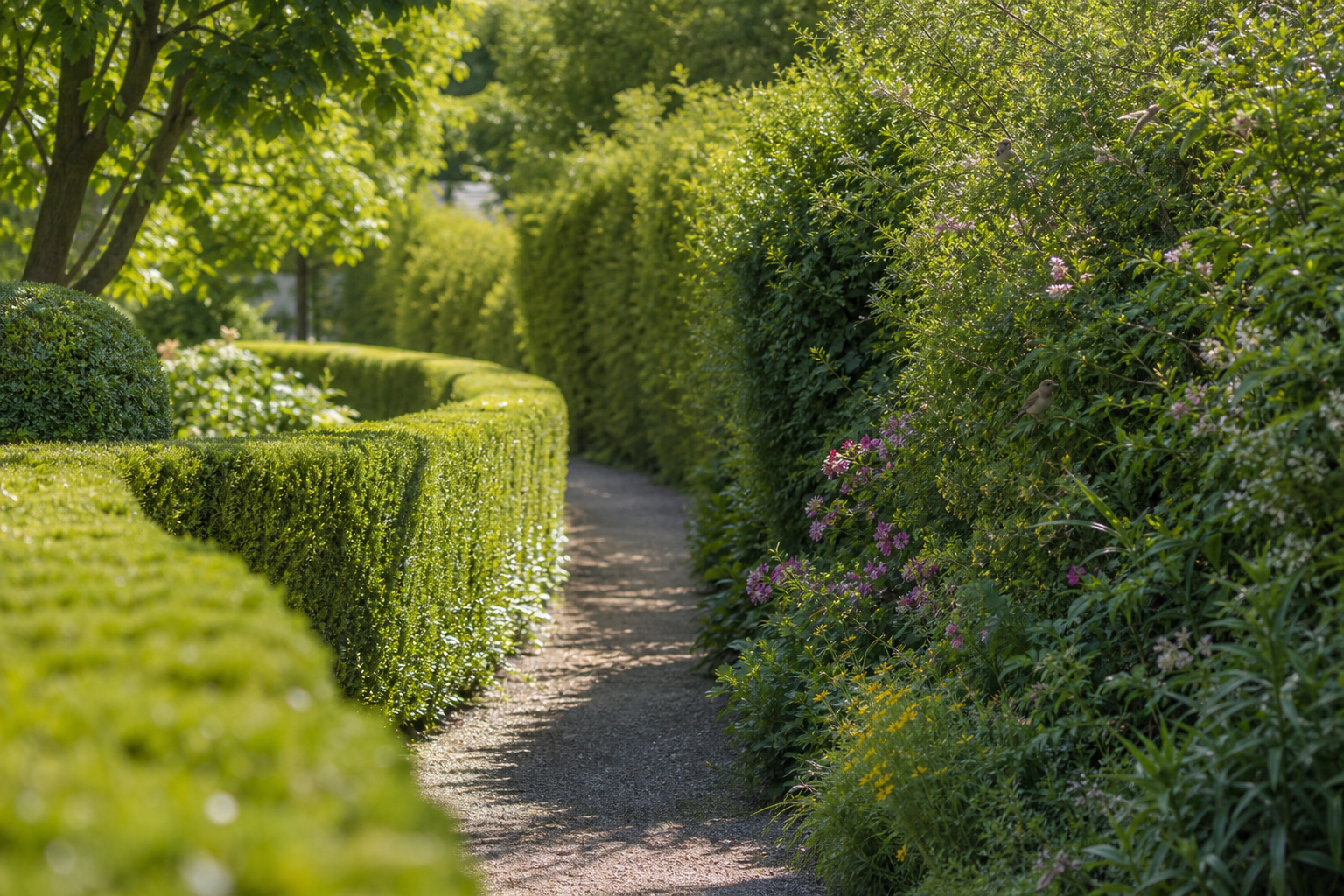
Their versatility is remarkable. Hedges can define garden rooms, frame pathways, soften hard architectural lines, and screen unsightly views while maintaining a far more welcoming appearance than solid fencing.
Formal clipped hedges create crisp architectural structure, while informal plantings deliver a softer, relaxed aesthetic suited to contemporary Queensland gardens.
Environmental Advantages of Living Screens
Living fences contribute significantly to environmental health.
Dense foliage filters airborne dust, absorbs carbon dioxide, reduces reflected heat, dampens traffic noise, and provides valuable habitat for birds, insects, and pollinators. Unlike manufactured fences, which simply divide spaces, hedges actively improve the surrounding ecosystem.
Even a relatively narrow hedge can become an ecological corridor connecting wildlife throughout suburban neighbourhoods.
Choosing the Right Hedge for Your Garden
Fast-Growing vs Slow-Growing Varieties
Fast-growing hedges quickly establish privacy but often require more frequent trimming to maintain their density and shape.
Slower-growing species typically demand less maintenance over time while developing a more refined appearance. Selecting the right balance depends on your priorities—rapid screening or reduced upkeep.
Native and Exotic Options for Queensland
Queensland's subtropical climate supports an impressive selection of hedge plants.
Popular native choices include Lilly Pilly, Callistemon, Grevillea, Westringia, and Elaeocarpus. These species tolerate local conditions while supporting native birds and insects.
For those seeking ornamental appeal, Viburnum, Duranta, Gardenia, Camellia, and Bougainvillea offer exceptional screening with seasonal colour and texture.
Matching Plant Selection to Garden Size
Not every hedge belongs in every garden.
Large suburban blocks may accommodate broad screening plants several metres tall, while smaller courtyards benefit from compact species that remain manageable without constant pruning.
Considering ultimate mature size prevents future maintenance headaches and ensures the hedge remains proportional to the landscape.
Designing an Effective Living Fence
Formal, Informal, and Mixed Hedges
Formal hedges create symmetry and precision. Their clipped profiles suit contemporary homes and structured landscapes.
Informal hedges celebrate natural growth habits, flowering displays, and relaxed forms. Mixed-species hedges combine different textures and flowering periods, creating visually rich screens while increasing biodiversity.
Layering Plants for Maximum Privacy
Privacy improves dramatically when multiple planting layers are introduced.
Tall screening shrubs establish the primary barrier, medium-height plants fill visual gaps, and lower-growing foliage softens the base. This layered approach produces depth and density that a single row of plants cannot achieve.
Combining Hedges with Existing Fencing
Many successful gardens combine traditional fencing with living screens.
A timber fence provides immediate privacy while newly planted hedges mature. Over time, lush foliage softens hard boundaries, creating a seamless blend between architecture and landscape.
Planting for Long-Term Success
Soil Preparation and Spacing
Healthy hedges begin beneath the surface.
Deep cultivation, generous compost incorporation, and improved drainage encourage vigorous root development. Consistent spacing allows individual plants to knit together into a continuous living wall without competing excessively for nutrients.
Watering, Mulching, and Establishment
Young hedges require consistent irrigation during establishment.
Organic mulch conserves moisture, suppresses weeds, moderates soil temperature, and gradually enriches the soil as it decomposes. Once established, many Queensland-suited species require significantly less supplemental watering.
Encouraging Dense Growth from the Beginning
Early formative pruning encourages branching from the base rather than allowing plants to become tall and sparse.
A slightly wider base than top ensures sunlight reaches lower foliage, maintaining density throughout the hedge.
Maintaining Healthy, Attractive Hedges
Pruning Techniques and Timing
Routine trimming maintains shape, density, and overall health.
Small-leafed species tolerate formal clipping exceptionally well, while larger-leafed shrubs often benefit from selective pruning that preserves their natural appearance.
Fertilising and Pest Management
Balanced fertilisers applied during active growth encourage lush foliage and vibrant colour.
Regular inspections allow early detection of pests, diseases, or nutrient deficiencies before they become significant problems.
Preventing Thin or Patchy Growth
Many disappointing hedges result from inconsistent watering, excessive shading, or incorrect pruning.
Maintaining even moisture, adequate sunlight, and regular trimming promotes dense, healthy growth from top to bottom. Proper establishment techniques are often the difference between a hedge that flourishes and one that remains thin for years.
Enhancing Wildlife and Biodiversity
Creating Habitat for Birds and Pollinators
Living fences provide valuable shelter for nesting birds while offering safe movement corridors through suburban environments.
Dense evergreen foliage protects wildlife from predators and harsh weather, making hedges an essential ecological resource.
Selecting Flowering and Fruiting Species
Flowering hedges attract bees, butterflies, and beneficial insects.
Berry-producing species provide seasonal food for native birds, increasing biodiversity while adding ornamental interest throughout the year.
Building a Sustainable Garden Ecosystem
A diverse hedge becomes far more than a privacy screen.
It cools surrounding spaces, stabilises soil, improves air quality, supports pollinators, and contributes to a healthier, more resilient garden ecosystem. Increasing plant diversity within living fences further enhances these ecological benefits.
Conclusion
Hedges and living fences offer a compelling alternative to conventional suburban boundaries.
They provide privacy without sacrificing beauty. They soften architecture while supporting biodiversity. They mature into living features that improve with every passing season rather than deteriorating with age.
Whether you envision a formal evergreen screen, a flowering native border, or a layered wildlife corridor, a thoughtfully designed hedge transforms an ordinary fence line into one of the most valuable and visually captivating elements of the entire landscape.