
Fermented Fertilizers: How to Brew Microbial Rich Garden Boosters
 Trevor Dixon
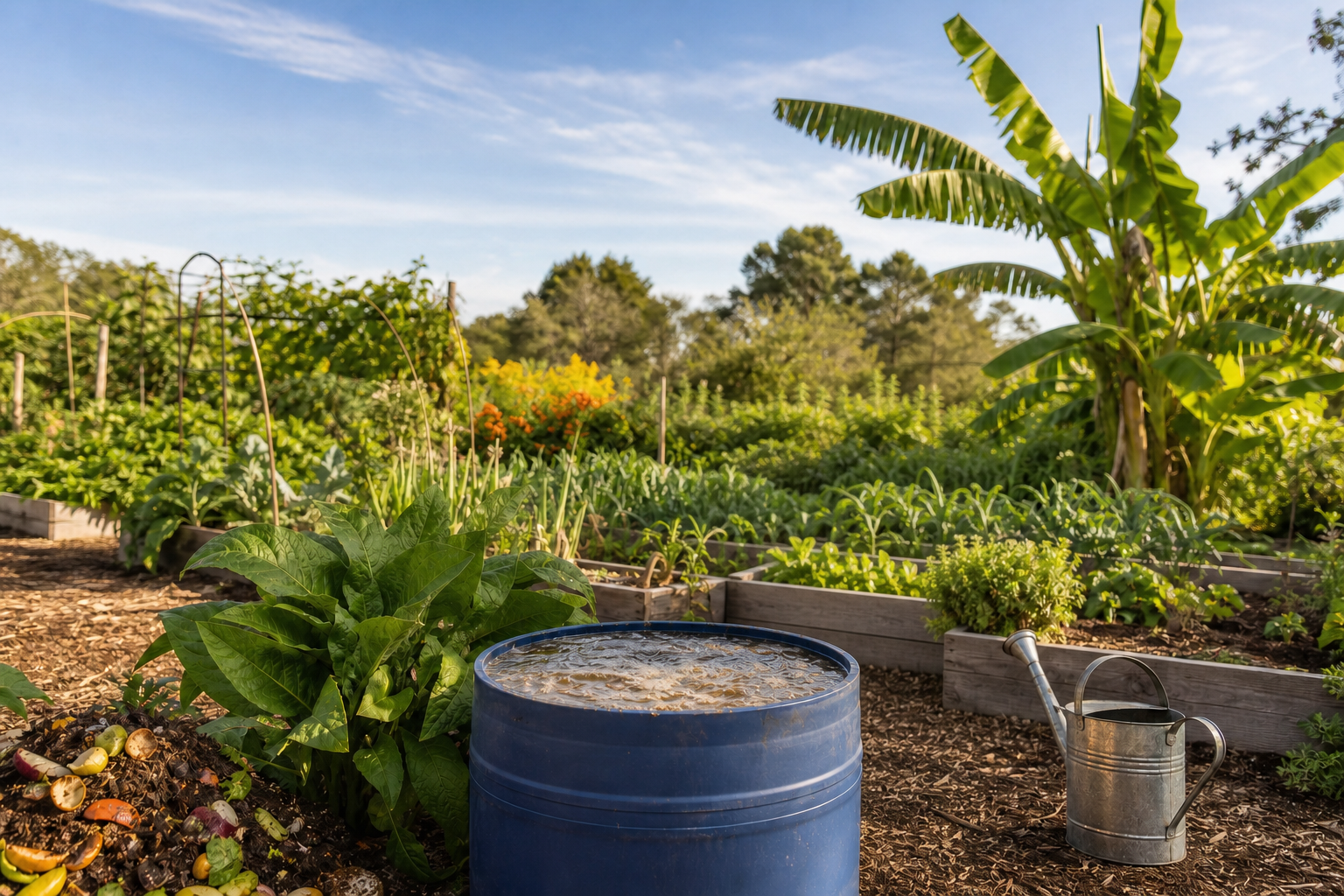
Introduction: Unlocking the Power of Fermentation
Some of the most effective fertilizers are not manufactured inside factories—they are cultivated through the remarkable activity of living microorganisms.
Fermented fertilizers harness beneficial bacteria, yeasts, and other naturally occurring microbes to convert everyday organic materials into biologically active plant foods. During fermentation, microorganisms transform complex organic compounds into simpler nutrients while multiplying into thriving microbial communities. Fermentation itself is driven by microorganisms such as bacteria and yeasts breaking down organic materials through controlled biological processes.
For South East Queensland gardeners, these living fertilizers offer an opportunity to improve soil naturally while reducing dependence on synthetic products. Instead of feeding only the plant, fermented fertilizers nourish the entire underground ecosystem.
Healthy soil begins with healthy microbes.
Understanding the Science Behind Fermented Fertilizers
The Role of Beneficial Bacteria and Yeasts
Every successful fermentation depends upon microscopic workers.
Beneficial bacteria digest carbohydrates and proteins, producing enzymes, organic acids, vitamins, and other compounds that enrich the finished fertilizer. Yeasts contribute their own metabolic processes, helping accelerate decomposition while creating valuable growth-promoting substances.
These organisms perform countless biochemical reactions that would otherwise take months or even years to occur naturally.
How Fermentation Transforms Organic Materials
Leaves, fruit scraps, weeds, fish waste, and compost all contain valuable nutrients.
During fermentation, microbial populations convert these materials into forms that plants can access more readily. Large molecules become smaller compounds. Nutrients become more soluble. Beneficial microorganisms multiply rapidly under favourable conditions.
The result is a concentrated biological amendment that supports both plants and soil life.
Why Fermented Fertilizers Thrive in South East Queensland
South East Queensland enjoys warm temperatures for much of the year.
These conditions are equally appreciated by beneficial microbes. Warm soils encourage biological activity, while regular rainfall supports microbial reproduction. Unlike cooler climates where microbial processes slow dramatically during winter, SEQ gardens often remain biologically active for extended periods.
This means fermented fertilizers can contribute to healthy soil throughout most seasons.
However, rapid biological activity also means organic matter decomposes quickly. Regular additions of compost, mulch, and microbial fertilizers help replenish this living resource before it becomes depleted.
Essential Ingredients for Brewing Garden Boosters
Carbon and Nitrogen Sources
Successful fermentation begins with balanced ingredients.
Carbon-rich materials such as molasses, raw sugar, rice bran, or dried leaves provide energy for microbes. Nitrogen-rich ingredients including fresh grass clippings, green weeds, kitchen vegetable scraps, manure, or fish waste supply proteins and amino acids needed for microbial growth.
The combination creates an ideal environment for fermentation.
Water Quality and Microbial Starters
Water is more than a carrier—it becomes the microbial habitat.
Rainwater is often preferred because it contains fewer disinfectants than treated water. If tap water is used, allowing it to stand for 24 hours helps dissipate chlorine before brewing.
Many gardeners introduce starter cultures using mature compost, worm castings, or previous batches of successful fermentations.
Choosing the Right Brewing Container
Food-grade plastic drums, buckets with secure lids, or ceramic crocks work well.
Metal containers should generally be avoided because prolonged exposure to acidic fermentation liquids may cause corrosion or contamination.
Clean equipment produces healthier microbial populations.
Popular Fermented Fertilizer Recipes
Compost Tea
Compost tea remains one of the simplest microbial fertilizers.
High-quality compost is suspended in water and allowed to develop a rich microbial population. When applied correctly, it introduces beneficial organisms directly to the soil and plant surfaces.
Fermented Plant Juice
Fast-growing plants such as comfrey, banana stems, pumpkin vines, and leafy weeds contain remarkable quantities of nutrients.
When mixed with sugar or molasses and fermented, they release a concentrated liquid rich in plant nutrients and beneficial microorganisms.
Fish Hydrolysate
Fish scraps contain valuable nitrogen, phosphorus, calcium, and trace elements.
Through controlled fermentation rather than cooking, these nutrients remain largely intact while beneficial microbes break down proteins into plant-available compounds.
The finished product becomes an exceptional fertilizer for leafy growth.
Fruit Enzyme Fertilizer
Overripe fruit, citrus peels, papaya, mangoes, bananas, and melons can all become valuable microbial fertilizers.
Rather than entering landfill, these materials become nutrient-dense brews that stimulate flowering and fruit production.
Weed Tea
Many common weeds accumulate minerals from deep within the soil profile.
Fermenting these plants transforms them into nutrient-rich liquids while recycling valuable elements back into the garden.
Even troublesome weeds can become useful allies.
Brewing Success: Best Practices and Common Mistakes
Fermentation is remarkably forgiving, but attention to detail improves results.
Containers should remain clean and protected from direct sunlight. Temperature plays a significant role, with moderate warmth encouraging vigorous microbial growth. Excessive heat, however, may inhibit desirable organisms.
Strange colours, offensive odours, or excessive mould growth usually indicate contamination or poor ingredient balance.
Patience is equally important.
Rushing fermentation often produces incomplete microbial communities that offer fewer benefits than fully matured brews.
Applying Fermented Fertilizers in the Garden
Living fertilizers can be remarkably versatile.
Vegetable gardens respond with vigorous foliage and stronger root systems.
Fruit trees benefit from improved nutrient cycling and enhanced microbial diversity around their root zones.
Flowering ornamentals often produce healthier blooms and improved colour.
Lawns develop deeper roots and greater resilience to drought.
Container plants, despite their restricted growing environment, frequently experience renewed vitality when microbial life is regularly replenished.
Dilution is generally advisable, as concentrated ferments can overwhelm young plants.
The Long-Term Benefits of Microbial Garden Boosters
The greatest strength of fermented fertilizers lies not in immediate growth alone but in the gradual transformation of the soil itself.
Beneficial microbes improve nutrient cycling, making essential minerals continuously available to plants.
Organic matter becomes stable humus.
Soil structure improves, increasing water infiltration, aeration, and moisture retention.
Earthworms, fungi, insects, and countless other beneficial organisms flourish alongside expanding microbial populations.
Over time, gardens become increasingly self-sustaining.
Plants require fewer chemical inputs, recover more rapidly from environmental stress, and display greater resistance to pests and diseases.
The soil evolves into a living ecosystem rather than an inert growing medium.
Conclusion: Brewing Life Back Into Your Soil
Fermented fertilizers represent one of gardening's oldest and most effective biological technologies. They transform ordinary organic materials into vibrant microbial communities capable of enriching soil, nourishing plants, and restoring ecological balance.
For South East Queensland gardeners, the warm climate provides ideal conditions for brewing these living fertilizers throughout much of the year.
Each batch introduces billions of microscopic allies into the garden. Together they recycle nutrients, improve soil structure, strengthen plant health, and build resilience from the ground up.
The true magic is not contained within the bucket.
It is found in the living soil that emerges after every application.


