How to Design a Waterwise Ornamental Garden in South East Queensland
 Trevor Dixon
South East Queensland is renowned for its warm climate, vibrant landscapes, and periods of unpredictable rainfall. While the region enjoys a subtropical environment that supports an incredible range of ornamental plants, wise gardeners understand that water is a precious resource. Creating a waterwise ornamental garden is not about sacrificing beauty. Quite the opposite. It is about designing a landscape that flourishes with efficiency, resilience, and enduring visual appeal.
A thoughtfully planned waterwise garden can remain lush and colourful throughout the year while reducing water consumption, lowering maintenance requirements, and supporting local biodiversity.
Understanding Waterwise Gardening in South East Queensland
Why Water Conservation Matters in SEQ
The climate of South East Queensland can fluctuate dramatically. Heavy summer rainfall may be followed by extended dry periods, placing stress on gardens that rely heavily on irrigation.
Waterwise gardening embraces sustainable principles by selecting plants suited to local conditions and designing landscapes that maximise every drop of water. This approach not only reduces environmental impact but also creates gardens that are better equipped to withstand drought and heatwaves.
The Benefits of a Waterwise Ornamental Landscape
A waterwise garden offers numerous advantages. Reduced water bills. Less maintenance. Increased resilience during dry periods. Improved soil health. Greater wildlife attraction.
Perhaps most importantly, these gardens remain attractive throughout the seasons. Carefully selected ornamentals provide year-round colour, texture, and structure without demanding constant irrigation.
Assessing Your Garden Site
Sun, Shade and Microclimates
Before selecting plants, take time to understand how sunlight moves across your property.
Some areas receive intense afternoon sun, while others remain shaded beneath trees or buildings. These variations create microclimates that influence water requirements and plant performance.
Observing these patterns allows you to position plants where they will naturally thrive with minimal intervention.
Soil Types and Drainage Considerations
Many SEQ gardens feature sandy soils that drain rapidly and struggle to retain moisture. Others contain heavy clay that can become waterlogged after rain.
Understanding your soil helps determine which plants will perform best and what improvements may be required. Well-structured soil acts like a sponge, storing moisture and releasing it gradually to plant roots.
Choosing the Right Waterwise Ornamental Plants
Native Ornamentals Adapted to SEQ
Native plants have evolved to cope with Australian conditions. They often require less water once established and provide valuable habitat for wildlife.
Excellent choices include:
- Lomandra
- Dianella
- Grevillea
- Westringia
- Callistemon
- Banksia
- Kangaroo Paw
These plants deliver colour, texture, and seasonal interest while thriving in local conditions.
Exotic Ornamentals with Low Water Requirements
Many exotic ornamentals also perform exceptionally well in waterwise gardens.
Consider:
- Agave
- Aloe
- Cordyline
- Bird of Paradise
- Society Garlic
- Lavender
- Salvia
These species offer striking architectural forms and extended flowering displays while requiring surprisingly little supplemental water.
Creating Efficient Garden Zones
Grouping Plants by Water Needs
One of the most effective waterwise strategies involves grouping plants according to their irrigation requirements.
Plants with higher moisture needs can be located together in protected areas, while drought-tolerant species occupy exposed sites where irrigation is less frequent.
This simple practice prevents overwatering and improves overall garden health.
Designing Hydrozones for Maximum Efficiency
Hydrozoning involves dividing the garden into distinct watering zones.
High-water-use plants may be positioned near outdoor living spaces where visual impact is greatest. Low-water-use plants can dominate larger areas, reducing long-term irrigation demands.
The result is a garden that appears abundant while operating efficiently.
Improving Soil for Better Water Retention
Organic Matter and Soil Conditioning
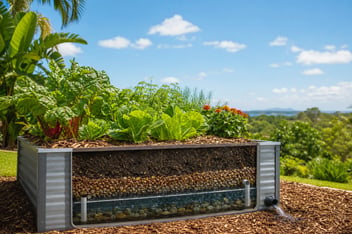
Healthy soil is the foundation of every successful waterwise garden.
Compost, aged manure, worm castings, and organic soil conditioners improve soil structure and enhance moisture retention. These amendments encourage beneficial microorganisms that further improve soil health.
Rich soil holds water longer and supports stronger root development.
Mulching Techniques for Moisture Conservation
Mulch is one of the most valuable tools available to gardeners.
Organic mulches such as bark, wood chips, sugar cane, and leaf litter help:
- Reduce evaporation
- Moderate soil temperatures
- Suppress weeds
- Improve soil structure
A mulch layer of 75 to 100 millimetres can dramatically reduce water loss during summer.
Designing for Beauty and Function
Using Texture, Colour and Form
A successful ornamental garden engages the senses through contrast and composition.
Combine fine-textured grasses with bold foliage plants. Pair silver leaves with deep greens. Contrast upright forms with spreading groundcovers.
These visual relationships create richness and complexity without relying solely on flowers.
Layering Plants for a Natural Appearance
Nature rarely arranges plants in neat rows.
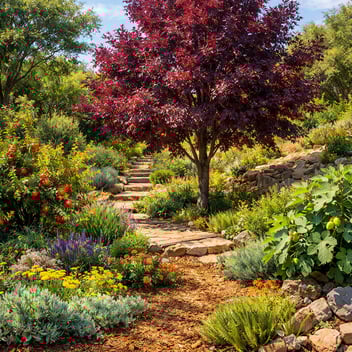
Layering plants creates depth and mimics natural ecosystems. Tall shrubs and small trees provide structure. Mid-level ornamentals add colour and texture. Groundcovers soften edges and protect the soil.
This layered approach also reduces exposed soil, further conserving moisture.
Smart Irrigation Solutions
Drip Irrigation and Targeted Watering
Traditional sprinklers often waste significant amounts of water through evaporation and overspray.
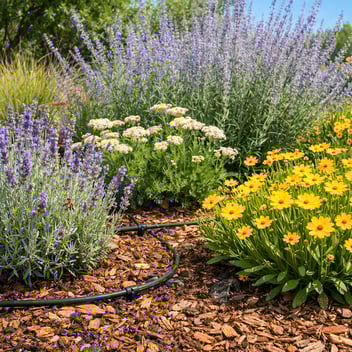
Drip irrigation delivers water directly to plant roots where it is needed most. This targeted approach improves efficiency and reduces weed growth between plants.
Modern drip systems are simple to install and highly effective.
Rainwater Harvesting and Water Reuse
Rainwater tanks are an excellent investment for SEQ gardens.
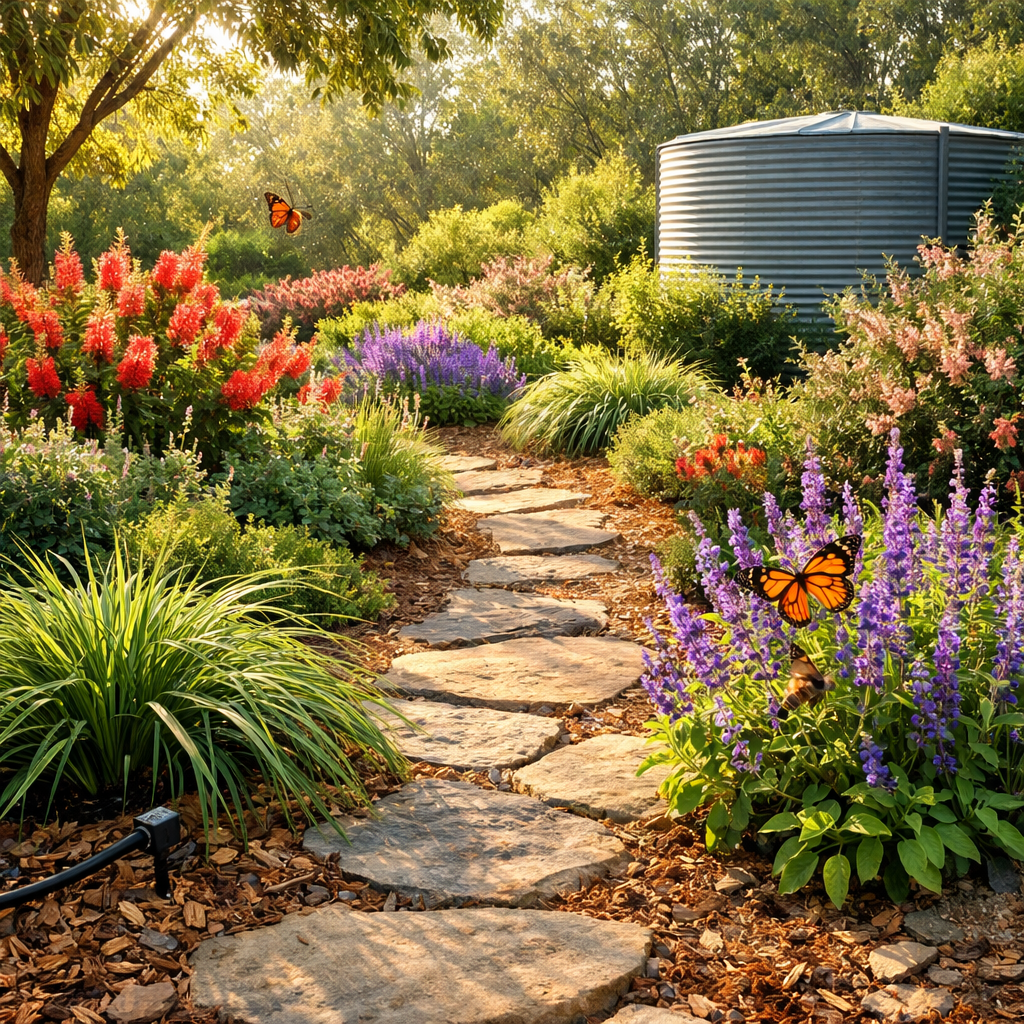
Harvested rainwater can be used to irrigate ornamental beds during dry periods. Combined with efficient irrigation systems, rainwater storage significantly reduces reliance on mains water.
Every rainfall event becomes an opportunity to replenish your garden's water supply.
Maintaining a Waterwise Ornamental Garden
Pruning, Fertilising and Seasonal Care
Regular maintenance keeps plants healthy and efficient.
Remove dead growth. Lightly shape shrubs as needed. Apply slow-release fertilisers during active growth periods. Monitor irrigation systems to ensure they remain effective.
Healthy plants use water more efficiently than stressed specimens.
Long-Term Sustainability Strategies
As gardens mature, water requirements often decrease.
Established trees provide shade. Groundcovers reduce evaporation. Improved soils retain moisture more effectively.
Over time, a well-designed waterwise garden becomes increasingly self-sufficient and resilient.
Waterwise Plant Combinations for Stunning Displays
Contemporary Garden Designs
For a modern aesthetic, combine:
- Agave
- Lomandra
- Dianella
- Westringia
- Blue Fescue
This palette creates strong architectural forms with contrasting textures and minimal water requirements.
Tropical-Inspired Waterwise Gardens
Many gardeners assume tropical gardens require excessive water. Not necessarily.
Combine:
- Bird of Paradise
- Cordyline
- Bromeliads
- Lomandra
- Native Gingers
The result is a lush, tropical appearance with significantly lower water demand than traditional tropical plantings.
Conclusion
A waterwise ornamental garden in South East Queensland proves that sustainability and beauty can coexist effortlessly. By selecting appropriate plants, improving soil health, applying mulch, and using efficient irrigation techniques, it is possible to create a landscape that remains vibrant throughout the year while using far less water.
The result is more than a garden. It is a resilient ecosystem. A sanctuary that thrives through changing seasons. A beautiful outdoor space that respects both the climate and the future.