Companion Planting with Roses in Subtropical Gardens
 Trevor Dixon
Introduction
A rose garden, when thoughtfully composed, becomes more than a collection of blooms. It evolves into a living tapestry. Companion planting introduces nuance—an interplay of colour, scent, and ecology that elevates the garden beyond ornamentation. In subtropical regions, where heat and humidity conspire to challenge plant health, these partnerships are not merely aesthetic—they are strategic.
Understanding Companion Planting
Companion planting is the deliberate cultivation of different species in proximity to enhance growth, deter pests, and optimise resources. It is, at its core, a form of ecological choreography.
Plants communicate in subtle ways—through root systems, chemical exudates, and even airborne signals. Some repel pests. Others summon beneficial insects. Many contribute to soil vitality or suppress weeds.
This layered interaction transforms a garden into a dynamic, self-supporting ecosystem.
Why Roses Thrive with Companions
Roses, while iconic, are not solitary performers. Left alone, they can become susceptible to aphids, fungal infections, and environmental stress. Companion plants act as a protective entourage.
- Aromatic species mask the scent of roses, confusing pests.
- Flowering companions attract predators like ladybirds and lacewings.
- Groundcovers reduce evaporation and suppress weed competition.
This integrated system reduces reliance on chemical inputs and fosters resilience.
Best Companion Plants for Roses in Subtropical Gardens
Aromatic Allies
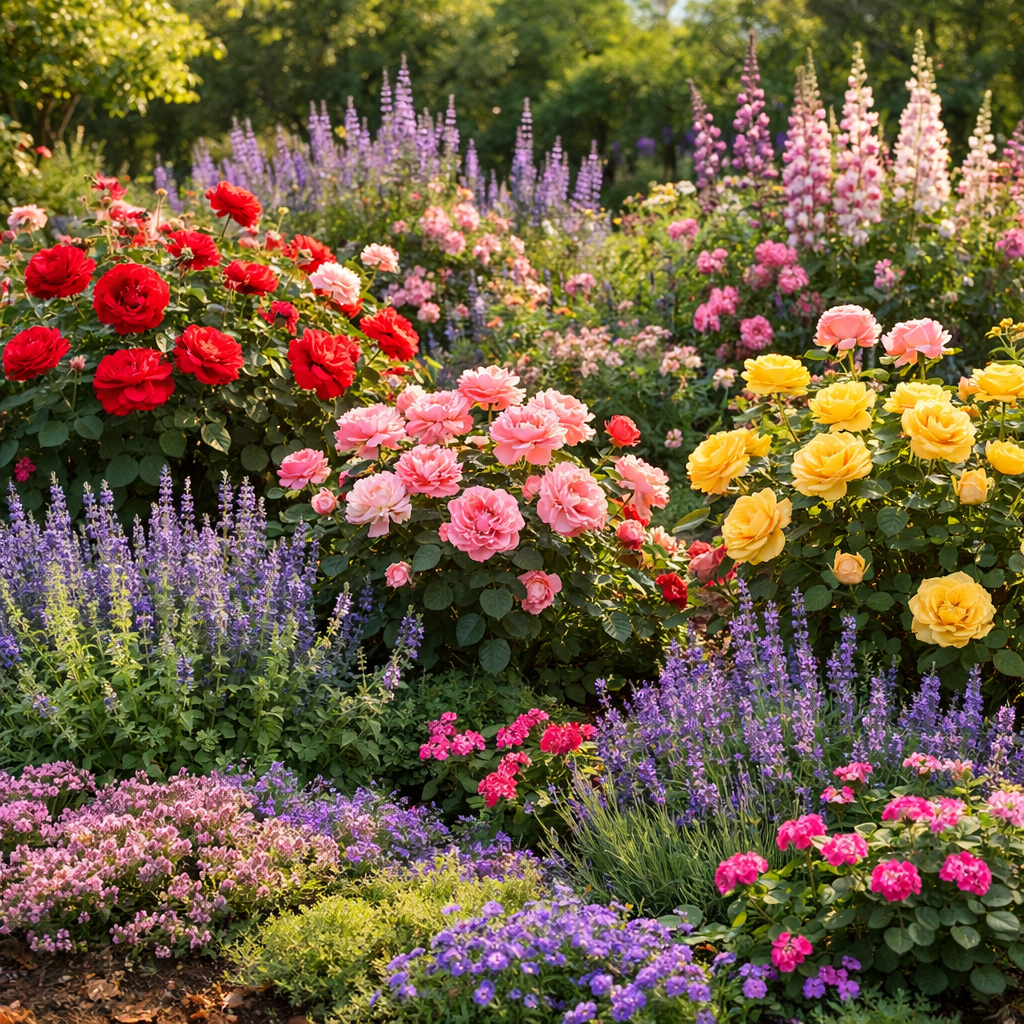
Lavender, catmint, and alliums serve as fragrant sentinels. Their volatile oils deter aphids and other soft-bodied pests while simultaneously attracting pollinators.
These plants thrive in similar sun and soil conditions, making them ideal companions in SEQ gardens.
Flowering Perennials
Plants such as salvia, geranium, and foxglove introduce verticality and contrast. They soften the structure of rose bushes and extend seasonal interest.
They also attract bees and beneficial insects, enriching biodiversity and encouraging pollination cycles.
Groundcovers and Soil Builders
Creeping thyme, lady’s mantle, and low-growing geraniums act as living mulch. They stabilise soil moisture, suppress weeds, and moderate temperature fluctuations.
Deep-rooted companions such as comfrey draw nutrients upward, enriching the soil profile available to roses.
Designing a Balanced Companion Planting Scheme
Harmony in the garden requires restraint. Roses demand sunlight and airflow. Companion plants must support—not suffocate.
Key principles include:
- Spacing with intention: Avoid overcrowding to maintain airflow and reduce fungal risk.
- Root compatibility: Choose plants with non-invasive root systems to prevent competition.
- Layered planting: Combine vertical accents, mid-height fillers, and low groundcovers to create visual depth without congestion.
A well-designed planting scheme feels effortless. Yet, it is meticulously orchestrated.
Soil Health and Microclimate Benefits
Companion planting enhances soil vitality in profound ways. Organic matter increases. Microbial life flourishes. Moisture retention improves.
Some plants fix nitrogen. Others act as living mulch. Together, they create a microclimate—a buffered environment where extremes of heat and dryness are softened.
This is especially critical in subtropical gardens, where intense sun and episodic rainfall can destabilise soil conditions.
Maintenance and Care Strategies
A companion-planted rose garden requires attentive stewardship.
- Water deeply but selectively: Ensure all plants receive adequate moisture without over-saturating the soil.
- Fertilise generously: Roses are heavy feeders, and companion plants share the same nutrient pool.
- Observe continuously: Watch for signs of imbalance—overgrowth, nutrient deficiency, or pest outbreaks.
Adjustment is constant. The garden evolves, and so must the gardener.
Common Mistakes to Avoid
Even the most enthusiastic planting can falter without foresight.
- Overcrowding leads to poor airflow and disease proliferation.
- Incompatible pairings create competition rather than cooperation.
- Ignoring growth habits results in dominant plants overshadowing roses.
Balance is the guiding principle. Every addition should serve the whole.
Conclusion
Companion planting with roses transforms the garden into a living ecosystem—resilient, diverse, and profoundly beautiful. It is a practice rooted in observation, guided by nature, and refined through experience.
In subtropical gardens, where conditions can be both generous and unforgiving, these plant partnerships offer stability. They soften extremes. They invite life.
And in return, the roses respond—with vigour, with fragrance, with blooms that feel almost inevitable.