Best Practices for Caring for Rockery Plants in Queensland's Heat
 Trevor Dixon
Introduction
Queensland's climate offers gardeners remarkable opportunities. Brilliant sunshine, extended growing seasons, and mild winters encourage an extraordinary diversity of plants to flourish. Yet these same conditions can become unforgiving when summer arrives with relentless heat, scorching sunlight, and prolonged dry periods.
Rockery gardens, by their very nature, intensify these conditions. Stone absorbs solar radiation throughout the day and slowly releases stored warmth well into the evening, creating a unique microclimate around surrounding plants. When designed intelligently and maintained carefully, however, these landscapes become remarkably resilient. They combine rugged beauty with exceptional durability, thriving even when temperatures soar.
Understanding how to care for rockery plants during Queensland's hottest months is the key to maintaining a vibrant, healthy landscape throughout the year.
Understanding Queensland's Climate
Heatwaves, Humidity, and Seasonal Rainfall
Queensland experiences a distinctly subtropical climate across much of the state. Long summers bring intense sunshine, elevated humidity, sudden thunderstorms, and occasional periods of prolonged drought.
These dramatic shifts require plants capable of adapting quickly. One week may deliver torrential rain, while the next brings cloudless skies and temperatures exceeding 35°C.
Successful rockery gardens embrace these natural rhythms rather than fighting them.
How Extreme Weather Affects Rockery Plants
Heat influences every aspect of plant health.
High temperatures accelerate evaporation from both soil and foliage. Leaves lose moisture rapidly through transpiration, while shallow soils surrounding rocks can dry surprisingly quickly.
Without proper preparation, plants may experience:
- Leaf scorch
- Wilting
- Flower drop
- Reduced growth
- Root stress
- Premature dormancy
Understanding these responses allows gardeners to intervene before permanent damage occurs.
Selecting Heat-Resilient Rockery Plants
Choosing appropriate species is the foundation of long-term success.
Native Plants Adapted to Queensland Conditions
Native plants have evolved alongside Queensland's climate for thousands of years.
Excellent choices include:
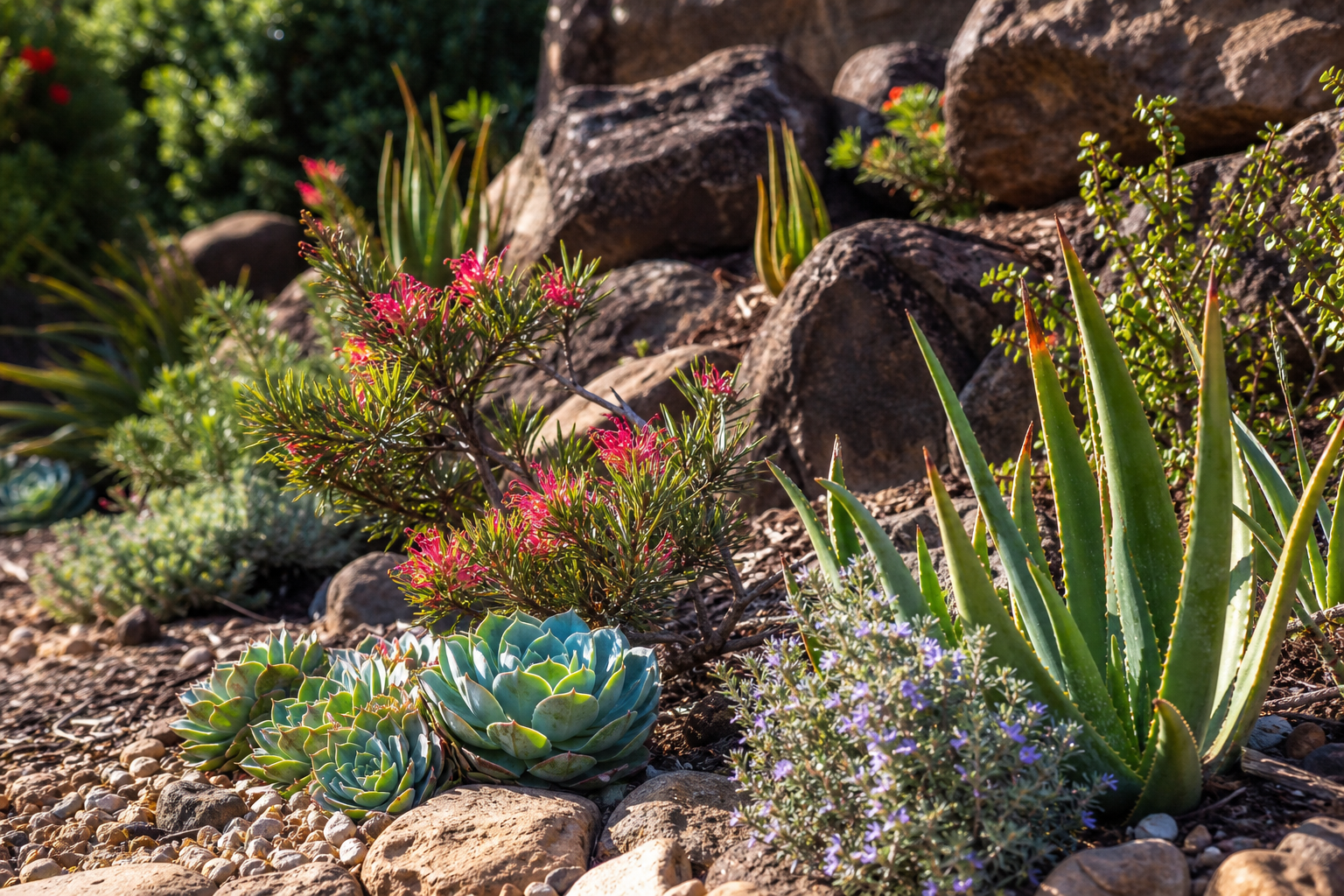
- Grevillea species
- Westringia fruticosa
- Lomandra longifolia
- Scaevola aemula
- Myoporum parvifolium
- Brachyscome multifida
- Dianella caerulea
These plants combine drought tolerance with exceptional ornamental value.
Succulents and Drought Specialists
Succulents naturally store water within fleshy leaves and stems.
Ideal selections include:
- Aloe
- Agave
- Echeveria
- Sedum
- Crassula
- Kalanchoe
Their sculptural forms also complement rugged stone beautifully.
Plant According to Sun Exposure
Not every rockery receives identical sunlight.
Reserve full-sun positions for hardy drought specialists.
Place moisture-loving plants where large rocks cast afternoon shade, creating cooler microclimates during extreme heat.
Building a Heat-Resistant Rockery
Choose Rocks Carefully
Larger rocks moderate temperature fluctuations better than smaller stones.
Deeply embedded boulders absorb heat gradually while protecting root systems beneath them.
Using locally sourced stone also creates a landscape that feels naturally integrated into its surroundings.
Improve Soil Structure
Healthy soil functions like a sponge.
Blend:
- Compost
- Coarse sand
- Fine gravel
- Organic matter
This combination encourages excellent drainage while retaining sufficient moisture during prolonged dry periods.
Create Microclimates
Microclimates dramatically improve plant survival.
Position rocks to:
- Cast afternoon shade
- Shield plants from drying winds
- Slow evaporation
- Protect delicate foliage
Even subtle variations in elevation create noticeable differences in growing conditions.
Watering Strategies That Work
Deep Watering Wins Every Time
Frequent shallow watering encourages weak surface roots.
Deep irrigation encourages roots to explore cooler soil layers where moisture remains available long after the surface has dried.
Strong roots create resilient plants.
Water Early
Early morning remains the ideal watering time.
Cooler temperatures reduce evaporation while allowing foliage to dry quickly after sunrise, lowering disease risk.
Avoid watering during the hottest part of the day when much of the moisture evaporates before reaching the root zone.
Install Efficient Irrigation
Drip irrigation delivers water precisely where it's needed.
Benefits include:
- Reduced evaporation
- Lower water consumption
- Minimal weed growth
- Consistent soil moisture
- Healthier root systems
For rockeries, few irrigation methods perform better.
Protecting Plants During Heatwaves
Mulch Is Essential
Mulch acts as insulation.
Organic mulch or decorative gravel:
- Reduces evaporation
- Suppresses weeds
- Moderates soil temperature
- Prevents erosion
Apply mulch evenly while keeping it away from plant stems.
Provide Temporary Shade
Even sun-loving plants appreciate relief during prolonged heatwaves.
Temporary shade cloth supported above vulnerable plants reduces leaf temperature without restricting airflow.
Protection during only a few critical days can prevent lasting damage.
Recognise Heat Stress Early
Watch for:
- Drooping leaves
- Bleached foliage
- Brown leaf margins
- Premature flower drop
- Curling leaves
Prompt intervention often allows plants to recover quickly.
Feeding and Maintaining Healthy Plants
Fertilise Wisely
Heavy fertilising during extreme heat encourages soft growth that dehydrates rapidly.
Instead:
- Apply slow-release fertiliser in spring.
- Supplement with seaweed-based soil conditioners during summer.
- Avoid high-nitrogen fertilisers during heatwaves.
Healthy roots outperform excessive foliage.
Prune Strategically
Remove:
- Dead branches
- Damaged foliage
- Spent flowers
Avoid severe pruning during peak summer, as exposed stems become vulnerable to sunburn.
Keep Weeds Under Control
Weeds compete aggressively for moisture.
Regular hand weeding prevents unnecessary competition while preserving valuable soil water for desirable plants.
Common Mistakes to Avoid
Several seemingly logical practices often create more problems than they solve.
Overwatering
Constantly wet soil suffocates roots and encourages fungal disease.
Poor Plant Selection
Plants suited to cool climates often struggle under Queensland's relentless sunshine.
Always prioritise climate-appropriate species.
Neglecting Soil Improvement
Healthy soil remains the hidden engine behind every successful rockery.
Ignoring it inevitably limits plant performance.
Conclusion
Queensland's summer heat need not be the enemy of a flourishing rockery. With thoughtful planning, intelligent plant selection, efficient watering practices, and careful seasonal maintenance, even the hottest months become simply another chapter in your garden's annual rhythm.
Every stone contributes to the landscape's structure. Every plant adds movement, texture, and life. Together they create a resilient ecosystem capable of withstanding intense sunshine while delivering beauty throughout the year.
A well-maintained rockery does more than survive Queensland's heat—it embraces it. Over time, plants mature, roots deepen, and the garden develops an enduring character that grows richer with every passing season, proving that resilience and elegance can coexist even under the brightest summer sun.