How to Care for Perennials in Queensland’s Subtropical Climate
 Trevor Dixon
Introduction
Queensland’s subtropical climate is both generous and demanding. It offers warmth, extended growing seasons, and abundant life. Yet it also delivers humidity, intense heat, and unpredictable rainfall. For perennials, this environment can either be a paradise or a trial.
With the right care, however, these enduring plants flourish magnificently. They root deeper, grow stronger, and reward the gardener with years of beauty. The secret lies not in constant intervention, but in understanding the rhythm of the climate and working with it.
Understanding Queensland’s Subtropical Climate
The subtropics are defined by contrasts. Summers are warm, often humid, and prone to heavy rainfall. Winters are mild but can bring dry spells and occasional cold snaps.
Gardens within this region are rarely uniform. One corner may bask in full sun, while another remains shaded and moist. These microclimates matter. Even neighbouring gardens can behave differently depending on soil, orientation, and shelter. Adapting plant care to these subtle variations ensures long-term success.
Choosing the Right Perennials for Success
The most effective care begins before planting. Choosing perennials suited to Queensland’s conditions reduces maintenance dramatically.
Native plants often excel because they are already adapted to local soils and climate patterns. However, many well-chosen exotics also thrive when matched carefully to conditions. The key is compatibility—sun-loving plants in sunny areas, shade-tolerant varieties under canopy, and drought-tolerant species where water is limited.
A well-selected perennial does not struggle. It settles, adapts, and grows with quiet confidence.
Soil Preparation: The Foundation of Healthy Perennials
Healthy soil is the quiet engine of a thriving garden. Without it, even the most resilient plants falter.
In subtropical Queensland, soils can vary widely. Some are sandy and free-draining. Others are dense and clay-heavy. Both require improvement. Incorporating compost enriches soil with nutrients and enhances its ability to retain water while still draining effectively.
This balance—moisture retention without waterlogging—is essential. Roots must breathe as much as they drink.
Watering Strategies for Subtropical Conditions
Watering is both an art and a science in the subtropics. Timing matters. Technique matters.
Watering early in the morning or late in the afternoon reduces evaporation and ensures moisture penetrates deeply into the soil.
Newly planted perennials require consistent moisture as they establish. Once settled, however, many develop deeper root systems and become more self-sufficient. Less frequent but deeper watering encourages resilience and stronger growth.
Mulching and Moisture Retention Techniques
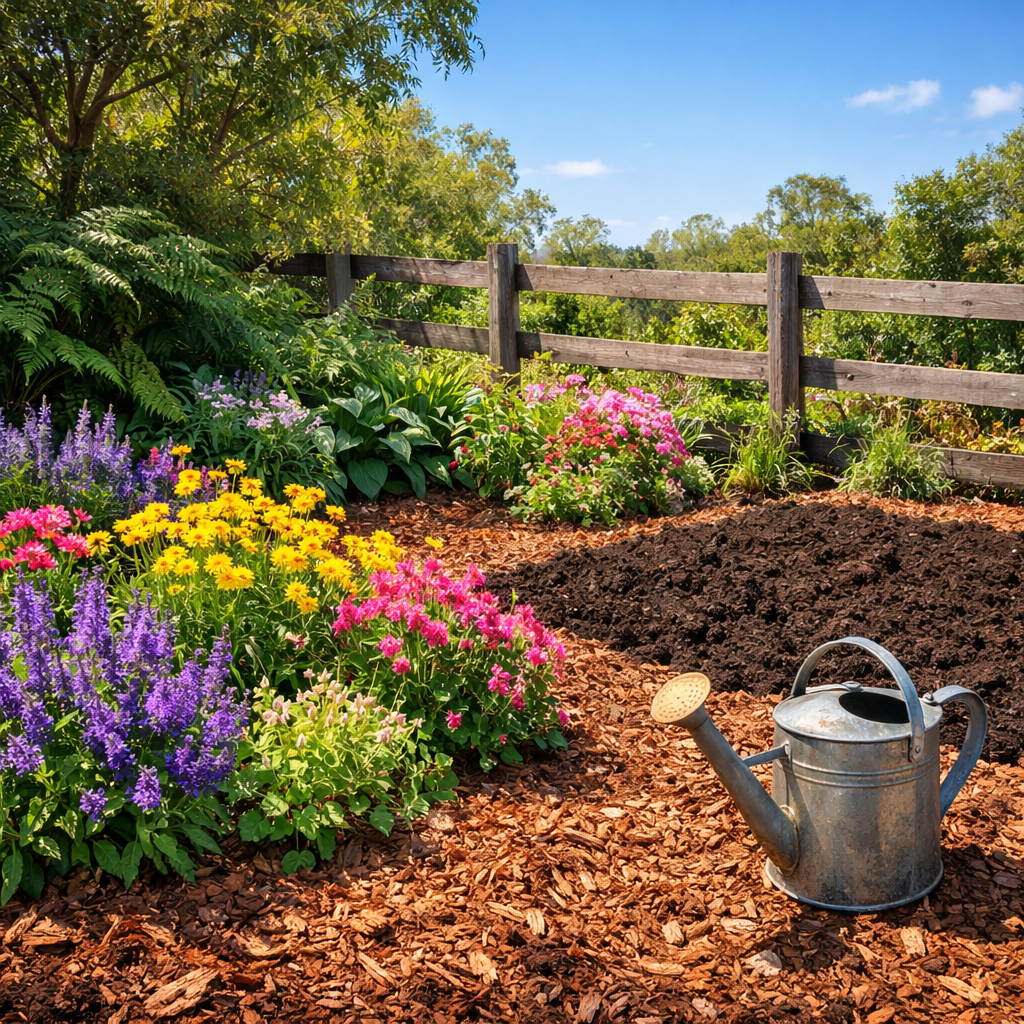
Mulch is one of the most powerful tools in subtropical gardening. It is simple. It is effective. And it transforms soil conditions almost instantly.
A thick layer of mulch retains moisture, cools the soil, and suppresses weeds. It also gradually enriches the soil as it breaks down, feeding the ecosystem beneath the surface.
Organic mulches such as bark, compost, or straw are particularly beneficial. They mimic natural forest floors, creating a stable and nourishing environment for roots.
Seasonal Care and Maintenance
Summer Care
Summer brings intensity. Heat, humidity, and sudden downpours test the resilience of perennials. During this time, maintaining consistent moisture and protecting soil with mulch becomes essential.
Winter Care
Winter in Queensland is gentler but still demands attention. Removing dead or diseased growth prevents pests from taking hold. Pruning encourages fresh growth when warmer weather returns.
Adding compost during this period replenishes nutrients and prepares plants for the next growth cycle.
Managing Pests and Diseases
Humidity can invite fungal issues. Good airflow, careful watering practices, and regular inspection help prevent problems before they escalate. A proactive approach keeps the garden healthy and balanced.
Pruning, Feeding, and Long-Term Health
Pruning is not merely aesthetic—it is restorative. Removing spent flowers and damaged foliage redirects energy into new growth. It also maintains the plant’s form and vitality.
Feeding should be measured. Over-fertilising can weaken plants, while organic matter provides a steady, natural nutrient supply. Compost, mulch, and occasional slow-release fertilisers maintain equilibrium in the soil.
Perennials, once established, prefer consistency over excess.
Conclusion
Caring for perennials in Queensland’s subtropical climate is a practice of observation and adaptation. It is about understanding the land, respecting its rhythms, and responding with thoughtful care.
When nurtured correctly, perennials become more than plants. They become the backbone of a garden—resilient, enduring, and quietly spectacular.
Work with the climate, not against it. And the garden will not only survive—it will thrive.