Water-Wise Gardening in SEQ: Tips for Saving Water
 Trevor Dixon
Introduction: Why Water-Wise Gardening Matters
South East Queensland enjoys a climate that encourages spectacular gardens. Warm temperatures, abundant sunshine and seasonal rainfall create ideal growing conditions for an enormous variety of plants. Yet this same climate also presents challenges. Dry periods, heatwaves and water restrictions remind gardeners that every drop of water is valuable.
Water-wise gardening is not about sacrificing beauty. It is about designing landscapes that flourish while using water efficiently. A thoughtfully planned garden can remain vibrant, colourful and productive even during extended dry spells. By working with nature instead of against it, you can create an outdoor space that is both sustainable and rewarding.
Understanding SEQ's Climate
Gardening success begins with understanding the environment.
South East Queensland experiences hot, humid summers with intense rainfall events, followed by milder, drier winters. While annual rainfall can be generous, it often arrives in short bursts rather than steady, predictable patterns. This means gardens may experience both flooding and drought within the same year.
Successful gardeners anticipate these seasonal fluctuations. They build healthy soils, choose appropriate plants and develop irrigation strategies that maximise every litre of water.
Rather than fighting the climate, they embrace it.
Building Healthy Soil for Better Water Retention
Organic Matter Creates Living Soil
Healthy soil behaves like a sponge.
Adding compost, aged manure and decomposed organic matter improves the soil's ability to absorb and retain moisture. Rich soil stores water around plant roots, making it available during warmer periods while also improving aeration and nutrient availability.
Mulch Is Nature's Protective Blanket
Mulch performs several valuable functions simultaneously.
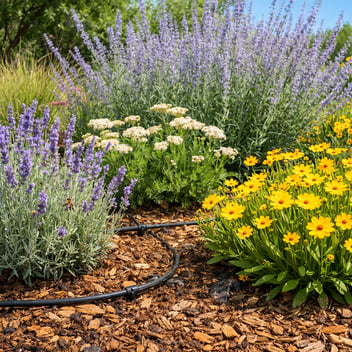
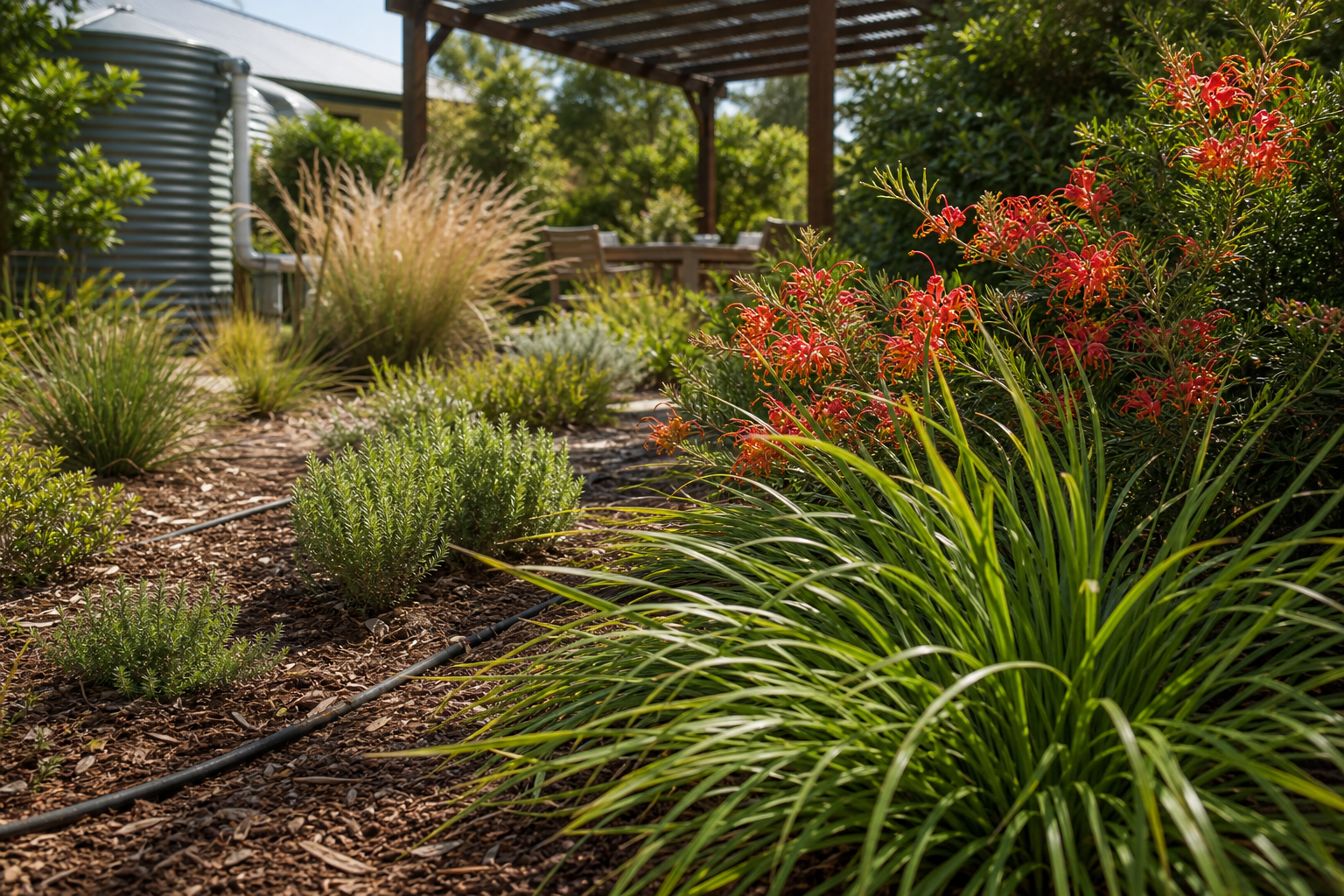
It reduces evaporation, suppresses weeds, moderates soil temperature and slowly enriches the soil as it decomposes. Organic mulches such as sugar cane, bark, straw or leaf litter are particularly beneficial in South East Queensland's warm climate.
A generous layer of mulch can dramatically reduce watering requirements throughout summer.
Protect Soil Structure
Avoid working soil when it is excessively wet or dry. Compacted soil sheds water instead of absorbing it, leaving plants stressed even after rainfall.
Healthy soil breathes.
Choosing Water-Efficient Plants
Native Plants
Australian native plants have evolved to cope with challenging conditions. Many tolerate drought, poor soils and intense sunshine while providing valuable habitat for native wildlife.
Species such as Grevillea, Lomandra, Callistemon and Banksia combine resilience with outstanding ornamental value.
Drought-Tolerant Ornamentals
Many flowering shrubs and perennials require surprisingly little water once established. Lavender, Salvia, Agapanthus and ornamental grasses provide colour and texture while thriving under reduced irrigation.
Productive Edible Gardens
Water-wise gardening does not mean abandoning vegetables.
Herbs such as rosemary, oregano and thyme perform exceptionally well with modest watering. Sweet potatoes, chillies and certain bean varieties also cope well in warm climates when planted appropriately.
Choosing seasonal crops significantly reduces irrigation demands.
Smarter Irrigation Techniques
Water Deeply
Frequent shallow watering encourages weak surface roots.
Deep, infrequent watering promotes stronger root systems capable of accessing moisture deeper within the soil profile. These plants become significantly more resilient during dry periods.
Install Efficient Irrigation
Drip irrigation and soaker hoses deliver water precisely where plants need it most.
Unlike overhead sprinklers, these systems minimise evaporation, reduce runoff and decrease the likelihood of fungal diseases developing on foliage.
Water at the Right Time
Early morning remains the ideal watering window.
Cooler temperatures allow moisture to penetrate the soil before evaporation accelerates. Evening watering may also be suitable but can increase disease risk if foliage remains damp overnight.
Timing matters almost as much as quantity.
Designing a Water-Wise Landscape
Group Plants by Water Needs
Plants with similar moisture requirements should be located together.
This zoning allows irrigation to be targeted efficiently without overwatering drought-tolerant species or underwatering moisture-loving plants.
Create Natural Shade
Trees, pergolas and taller shrubs reduce soil temperatures while protecting delicate plants from harsh afternoon sun.
Lower temperatures translate directly into lower water consumption.
Use Groundcovers
Groundcovers provide more than aesthetic appeal.
They reduce exposed soil, suppress weeds and minimise evaporation while helping moderate surface temperatures throughout the year.
Harvesting and Reusing Water
Rainwater Tanks
Rainwater harvesting is one of the most effective ways to reduce reliance on mains water.
Even modest rainfall can replenish tanks that provide irrigation throughout dry periods.
Capture Roof Runoff
Directing roof water into storage systems ensures valuable rainfall is not wasted.
Well-designed collection systems can dramatically increase available irrigation supplies.
Greywater Opportunities
Appropriately managed greywater from household activities can supplement garden irrigation where regulations permit.
Used responsibly, it becomes another valuable resource in a sustainable landscape.
Maintaining a Water-Wise Garden
Regular observation is essential.
Check mulch depth after storms. Monitor irrigation systems for leaks. Remove weeds before they compete for precious moisture.
Adjust watering schedules as seasons change. Gardens require less irrigation during cooler months than they do during the peak of summer.
Healthy gardens evolve continually.
Attentive gardeners evolve with them.
Common Water-Wasting Mistakes
One of the greatest misconceptions is that more water equals healthier plants.
Overwatering often leads to shallow roots, nutrient leaching and root diseases.
Poor plant selection creates unnecessary maintenance. Choosing water-hungry species for exposed, sunny positions inevitably increases irrigation demands.
Ignoring soil improvement also reduces efficiency. Even the most sophisticated irrigation system cannot compensate for poor soil structure.
Successful water-wise gardening begins below ground.
Conclusion: Every Drop Counts
Water is one of the garden's most precious resources.
By improving soil health, selecting climate-appropriate plants, using efficient irrigation methods and embracing thoughtful garden design, it is possible to create landscapes that remain beautiful throughout the seasons while conserving significant amounts of water.
The rewards extend beyond lower water bills.
Healthier plants. Richer soils. Greater biodiversity. Increased resilience during drought.
Water-wise gardening is not simply about using less water. It is about creating gardens that thrive because every drop is used wisely.