Tropical-Inspired Rockeries: Plants to Achieve the Look
 Trevor Dixon
Introduction
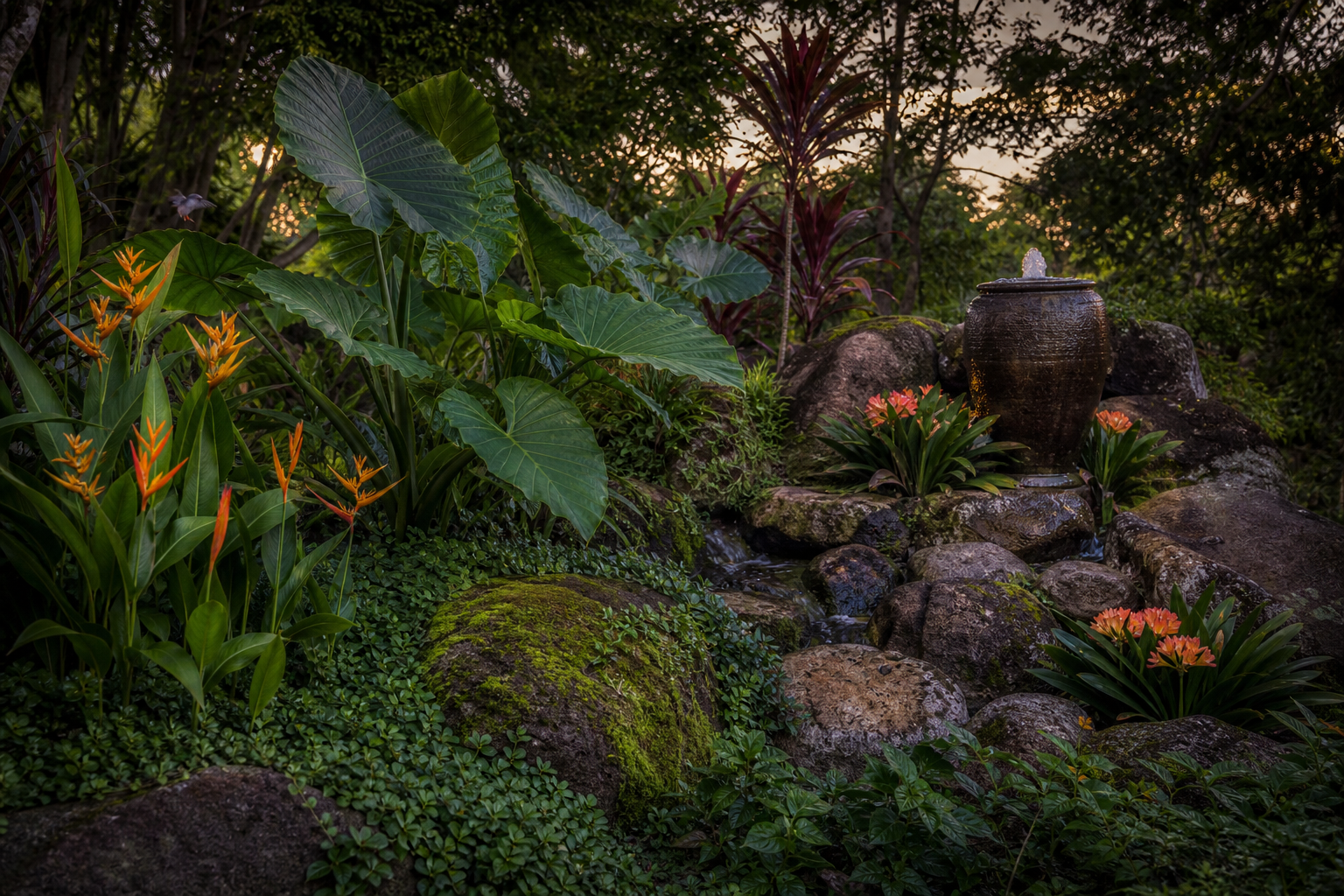
Imagine stepping into your backyard and feeling as though you've wandered into a secluded tropical retreat. Towering foliage arches overhead. Vibrant flowers emerge from between weathered stone. Gentle breezes ripple through lush leaves while birds dart from bloom to bloom. This is the allure of a tropical-inspired rockery.
South East Queensland's warm subtropical climate makes this style remarkably achievable. With thoughtful plant selection and careful design, a rockery can evolve from a simple collection of rocks into an immersive landscape overflowing with exotic character while remaining surprisingly practical.
Unlike traditional alpine-style rockeries, tropical rockeries celebrate abundance. They embrace texture over symmetry, foliage over flowers, and organic movement over rigid structure.
What Defines a Tropical Rockery?
Bold Foliage Creates the Drama
The essence of tropical design lies in foliage. Massive leaves, glossy surfaces, intricate veins and dramatic silhouettes immediately evoke images of rainforest landscapes.
Instead of relying solely on flowering plants, tropical rockeries use foliage as living sculpture.
Wide leaves contrast with slender grasses.
Deep emerald greens sit beside lime, bronze and burgundy foliage.
Every plant contributes a unique architectural element.
The result is layered complexity that changes throughout the day as sunlight filters through the canopy.
Natural Stone Completes the Illusion
Stone provides permanence while plants provide movement.
Large weathered boulders appear as though they've rested in place for centuries. Moss, lichens and creeping groundcovers soften their edges until the boundary between stone and vegetation disappears.
Rather than neat arrangements, rocks should appear naturally deposited by time itself.
Imperfection creates authenticity.
Planning Your Tropical Rockery
Choose a Protected Position
Although many tropical plants love sunshine, most appreciate protection from harsh afternoon heat and drying winds.
Ideal locations include:
- Beside patios
- Around swimming pools
- Beneath lightly filtered tree canopies
- Adjacent to retaining walls
- Courtyards with morning sun
Humidity naturally lingers in these locations, encouraging luxuriant growth.
Work With the Land
Avoid forcing symmetry.
Allow pathways to curve.
Build gentle mounds.
Create hidden planting pockets between rocks.
These subtle changes mimic nature and make even small gardens feel expansive.
The Best Plants for a Tropical-Inspired Rockery
Architectural Feature Plants
These become the backbone of the design.
Alocasia macrorrhizos (Giant Elephant Ear)
Huge heart-shaped leaves provide instant tropical impact.
Its bold foliage contrasts beautifully against rugged stone.
Alcantarea imperialis
Although technically a bromeliad, its enormous symmetrical rosette creates one of the most dramatic focal points possible.
Unlike many bromeliads, its architectural form remains attractive for years before flowering.
Cordyline rubra
Rich burgundy foliage introduces warm colour while adding height without becoming overwhelming.
Philodendron xanadu
Deeply divided glossy leaves create movement and texture throughout the year.
Flowering Tropical Beauties
Flowers become unexpected jewels hidden amongst foliage.
Heliconia psittacorum
Brilliant orange, yellow and red bracts provide months of colour while attracting nectar-feeding birds.
Costus woodsonii
Known as Red Button Ginger, this compact tropical plant flowers repeatedly through the warmer months.
Clivia miniata
Perfect for partially shaded rockeries, producing spectacular orange blooms in winter and spring.
Peace Lily
Elegant white flowers brighten darker corners while lush foliage softens hard stone.
Groundcovers That Complete the Picture
Groundcovers tie every element together.
Excellent choices include:
- Native Violet
- Baby Tears
- Mondo Grass
- Creeping Peperomia
- Dichondra repens
These spill naturally over rock edges, disguising harsh transitions.
Accent Plants
Every composition needs punctuation.
Consider:
- Bromeliads
- Crotons
- Caladiums
- Coleus
- Bird's Nest Ferns
Their striking colours inject excitement without overwhelming the design.
Creating the Perfect Growing Environment
Prepare Rich, Free-Draining Soil
Despite their lush appearance, few tropical plants tolerate permanently wet roots.
Blend:
- Quality garden soil
- Compost
- Coarse sand
- Aged organic matter
- Fine pine bark
This combination retains moisture while allowing excess water to escape quickly.
Mulch Generously
Organic mulch recreates the rainforest floor. It regulates soil temperature. It conserves moisture. It feeds beneficial microorganisms. As it decomposes, soil quality continually improves.
Styling Your Tropical Rockery
Layer Everything
Professional tropical gardens rarely rely on isolated specimens. Instead they build layers. Tall plants create the backdrop. Medium shrubs provide volume. Groundcovers weave between rocks. Trailing plants spill downward. Every level contributes to the overall composition.
Add Water
Nothing completes a tropical atmosphere like moving water A simple recirculating stream. A bubbling urn. A small pond. Even a stone bowl overflowing gently into pebbles introduces sound, movement and humidity.
Illuminate the Landscape
Low-voltage garden lighting transforms tropical rockeries after sunset. Soft uplighting beneath foliage creates dramatic shadows. Warm lighting grazing stone surfaces enhances texture. The garden becomes theatrical.
Maintaining a Tropical Rockery
Maintenance is refreshingly straightforward. Feed with slow-release fertiliser during spring and summer. Remove damaged foliage promptly. Trim plants to preserve airflow. Inspect regularly for scale insects, mealybugs and caterpillars. Replace organic mulch annually. Deep watering during prolonged dry periods encourages strong root development while preserving lush foliage.
Why Tropical Rockeries Thrive in South East Queensland
South East Queensland provides near-perfect growing conditions. Warm temperatures extend the growing season. Reliable summer rainfall supports vigorous growth. Mild winters allow many tropical plants to remain attractive year-round. Once established, many tropical species require surprisingly little intervention. The dense foliage also creates valuable habitat for native birds, beneficial insects, frogs and small reptiles, increasing biodiversity throughout the garden.
Conclusion
A tropical-inspired rockery is more than a landscape feature—it is an immersive experience. It blends the enduring strength of natural stone with the exuberance of lush foliage, creating a sanctuary that feels worlds away from everyday life.
By combining bold architectural plants, richly textured groundcovers, carefully positioned boulders and thoughtful layering, you can craft a garden that captures the spirit of the rainforest while remaining perfectly suited to South East Queensland's climate.
The result is timeless. Every season adds another layer of maturity. Every year the plants soften the stone a little more. And before long, what began as a collection of rocks and plants evolves into a thriving tropical oasis that rewards every visit with fresh colour, soothing tranquillity and the unmistakable feeling of nature at its most captivating.