Top Annuals for Shaded Spots in South East Queensland
 Trevor Dixon
Introduction
Not every garden basks in uninterrupted sunlight. Some spaces linger beneath tree canopies or rest beside walls where light softens into a gentle glow. These shaded pockets are often underestimated. Yet, with the right selection of annuals, they can become some of the most enchanting corners of a South East Queensland garden. Quiet. Cool. Lush with life.
Understanding Shade in SEQ Gardens
Shade is not a singular condition. It varies—subtly, dramatically.
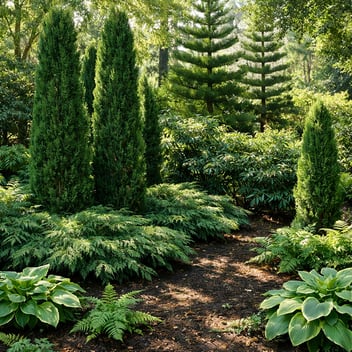
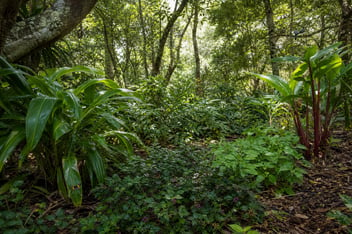
- Dappled Shade filters sunlight through foliage, creating a shifting mosaic of light and shadow.
- Partial Shade offers a few hours of gentle sun, often in the morning.
- Full Shade receives minimal direct light, relying instead on ambient brightness.
In SEQ, humidity and warmth amplify these conditions. Shaded areas often retain moisture longer, creating a microclimate that is cooler, but also potentially more prone to fungal challenges. Understanding this interplay is essential.
Key Traits of Annuals That Thrive in Shade
Not all annuals are created equal. Shade-tolerant varieties share distinct characteristics:
- Low-Light Adaptability — the ability to photosynthesise efficiently without full sun exposure
- Humidity Resilience — resistance to mildew and rot in damp environments
- Extended Blooming or Foliage Appeal — either consistent flowering or visually striking leaves
These plants do not merely survive in shade. They flourish.
Top Annuals for Shaded Spots in SEQ
Impatiens and New Guinea Impatiens
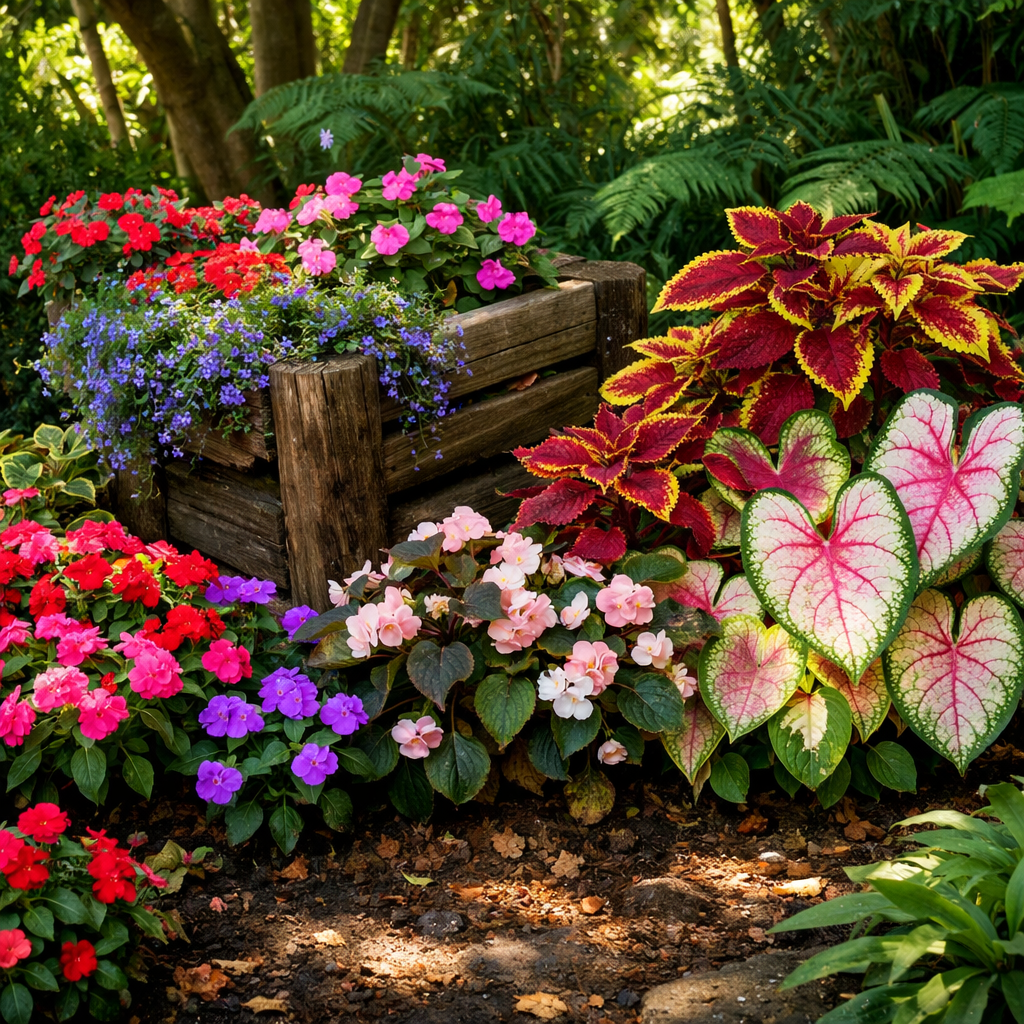
A cornerstone of shade gardening. These plants offer vivid, almost luminous blooms in reds, pinks, purples and whites. They thrive in humid, sheltered environments and provide continuous colour from spring through summer.
Begonias
Elegant. Versatile. Begonias deliver both floral beauty and textured foliage. They excel in shaded positions and produce long-lasting colour with minimal effort, making them ideal for both garden beds and containers.
Lobelia and Torenia
Delicate yet resilient. Lobelia offers cascading blues and purples, perfect for edging or hanging baskets. Torenia, often called wishbone flower, blooms generously even in deeper shade, bringing softness and charm.
Coleus
Flowers are not always necessary. Coleus captivates through foliage—bold, intricate, almost painterly leaves in crimson, lime, gold and burgundy. It thrives in shade and injects vibrancy where blooms may struggle.
Caladium
For a tropical aesthetic, few plants compare. Caladiums feature large, heart-shaped leaves splashed with colour—white, pink, red, green. They adore humidity and transform shaded areas into lush sanctuaries.
Planting Techniques for Shaded Areas
Success begins beneath the surface.
- Soil Preparation
Enrich with compost and organic matter. Shade soils can become compacted and nutrient-poor. Good structure ensures root vitality. - Positioning
Even shade-loving plants benefit from indirect light. Place them where they receive filtered brightness rather than complete darkness. - Containers vs In-Ground
Containers offer control—over soil, drainage, and positioning. In-ground planting provides stability and long-term growth. A combination often yields the best result.
Maintenance Tips for Shade Gardens
Shade reduces evaporation, but it also introduces complexity.
- Watering
Less frequent than sunny areas. Always check soil moisture before watering to avoid saturation. - Feeding
Use balanced fertilisers sparingly. Excess nutrients can encourage foliage at the expense of flowers. - Pruning and Deadheading
Remove spent blooms and trim leggy growth. This encourages compact form and sustained flowering.
Designing a Lush Shade Garden
A shaded garden is an exercise in subtlety.
- Colour Layering
Bright tones—white, soft pink, pale blue—stand out in low light. Deeper hues add depth and drama. - Foliage Contrast
Combine broad leaves with fine textures. Mix glossy surfaces with matte finishes. Visual intrigue replaces reliance on flowers alone. - Height Variation
Use taller plants as a backdrop, mid-level bloomers for structure, and trailing varieties to soften edges.
Common Challenges in Shaded Gardens
- Fungal Diseases
High humidity and limited airflow can lead to mildew. Space plants well and prune regularly. - Reduced Flowering
Deep shade can limit blooms. Choose species known for shade performance rather than forcing sun-loving varieties to adapt. - Drainage Issues
Water lingers longer in shaded soil. Improve drainage with organic matter and avoid overwatering.
Conclusion
Shaded spaces are not limitations. They are opportunities. Quiet refuges where colour glows softly, foliage speaks boldly, and the garden reveals a different kind of beauty. With carefully chosen annuals, even the dimmest corner can become a verdant masterpiece—cool, calm, and irresistibly alive.