The Role of Weeds in South East Queensland’s Ecosystem
 Trevor Dixon
Introduction
In South East Queensland, where humidity lingers and growth rarely pauses, weeds emerge with astonishing vigour. They are often cast as adversaries. Yet beneath that reputation lies a more nuanced truth. Weeds are both disruptors and restorers — agents of chaos, and, paradoxically, of recovery.
Weeds as Pioneer Species
In freshly disturbed soil — whether from construction, storms, or human intervention — weeds are the first responders. They germinate rapidly, colonising bare ground with astonishing speed.
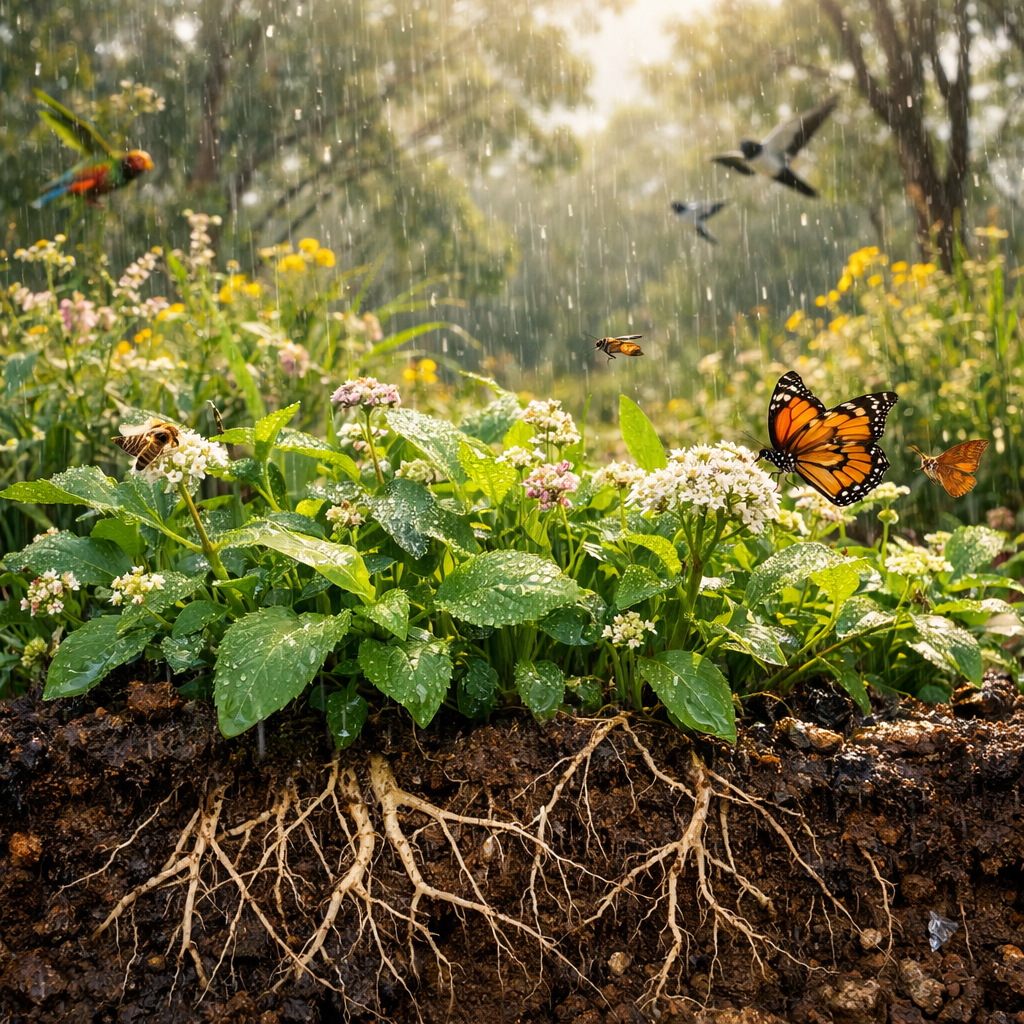
Their presence is not accidental. It is ecological choreography. These plants stabilise soil, anchoring it against erosion and reducing the loss of precious topsoil in exposed environments . In SEQ’s heavy rainfall events, this function becomes indispensable. Without them, soil would wash away before more delicate species could establish.
Short-lived, yes. But essential.
Soil Improvement and Nutrient Cycling
Many weeds act as subterranean miners. Their roots plunge deep into the soil, extracting nutrients inaccessible to shallow-rooted plants. These nutrients — calcium, nitrogen, trace minerals — are brought to the surface and redistributed when the plant dies back.
Some species improve soil structure. Others increase organic matter. Clover, for instance, fixes nitrogen through symbiotic bacteria, enriching the soil naturally .
Over time, this quiet work transforms depleted soils into fertile ground. A process unseen. Yet profound.
Weeds and Biodiversity
The relationship between weeds and biodiversity is not always antagonistic. In fact, emerging research suggests that in some ecosystems, weeds may correlate with increased plant diversity rather than diminished .
They provide refuge. Shelter. Food sources.
Insects, birds, and small fauna often utilise weed-dominated areas as transitional habitats. In degraded landscapes — common in urban and peri-urban SEQ — weeds can create ecological stepping stones, allowing native species to re-establish gradually.
A garden without weeds may look pristine. But it can also be ecologically sterile.
Weeds as Indicators of Environmental Conditions
Weeds are not random. They are diagnosticians of the soil beneath them.
Compacted soil invites certain species. Poor drainage invites others. Nutrient imbalances, pH extremes, and organic deficiencies each attract their own botanical signatures.
In this sense, weeds are not problems — they are messages.
Read correctly, they reveal what the soil lacks, what it holds, and what it resists. Ignore them, and the underlying issue persists.
Weeds in Pest and Pollinator Dynamics
Weeds play a subtle yet strategic role in garden ecology. Some attract pollinators, providing nectar during periods when cultivated plants are not flowering. Others draw pests away from valuable crops, acting as sacrificial hosts.
Additionally, they support beneficial insects — predators that regulate pest populations. This dynamic reduces reliance on chemical controls and fosters a more resilient ecosystem.
Nature prefers balance. Weeds often help restore it.
The Negative Impacts of Invasive Weeds
Not all weeds are benign. In fact, many invasive species in Australia pose serious ecological threats. They can outcompete native plants for water, nutrients, and sunlight, displacing entire communities and altering habitats .
Some modify fire regimes. Others disrupt waterways or introduce toxins. The economic and environmental costs are substantial, with weeds recognised as a major threat to biodiversity in Australia .
Distinction is critical. Not all weeds are equal.
Balancing Control and Coexistence
Effective garden stewardship in South East Queensland requires discernment. Total eradication is neither practical nor always beneficial. Instead, a calibrated approach is needed.
Remove aggressive, invasive species. Manage those that threaten crops or safety. But consider tolerating — even embracing — less harmful weeds that contribute to soil health and biodiversity.
This is not neglect. It is ecological intelligence.
Weeds are storytellers. They narrate the condition of the soil, the resilience of the ecosystem, and the history of disturbance and recovery. In South East Queensland, where life surges forward with relentless energy, understanding weeds transforms gardening from control into collaboration.