The Role of Soil Type in Designing an Irrigation System
 Trevor Dixon
Introduction
Beneath every flourishing garden lies an often-overlooked architect of success: soil. While many gardeners focus on plants, fertilizers, and irrigation hardware, the true determinant of watering efficiency rests below the surface. Soil dictates how quickly water infiltrates, how long it remains available to roots, and whether it nourishes or suffocates plant life. Ignoring soil type during irrigation design can lead to runoff, waterlogging, nutrient loss, and stressed vegetation.
An irrigation system should never be designed in isolation. It must work in harmony with the soil's natural characteristics. When soil and irrigation are aligned, landscapes become healthier, more resilient, and remarkably efficient.
Understanding the Major Soil Types
Sandy Soil and Rapid Drainage
Sandy soil is composed of large particles separated by equally large pore spaces. Water moves through it with astonishing speed. While this allows excellent drainage and aeration, it also means moisture disappears quickly from the root zone. Sandy soils often require shorter but more frequent irrigation cycles to maintain adequate hydration.
Plants growing in sandy conditions can experience drought stress surprisingly fast, even after a generous watering session.
Clay Soil and Water Retention Challenges
Clay soil sits at the opposite end of the spectrum. Its microscopic particles create tiny pore spaces that slow water movement dramatically. Water infiltrates slowly but remains in the soil for extended periods.
This characteristic can be both a blessing and a curse. While moisture retention reduces irrigation frequency, excessive watering often causes ponding, runoff, and root suffocation.
Silt Soil and Moisture Balance
Silty soils possess finer particles than sand but larger particles than clay. They retain moisture well while still allowing reasonable drainage. These soils are generally fertile and support vigorous plant growth. However, they can become compacted if overworked or excessively irrigated.
Loam Soil as the Ideal Growing Medium
Loam is frequently regarded as horticultural gold. A balanced combination of sand, silt, clay, and organic matter, it provides excellent water retention alongside efficient drainage. Loamy soils allow irrigation systems to operate with greater flexibility and fewer complications.
For many landscapes, loam offers the perfect equilibrium between hydration and aeration.
How Soil Influences Water Movement
Infiltration Rates and Water Absorption
Infiltration refers to how quickly water enters the soil surface. This property varies dramatically between soil types. Sandy soils may absorb water at rates exceeding one inch per hour, while heavy clay soils absorb water at a fraction of that rate.
If irrigation applies water faster than the soil can absorb it, runoff becomes inevitable.
Percolation and Root Zone Hydration
Once water enters the soil, it continues downward through a process called percolation. Effective irrigation ensures that water reaches the active root zone without draining beyond it. Excessive percolation wastes water and can leach nutrients away from plants.
The goal is precision. Enough water to satisfy roots. Not so much that it disappears into the subsoil.
Runoff, Ponding, and Water Waste
Poorly matched irrigation systems often create runoff on clay-heavy sites or fail to provide sufficient moisture in sandy landscapes. Water that pools or flows away contributes nothing to plant health and often carries valuable nutrients with it.
Efficient irrigation begins with understanding how the soil behaves after every drop lands.
Designing Irrigation Systems Around Soil Type
Matching Water Delivery Methods to Soil Conditions
Different soils require different approaches. Sandy soils often perform well with drip irrigation, which delivers consistent moisture without excessive loss. Clay soils benefit from slow application rates that allow water time to infiltrate.
Design should always reflect the soil's natural tendencies.
Adjusting Sprinkler Application Rates
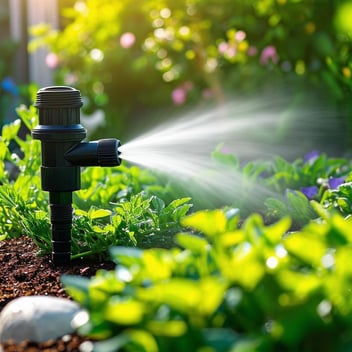
Sprinkler systems must be calibrated to the soil's infiltration rate. High-output sprinklers on clay soil frequently cause runoff because water arrives faster than the soil can absorb it. Proper nozzle selection and zoning help mitigate this issue.
A carefully tuned system can transform irrigation efficiency without increasing water consumption.
Choosing Drip Irrigation for Precision Watering
Drip irrigation excels in situations where precision matters. By delivering water slowly and directly to root zones, drip systems minimize evaporation and reduce runoff risks. This makes them especially valuable in clay soils where infiltration is limited.
Few irrigation methods offer such elegant control.
Irrigation Scheduling Based on Soil Characteristics
Watering Frequency for Different Soil Types
Sandy soils typically require more frequent watering because they store less moisture. Clay soils require longer intervals between irrigation events because they retain water for extended periods. Loam falls comfortably in between.
Applying a universal schedule across all soil types is one of the most common irrigation mistakes.
Determining Irrigation Duration
Frequency is only half the equation. Duration matters equally. Sandy soils may require shorter watering sessions to prevent deep percolation losses, while clay soils benefit from slow, extended watering cycles that encourage infiltration without runoff.
Balance is everything.
The Importance of Soil Moisture Monitoring
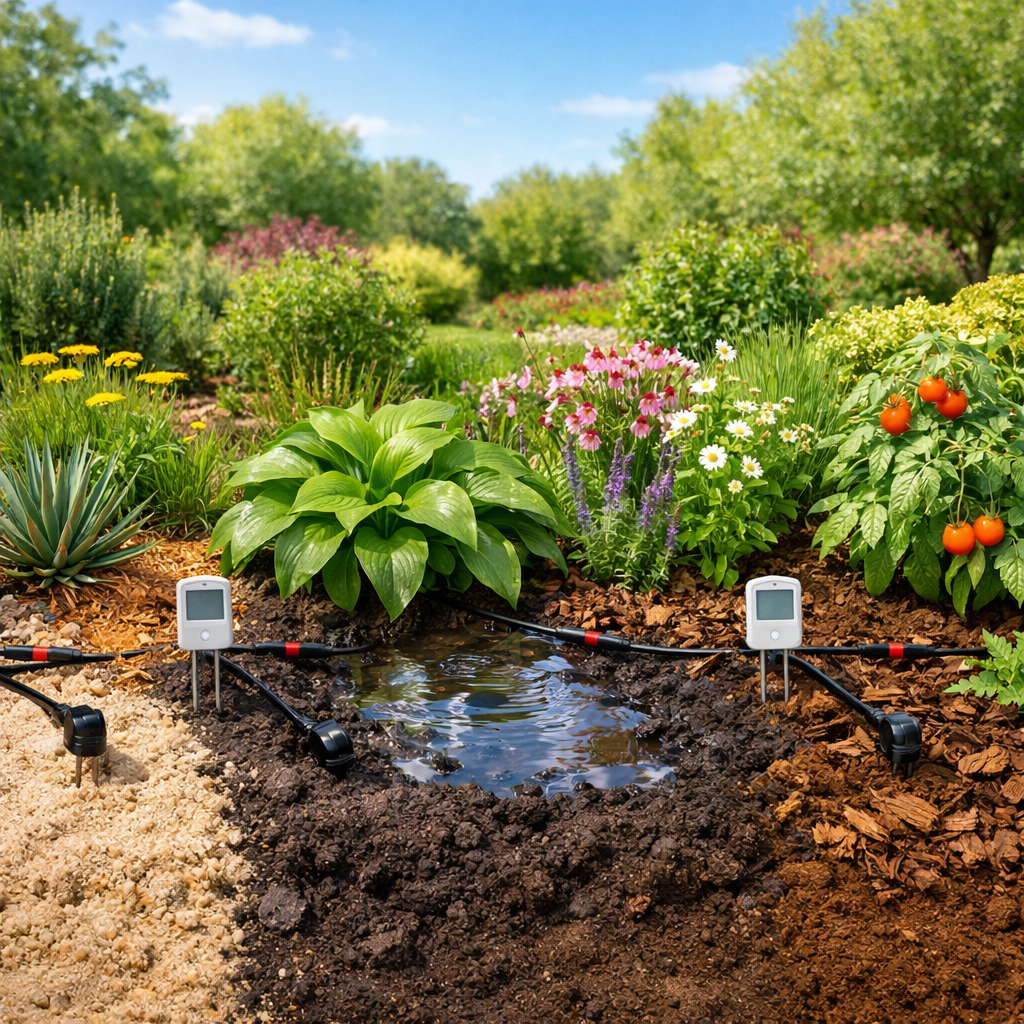
Modern irrigation scheduling increasingly relies on soil moisture measurements rather than rigid calendars. Monitoring moisture levels allows gardeners to irrigate based on actual conditions rather than assumptions.
Water when necessary. Not simply because the timer says so.
Improving Soil to Enhance Irrigation Performance
Organic Matter and Soil Structure
Incorporating compost and organic matter improves nearly every soil type. Sandy soils gain water-holding capacity, while clay soils become more porous and better drained.
Healthy soil reduces the burden placed on irrigation systems.
Mulching for Moisture Retention
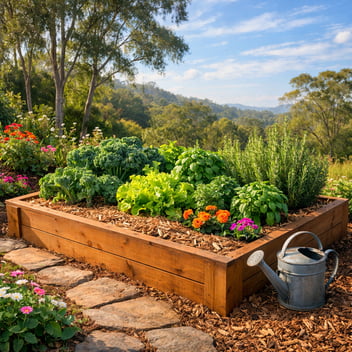
Mulch acts as a protective mantle across the soil surface. It reduces evaporation, stabilizes temperature fluctuations, and suppresses weeds that compete for water. In many gardens, mulch alone can dramatically reduce irrigation requirements.
Managing Compaction and Drainage Issues
Compacted soils resist infiltration regardless of texture. Aeration, deep cultivation, and strategic soil amendments can restore proper water movement and root penetration. Good irrigation design must address these physical limitations rather than merely compensating with additional water.
Common Mistakes When Ignoring Soil Type
Overwatering Clay Soils
Perhaps the most frequent mistake is treating clay soil like sandy soil. Excess irrigation quickly creates saturated conditions that deprive roots of oxygen and encourage disease.
More water rarely solves poor soil management.
Underwatering Sandy Soils
Conversely, sandy soils often appear moist immediately after irrigation but dry rapidly. Infrequent watering schedules can leave plants struggling between irrigation events.
The surface can be deceptive.
Using Uniform Irrigation Across Mixed Soil Zones
Landscapes rarely consist of a single soil type. Applying identical irrigation schedules across diverse zones inevitably leads to inefficiencies. Similar soil types should be grouped together whenever possible.
Smart zoning creates smarter irrigation.
Modern Technology and Soil-Based Irrigation
Soil Moisture Sensors and Smart Controllers
Advanced sensors now provide real-time data about soil moisture conditions. Smart controllers use this information to adjust irrigation schedules dynamically, preventing both overwatering and drought stress.
Technology has transformed irrigation from estimation into precision management.
Precision Irrigation Systems
Modern drip systems, variable-rate controllers, and sensor-integrated networks allow different zones to receive customized watering based on soil conditions, plant needs, and weather forecasts.
Every drop becomes purposeful.
Future Innovations in Soil-Water Management
Emerging technologies are pushing irrigation toward unprecedented efficiency. Artificial intelligence, predictive analytics, and advanced moisture-monitoring systems promise irrigation schedules that respond automatically to changing environmental conditions.
The future of irrigation is not merely automated. It is adaptive.
Conclusion
Soil is far more than a planting medium. It is the foundation upon which every successful irrigation system is built. Understanding how different soils absorb, store, and release water allows designers and gardeners to create systems that deliver moisture efficiently and sustainably.
Whether dealing with fast-draining sand, moisture-retentive clay, fertile silt, or balanced loam, irrigation strategies should always be shaped by the ground beneath our feet. When irrigation design respects soil characteristics, landscapes flourish, water is conserved, and plants develop stronger, healthier root systems.
The smartest irrigation system begins not with a sprinkler head or controller—but with a handful of soil.