The Environmental Benefits of Worm Farms in SE Qld
 Trevor Dixon
Introduction
Every banana peel, coffee ground and handful of vegetable scraps has a story yet to unfold. In many households, these organic materials are simply discarded, destined for landfill where they become part of a growing environmental challenge. Yet in Southeast Queensland, there is a far better alternative waiting quietly beneath the surface—worm farming.
A worm farm is much more than a recycling system. It is a living ecosystem capable of transforming household waste into one of nature's finest soil amendments while delivering meaningful environmental benefits. For gardeners and environmentally conscious households alike, few sustainable practices offer such impressive returns from such a modest investment.
What Is a Worm Farm?
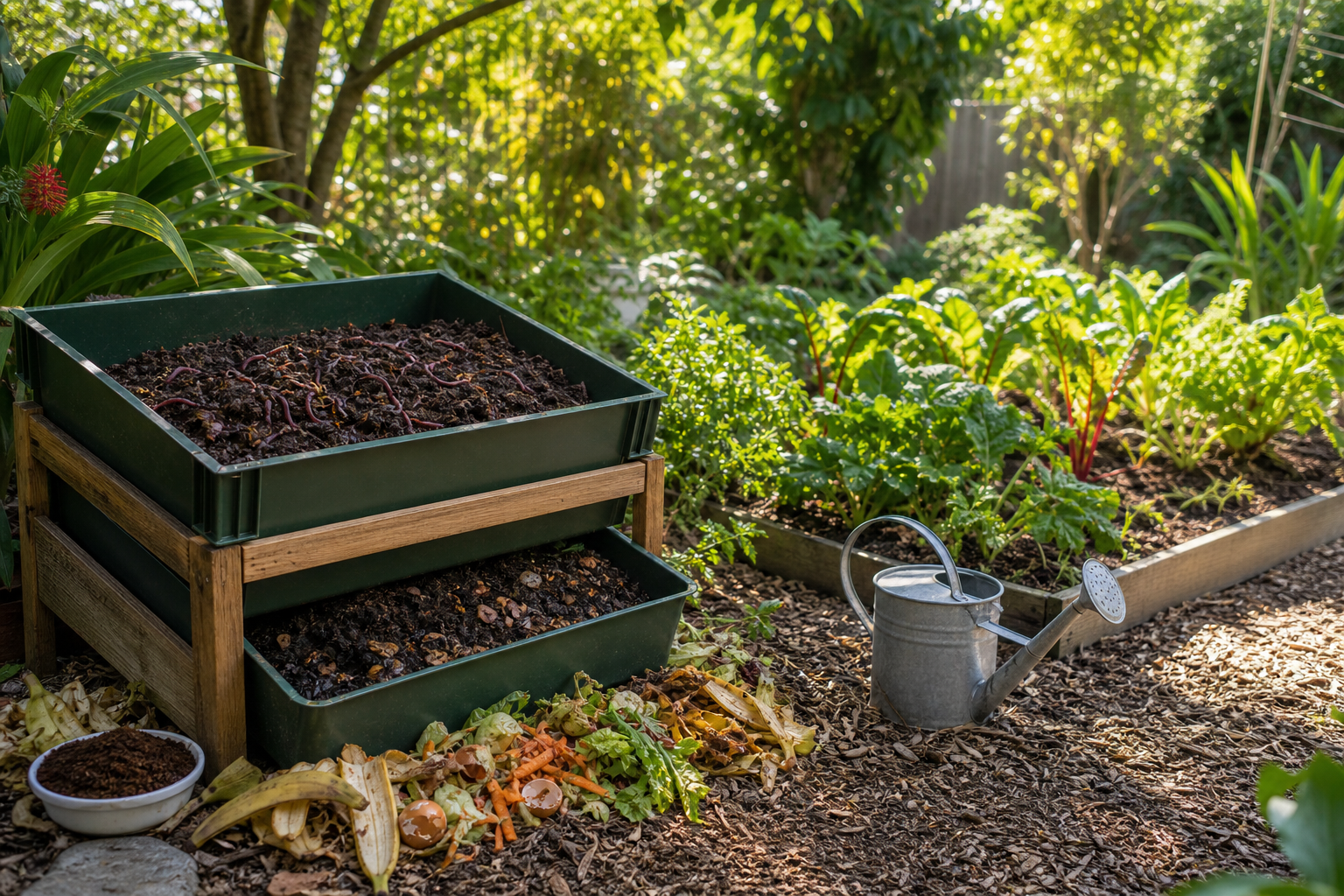
A worm farm is a carefully managed habitat where composting worms consume organic material and convert it into nutrient-rich worm castings and liquid fertiliser.
Unlike traditional composting, vermicomposting relies on specialised surface-dwelling worms that rapidly digest food scraps. As material passes through their digestive system, it is enriched with beneficial microorganisms, plant-available nutrients and stable organic matter.
The result is an exceptionally valuable soil conditioner that improves both soil health and plant performance.
Why Worm Farms Thrive in SE Qld
Southeast Queensland provides favourable conditions for composting worms throughout much of the year.
Warm temperatures encourage consistent feeding and reproduction, allowing worm populations to establish quickly when provided with adequate shade and moisture.
Popular composting species include:
- Red Wigglers
- Tiger Worms
- Indian Blue Worms
These species thrive in moist organic environments rather than ordinary garden soil, making purpose-built worm farms the ideal habitat.
Reducing Household Waste
A significant proportion of household rubbish consists of biodegradable organic material.
Fruit and vegetable scraps, tea leaves, coffee grounds, crushed eggshells and garden trimmings can all become valuable worm food instead of landfill waste.
Every kilogram diverted from the rubbish bin represents:
- Less waste entering landfill
- Lower disposal costs
- Reduced collection requirements
- Valuable nutrients remaining within the local environment
Waste is no longer something to discard.
It becomes a renewable resource.
Lowering Greenhouse Gas Emissions
When organic waste decomposes inside landfill, oxygen is largely absent. Under these anaerobic conditions, methane is produced—a greenhouse gas significantly more potent than carbon dioxide over the short term.
Worm farms avoid this outcome by processing food scraps aerobically.
Instead of generating methane, organic matter is recycled into stable compost products that enrich soils and contribute to long-term carbon storage.
Every household worm farm therefore represents a practical contribution toward reducing greenhouse gas emissions.
Building Healthier Soils Naturally
Healthy soil is alive.
Worm castings contain an extraordinary diversity of beneficial bacteria, fungi and other microorganisms that stimulate natural nutrient cycling.
Regular additions of worm castings improve:
- Soil structure
- Aeration
- Moisture retention
- Root development
- Nutrient availability
Unlike many synthetic fertilisers that deliver nutrients in rapid bursts, worm castings provide gentle, sustained nourishment while improving the biological foundation of the soil itself.
Conserving Water Through Better Soil
Water conservation is becoming increasingly important across Southeast Queensland.
Worm castings dramatically improve the soil's capacity to retain moisture by increasing organic matter and improving soil aggregation.
As a result:
- Water infiltrates more effectively.
- Less moisture evaporates.
- Plant roots remain hydrated for longer.
- Irrigation frequency often decreases.
This creates gardens that remain productive even during extended dry periods.
Supporting Biodiversity
Healthy soils support thriving ecosystems.
Introducing worm castings encourages populations of beneficial bacteria, fungi, protozoa and microscopic invertebrates that contribute to natural nutrient cycling.
Above ground, healthier plants attract pollinators, beneficial insects and wildlife while becoming more resilient against environmental stresses.
A thriving worm farm ultimately supports biodiversity well beyond the compost bin itself.
Reducing Reliance on Synthetic Fertilisers
Synthetic fertilisers provide rapid nutrition but contribute little to long-term soil improvement.
Worm castings take a different approach.
They enhance nutrient availability naturally while steadily improving soil biology and structure. As soils become healthier, gardeners often find themselves relying less on manufactured fertilisers and more on natural nutrient cycling.
The result is a garden that becomes increasingly self-sustaining over time.
Worm Farms for Every Home
One of the greatest advantages of worm farming is its accessibility.
A compact worm farm fits comfortably into:
- Small suburban backyards
- Courtyards
- Apartment balconies
- School gardens
- Community gardens
Even households with limited space can recycle a substantial proportion of their kitchen waste while producing premium-quality organic fertiliser.
Common Mistakes to Avoid
Successful worm farming is straightforward once a few common pitfalls are understood.
Overfeeding
Too much food decomposes before worms can consume it, leading to unpleasant odours.
Poor Moisture Management
Bedding should remain moist like a wrung-out sponge. Excess water excludes oxygen, while dryness slows worm activity.
Temperature Extremes
Protect worm farms from direct summer sun and heavy rainfall. Shaded, well-ventilated locations provide the most stable environment.
Simple attention to these fundamentals keeps worm populations healthy and productive.
Conclusion
A worm farm represents far more than an efficient way to dispose of kitchen scraps.
It reduces landfill waste, lowers greenhouse gas emissions, conserves water, enriches soil, supports biodiversity and helps create more resilient gardens throughout Southeast Queensland.
Every handful of worm castings is evidence that nature wastes nothing.
With only a small amount of care, a humble colony of composting worms can transform everyday household waste into one of the most valuable resources any gardener can produce—while making a meaningful contribution to a healthier environment for generations to come.