Seasonal Guide to Pollination in South East Queensland
 Trevor Dixon
Introduction
In South East Queensland (SEQ), the ebb and flow of seasons choreograph a delicate ballet of blooms and buzzing wings. Understanding how time of year influences pollination is not a mere gardening curiosity — it's the key to cultivating a garden that hums with life, from early spring blossoms to winter‑time blossoms that sustain native fauna. By attuning to seasonal rhythms, gardeners can orchestrate a continuous symphony of floral display and ecological support.
Understanding SEQ’s Climate and Seasons
South East Queensland enjoys a subtropical climate characterised by warm, humid summers, moderate rainfall, and mild winters.
This climate creates unique dynamics: heavy summer rains followed by drier winters; heat and humidity alternating with milder, cooler spells. Plants and pollinators alike respond to these rhythms. Flowering times, nectar availability, and pollinator activity fluctuate accordingly. To garden successfully here means to dance in step with these natural cadences.
Spring (September – November): Awakening Blooms & Early Pollinators
As the earth warms and daylight lengthens, spring in SEQ bursts into bloom. This is an opportune period to sow and plant — the soil is warming, but heat has not yet conspired with summer drought.
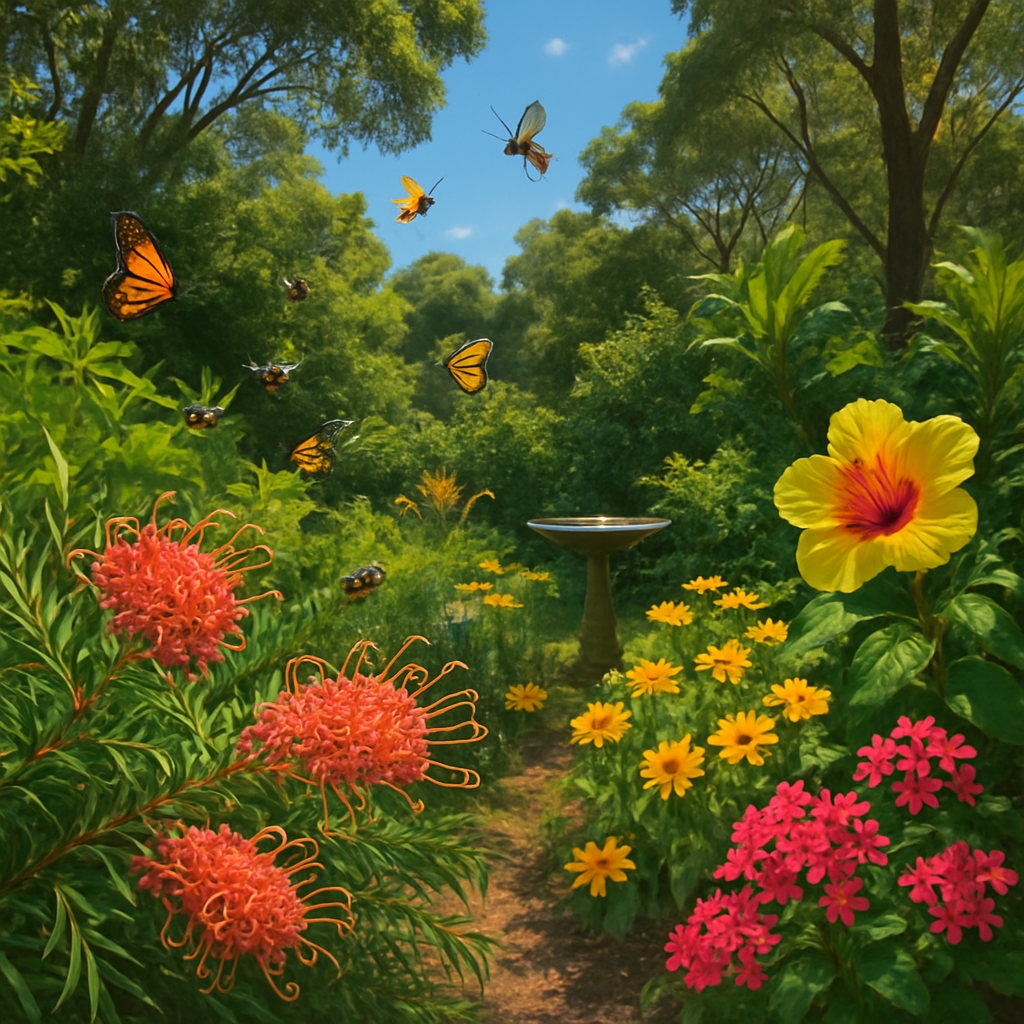
Flowering natives and ornamentals come alive: shrubs like Grevillea 'Superb' begin to display vivid inflorescences, offering abundant nectar and pollen.
These blossoms are vital for pollinators — native bees, butterflies, and early‑season insects that emerge hungry and ready.
For gardeners: use spring to prepare beds. Enrich soil with organic matter, sow native and heat‑tolerant plants, and plant species that flower early — giving pollinators a head start. Early planting also gives plants time to establish before peak summer heat.
Summer (December – February): Peak Growth, Rain & Humidity
Summer in SEQ is lush. Many flowering plants rise to the occasion under the humid skies. Heat‑tolerant shrubs, tropical‑style blooms and hardy natives thrive.
This is when gardens bathe in sunshine and rainfall becomes erratic — sunny spells interspersed with tropical downpours. For pollinator gardens, summer can be both abundant and challenging: while blooms attract bees, butterflies, birds and other pollinators, intense heat and moisture can stress plants and insects alike.
To support pollinators, ensure good watering practices — deep, early‑morning watering or watering at dawn to reduce evaporation — and maintain healthy soil with mulch to retain moisture. Plant a mix of drought‑tolerant natives and water‑loving species; this ensures some blooms persist even in dry spells.
Summer is also a time to keep floral supplies coming. Consider long‑blooming natives or shrubs with extended flowering periods so nectar sources remain constant even under heat stress.
Autumn (March – May): Transition, Fruit Set & Late Blooms
As summer’s furnace cools and rainfall moderates, autumn becomes a transitional yet vital season in the pollination calendar. Plants that struggled in summer heat rejuvenate; others begin a second flush of flowers. Autumn‑flowering natives such as some shrubs and herbs provide nectar and pollen when summer plants fade.
This season supports pollinators preparing for cooler months — give them a chance to refuel and reproduce. Garden tasks in autumn should include pruning spent summer flowers, dividing or transplanting perennials, and planting autumn‑loving species. Use this cooler window to expand or redesign pollinator‑friendly areas.
Autumn's moderate climate also improves plant establishment before winter, giving new plants a stronger root base and better survival rates through cooler weather.
Winter (June – August): Mild Season, Strategic Blooms & Pollinator Support
Winter in SEQ is mild compared to temperate zones. Frost is rare; days are cooler but often sunny. This offers a chance to maintain or even extend floral support for insects. Selecting hardy native and drought‑tolerant species can ensure winter blooms and pollen presence, helping insects survive lean periods.
By keeping some habitat elements — mulched garden beds, native shrubs, shelter for insects — pollinators find refuge even when fewer flowers are present. Adding nectar‑rich or winter‑flowering natives helps sustain bees and other pollinators.
Winter is also ideal for maintenance tasks: soil enrichment, mulching, pruning, and preparing for spring. Because plant growth slows, interventions disturb pollinators less.
Creating a Year‑Round Pollination Plan
To ensure continuous support for pollinators, the key is plant diversity and bloom succession. Select plants that flower across different seasons. A mix of natives and appropriate exotics gives colour, nectar and pollen at varying times. For instance, combine a long‑flowering shrub like Grevillea 'Superb' with species that bloom in autumn or winter.
Incorporate native plants adapted to SEQ’s climate — they’ll be more resilient to heat, humidity, and variable rainfall, and they also offer resources local pollinators know how to use.
Other supportive practices: maintain water sources (shallow bowl or puddle for butterflies, birds, insects), provide shelter (leaf litter, native shrubs), avoid pesticide use, and enrich soil organically. These create habitat continuity and a safe environment for pollinators year‑round.
Monitoring and Adapting to Seasonal Variability
No two years are identical. Rainfall may shift, heat waves may arrive early, or unexpected storms may alter flowering times. Observing how your garden and pollinators respond is essential. Adapt planting schedules, change plant selections and adjust maintenance accordingly.
Flexibility is your ally. If summer is unusually dry, add drought‑tolerant natives; if winter is wetter than usual, avoid waterlogging. Over time, maintaining a responsive garden builds resilience — a living ecosystem attuned to nature’s whims.
Conclusion
A garden in South East Queensland is not a static image — it’s a living chronicle of seasons, cycles, and interactions. By aligning planting and care with seasonal rhythms and designing for year‑round bloom and pollinator support, gardeners can foster a vibrant ecosystem that hums with life.
Embracing the cadence of seasons — spring’s awakening, summer’s exuberance, autumn’s calm, winter’s quiet — creates a sanctuary not only for plants, but for pollinators, biodiversity, and ecological harmony.