Recipes Featuring Bush Tucker Ingredients from Your Garden
 Trevor Dixon
Introduction to Bush Tucker Cuisine at Home
There is something quietly extraordinary about stepping into the garden and harvesting ingredients that have nourished this land for millennia. Bush tucker cuisine is not a trend. It is a revival. A rediscovery. A return to flavours shaped by climate, soil, and deep cultural knowledge.
Incorporating native ingredients into everyday cooking transforms the ordinary into something evocative. It adds nuance. Complexity. A sense of place. Plants such as lemon myrtle and finger lime are not only resilient and suited to Australian gardens, but also bring bold, distinctive flavours to the plate.
Understanding Bush Tucker Flavour Profiles
Bush tucker ingredients are not subtle. They are expressive, aromatic, and often surprising. Lemon myrtle delivers an intense citrus perfume. Finger lime bursts with sharp, effervescent acidity. Saltbush carries a mineral richness, almost oceanic in character.
Many native herbs combine multiple flavour notes at once. Peppery. Minty. Resinous. These layered profiles allow them to replace several conventional herbs in a single stroke, creating depth without complication.
Pairing becomes intuitive. Native citrus with seafood. Earthy bush tomato with roasted meats. Sweet-tart fruits folded into desserts. The garden becomes both pantry and inspiration.
Fresh Garden to Plate: Simple Bush Tucker Starters
Begin simply. Let the ingredients speak.
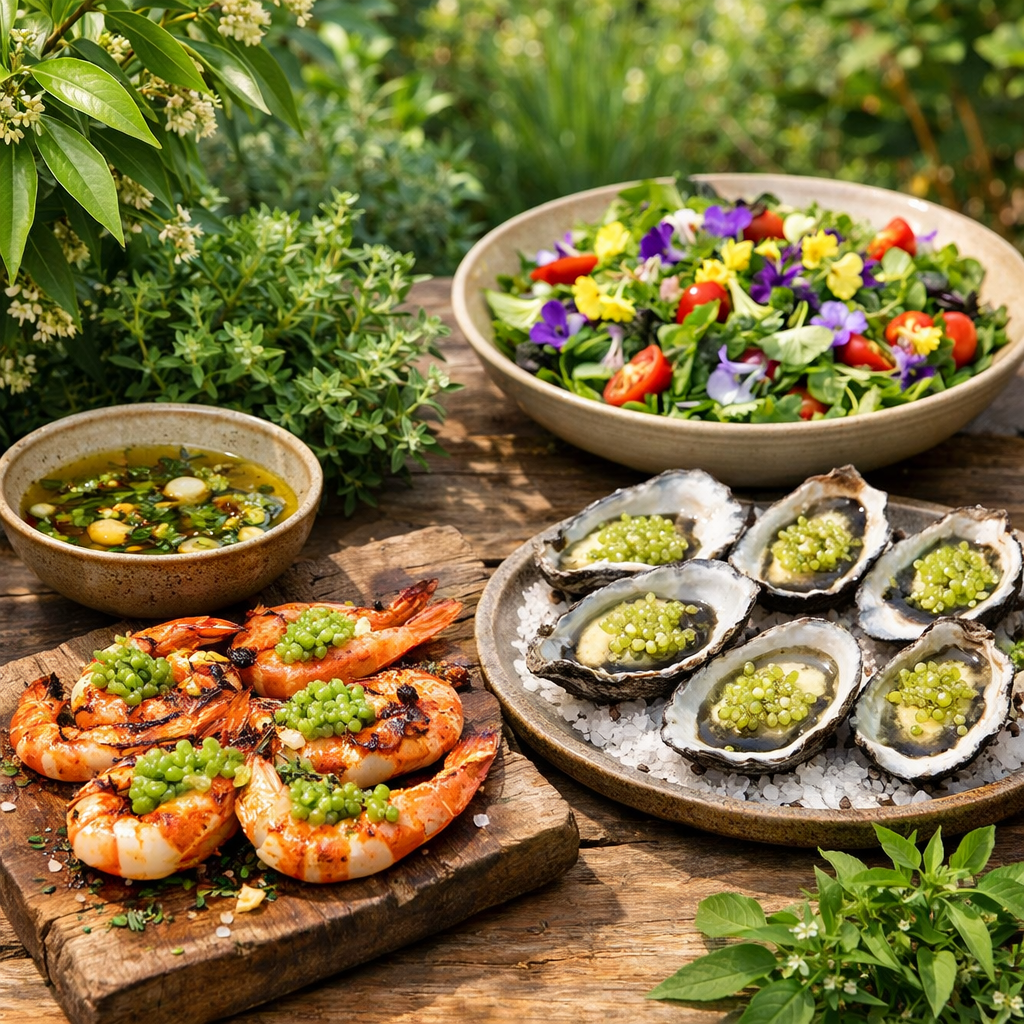
A freshly harvested finger lime, sliced open, reveals glistening pearls that tumble like citrus caviar over grilled prawns or oysters. The effect is immediate. Bright. Electric.
Native herbs such as bush basil or native thyme can be crushed into olive oil, infused gently, then drizzled over warm bread or stirred into dips. Their aromatic oils release quickly, filling the air with a fragrance that is both familiar and intriguingly foreign.
Even a humble salad becomes elevated when scattered with native greens and edible flowers. It is not just food. It is sensory storytelling.
Hearty Mains with Native Ingredients
Bush tucker ingredients excel in robust, satisfying dishes.
Lemon myrtle, often described as the queen of lemon herbs, lends itself beautifully to marinades. Its leaves can be used to flavour fish, chicken, or even slow-cooked curries, delivering a clean citrus lift that cuts through richness.
Saltbush, with its savoury intensity, can be used as a seasoning crust. Rubbed over lamb or folded into stuffing, it brings a smoky, mineral complexity that enhances rather than overwhelms.
Bush tomato, with its deep, sun-dried intensity, adds richness to sauces and stews. Its flavour—somewhere between caramelised tomato and tamarillo—anchors dishes with remarkable depth.
Bush Tucker Baking and Sweet Creations
The sweet side of bush tucker is unexpectedly sophisticated.
Davidson’s plum, intensely tart and richly coloured, transforms into vibrant jams, sauces, and dessert fillings. Its acidity balances sweetness with precision, creating desserts that feel refined rather than cloying.
Cinnamon myrtle offers a native alternative to traditional spices. Its delicate warmth can be infused into custards, cakes, and syrups, adding a subtle aromatic complexity that lingers on the palate.
Even simple baked goods—muffins, biscuits, or damper—take on new character when native ingredients are introduced.
Native Herbs and Spice Blends for Everyday Cooking
A garden rich in bush tucker is a spice rack waiting to be created.
Leaves can be dried, ground, and blended into bespoke seasoning mixes. Lemon myrtle combined with saltbush and native pepper creates a fragrant, versatile rub suitable for meats, vegetables, or even bread.
These blends are not just flavour enhancers. They are expressions of terroir. Each mix reflects the plants, the soil, and the climate in which they were grown.
Native herbs are also remarkably versatile. They can be used fresh, dried, infused, or smoked over coals to impart flavour.
Refreshing Drinks and Infusions
Bush tucker extends effortlessly into beverages.
Lemon myrtle leaves steeped in hot water produce a calming, aromatic tea. Light. Uplifting. Restorative.
Native fruits can be transformed into syrups and cordials, adding a uniquely Australian character to drinks. Finger lime pearls stirred into sparkling water create bursts of citrus with every sip.
These drinks are not just refreshing. They are experiential. Each glass carries the essence of the garden.
Harvesting and Preparing Ingredients from Your Garden
The journey from plant to plate begins with mindful harvesting.
Leaves should be picked when aromatic oils are at their peak. Fruits should be harvested at full ripeness to ensure optimal flavour. Proper handling preserves integrity. Enhances taste. Extends shelf life.
Many bush tucker ingredients can be dried or preserved, allowing their use well beyond the growing season. This transforms a seasonal garden into a year-round culinary resource.
Growing and using native ingredients also supports sustainability. These plants are adapted to local conditions, often requiring fewer inputs while delivering exceptional yields and flavour.
Bush tucker cooking is more than a method. It is a philosophy. A celebration of place, resilience, and flavour.
From simple garnishes to complex dishes, the ingredients grown in the garden hold the power to redefine the kitchen. Boldly. Beautifully. Authentically.