Raised Garden Beds for Growing Vegetables in SEQ’s Subtropical Climate
 Trevor Dixon
Introduction
South East Queensland offers one of Australia's most rewarding climates for home vegetable gardening. Warm sunshine, generous rainfall and comparatively mild winters provide opportunities to harvest fresh produce throughout almost every month of the year. Yet this enviable climate also presents unique challenges. Torrential summer rain, humid conditions, nutrient-leaching downpours and periods of intense heat can quickly transform a promising vegetable patch into a disappointing one.
Raised garden beds solve many of these challenges elegantly.
By lifting the growing area above ground level, gardeners gain complete control over soil quality, drainage, nutrition and plant spacing. The result is healthier vegetables, improved harvests and significantly less maintenance. Whether the goal is growing crisp lettuce for salads, sweet tomatoes bursting with flavour or herbs picked moments before dinner, raised beds provide an outstanding foundation for success.
Understanding SEQ's Subtropical Climate
South East Queensland enjoys a subtropical climate characterised by hot, humid summers and pleasantly mild winters. Rather than viewing these seasonal shifts as obstacles, experienced gardeners embrace them by selecting vegetables that naturally thrive during each growing season.
Summer rewards gardeners with vigorous crops such as tomatoes, capsicum, cucumbers, sweet corn and pumpkins, while autumn and winter become ideal for leafy greens, brassicas, root vegetables and peas. Successful gardening in SEQ depends largely on planting the right crop at the right time rather than attempting to force unsuitable vegetables outside their preferred season.
The extended growing season means one garden bed can produce multiple harvests each year, making raised beds an exceptionally productive investment.
Designing the Ideal Raised Garden Bed
An intelligently designed raised bed makes every gardening task simpler.
Position the bed where it receives six to eight hours of sunlight each day. Most fruiting vegetables rely on abundant sunlight to produce quality crops, while leafy vegetables can tolerate light afternoon shade during the hottest months.
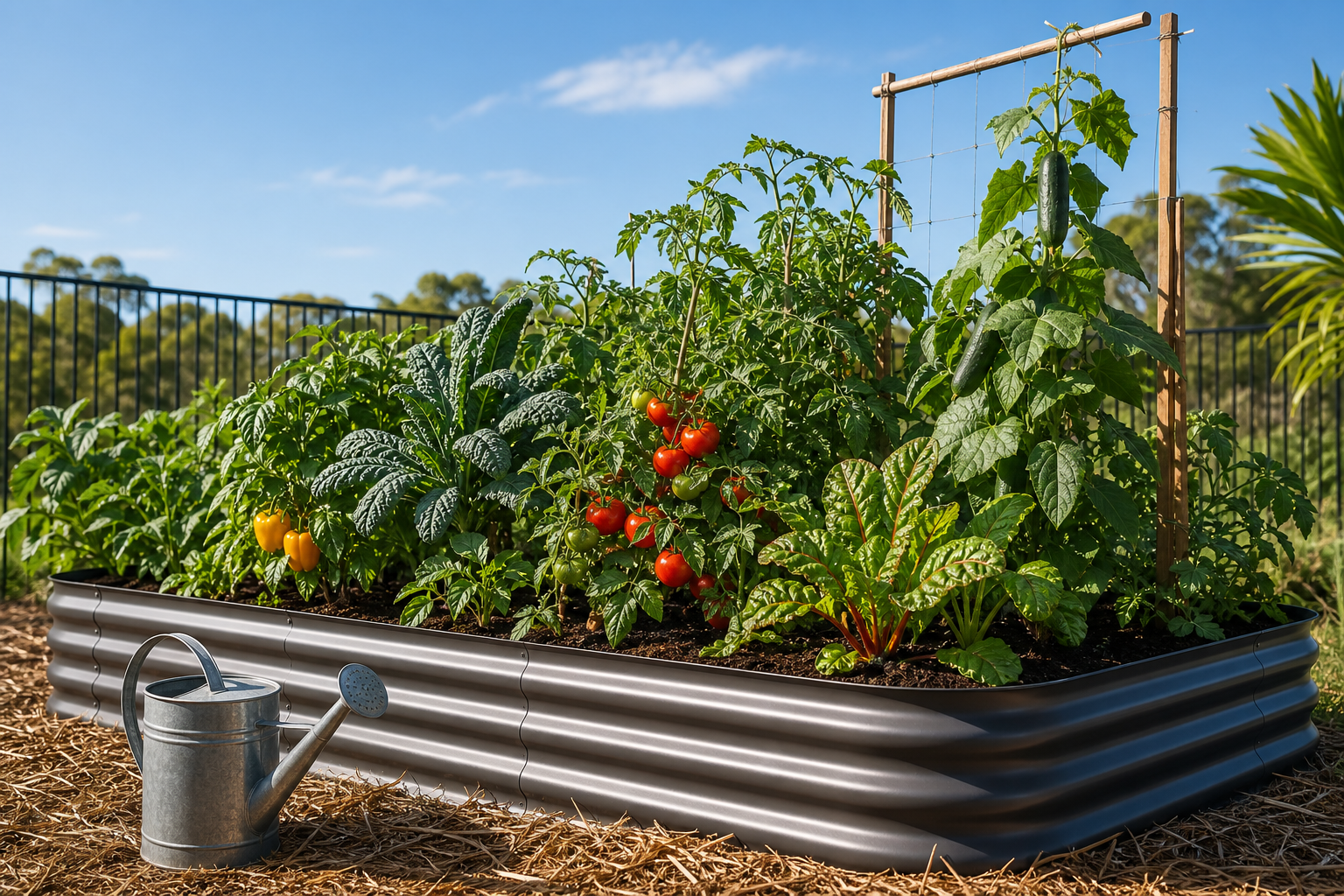
A width of approximately 1.2 metres allows every part of the bed to be reached comfortably without stepping onto the soil. Avoiding foot traffic preserves soil structure and prevents compaction.
Height is equally important. Beds between 300 and 450 millimetres are suitable for most vegetables, while deeper beds offer greater flexibility for root crops and improved drainage during Queensland's heavy summer storms.
Choose durable materials capable of enduring decades of exposure. Galvanised steel, aluminium, hardwoods and quality composite materials all perform exceptionally well under subtropical conditions.
Building Healthy Soil for Productive Vegetables
Outstanding vegetables begin beneath the surface.
Raised beds allow gardeners to construct an ideal growing medium rather than attempting to improve existing soil gradually over many years.
An excellent vegetable blend typically consists of:
- Premium garden soil
- Mature compost
- Well-aged organic manure
- Coarse sand or perlite for drainage
- Organic fertiliser
- Rock minerals and trace elements
This combination provides excellent water retention while maintaining enough aeration to prevent root diseases during wet weather.
Each growing season should begin with another generous application of compost. Organic matter continually feeds beneficial microorganisms, earthworms and fungi that transform ordinary soil into a thriving biological ecosystem.
Healthy soil creates healthy vegetables.
The Best Vegetables to Grow Throughout the Year
One of the greatest advantages of gardening in South East Queensland is the ability to grow vegetables almost continuously.
Spring and Summer
Warm weather favourites include:
- Tomatoes
- Capsicums
- Chillies
- Cucumbers
- Sweet corn
- Eggplants
- Beans
- Zucchini
These crops flourish once soil temperatures rise and produce heavily through the warmer months.
Autumn and Winter
As temperatures moderate, the garden transforms.
Excellent cool-season crops include:
- Broccoli
- Cauliflower
- Cabbage
- Kale
- Lettuce
- Silverbeet
- Beetroot
- Carrots
- Radish
- Onions
- Garlic
- Snow peas
These vegetables often produce sweeter flavours during cooler conditions while suffering fewer insect problems.
Fast Harvest Crops
Busy gardeners appreciate vegetables that mature rapidly.
Consider:
- Rocket
- Asian greens
- Spring onions
- Radishes
- Loose-leaf lettuce
- Baby spinach
Many can be harvested within weeks, providing continual rewards throughout the year.
Watering and Irrigation for Maximum Success
Raised beds drain beautifully. They also dry faster than in-ground gardens.
The key is watering deeply rather than frequently.
Deep watering encourages roots to explore lower soil layers where moisture remains available during hotter periods. Morning irrigation minimises evaporation and reduces disease pressure. Drip irrigation systems deliver water directly to plant roots while avoiding unnecessary wetting of foliage.
Mulch completes the system.
A generous layer of sugar cane mulch, lucerne or coarse compost significantly reduces evaporation, moderates soil temperature and suppresses weeds.
The result is healthier vegetables requiring considerably less maintenance.
Planting Techniques for Bigger Harvests
Maximising production is not about planting more.
It is about planting smarter.
Companion planting allows vegetables to support one another naturally. Herbs, flowers and vegetables work together to confuse insect pests, attract pollinators and improve biodiversity.
Succession planting ensures continuous harvests. Instead of sowing an entire crop simultaneously, plant small batches every two or three weeks. As one finishes, another reaches maturity.
Vertical growing further increases productivity.
Trellises supporting beans, cucumbers and climbing tomatoes transform unused vertical space into additional harvest area while improving airflow and reducing disease incidence.
Keeping Vegetables Healthy Naturally
Healthy gardens rarely rely upon chemicals.
Instead, they depend upon diversity.
Rotate crops each season to reduce disease build-up and minimise pest populations. Brassicas should not occupy the same position year after year. Tomatoes benefit from rotation just as much.
Inspect plants regularly. Small problems remain manageable.
Encourage beneficial insects through flowering companion plants such as alyssum, marigolds and nasturtiums.
Continue adding compost every season. Healthy soil biology creates vigorous plants naturally resistant to many diseases and insect attacks.
The strongest defence begins underground.
Conclusion
Raised garden beds perfectly complement South East Queensland's subtropical climate. They transform difficult soils into fertile growing environments, improve drainage during summer storms and make vegetable gardening more productive and enjoyable.
By combining quality soil, intelligent irrigation, seasonal planting and thoughtful garden design, even modest spaces can produce astonishing harvests throughout the year.
Fresh vegetables harvested minutes before they reach the kitchen offer unmatched flavour, nutrition and satisfaction. With every passing season, the soil becomes richer, the harvests more abundant and the garden more rewarding.
A raised garden bed is more than a place to grow vegetables.
It is an investment in healthier food, sustainable living and the simple pleasure of harvesting something extraordinary from your own backyard.