Native vs Exotic Trees: What’s Best for SEQ Gardens?
 Trevor Dixon

1. Introduction
In South East Queensland’s sun‑kissed suburbs, many gardeners stand at a crossroads. One path beckons with the heritage and resilience of native trees; the other tempts with the novelty and lush variety of exotic species. Choosing between them is not just a design decision — it’s a statement about sustainability, resilience, beauty, and ecological responsibility. Especially in a region where climate, soil, and seasons each present their own challenges, the choice matters deeply.
2. What Defines Native and Exotic Trees
Native trees are species that evolved over millennia alongside local soils, climates, and wildlife. They are the botanical descendants of the land — drought‑hardened, climate‑tuned, and ecological stalwarts.
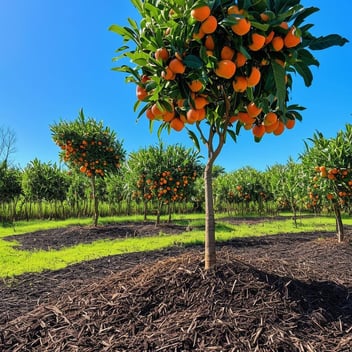
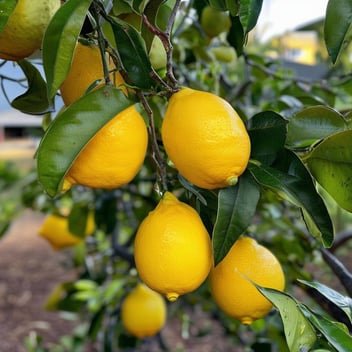
Exotic trees, by contrast, are immigrants. Brought in from overseas or distant climates, they carry novelty — new leaf textures, vibrant blooms, unfamiliar silhouettes. They offer diversity and surprise.
These definitions frame our garden choices. What kind of story do we want our garden to tell: one rooted in place and ecology, or one of global variety and design ambition?
3. Advantages of Native Trees for SEQ Gardens
Native trees bring more than familiarity — they bring resilience. Having evolved under Australia’s variable climate, many have sclerophyllous leaves, tough bark, efficient water‑use strategies, and nutrient‑saving adaptations.
When established, many need minimal watering or fertiliser, drawing sustenance from the environment with little fuss.
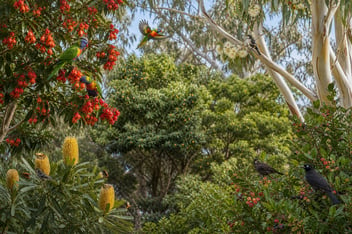
For wildlife, native trees are gold. They provide habitat and food for birds, insects, pollinators and microfauna — a vital piece in sustaining urban biodiversity and helping reconnect fragmented local ecosystems.
Moreover, native plantings can be resource‑efficient. They often require less maintenance, can tolerate local soil variability, and survive seasonal stresses better than many outsiders.
4. Potential Limitations of Native Trees
But native doesn’t always mean perfect. Some native trees grow slowly — which may disappoint those who crave immediate canopy, shade, or structure.
Also, native doesn’t guarantee suitability. Many species evolved for bushland, not suburban blocks. Without matching soil, drainage, or space conditions, they may struggle.
And from an aesthetic standpoint, some gardeners feel the native palette is limited — especially if they desire flamboyant blooms, exotic leaf forms, or dramatic seasonal change.
5. Advantages of Exotic Trees in Urban & Garden Landscapes
Exotic trees offer what natives often don’t: diversity and flair. Unique bark textures, lush canopies, unusual flowers — they can serve as bold design statements, focal points, or landscape accents.
Many exotics grow quickly — giving you shade, privacy, or structure in a shorter timeframe. For new gardens or rapidly developed landscapes, that speed can be invaluable.
Exotics also allow experimentation: species from climates similar to SEQ — tropical or subtropical — may adapt well, offering extended variety.
6. Risks and Drawbacks of Exotic Trees
But this diversity comes at a cost. Exotic species may not integrate smoothly into local ecosystems. Some have become invasive, out‑competing native flora and altering habitat dynamics.
Water consumption is another concern. Trees not adapted to local rainfall patterns may demand heavier irrigation — a drawback in a region where water conservation is often critical.
Exotics may also offer limited habitat value for native fauna, disrupting natural ecological networks.
7. Making the Decision: Contextual Considerations for Your Garden
The “right” choice depends largely on your garden’s context.
-
Site conditions — soil type, drainage, space, exposure, microclimate. A compact suburban block differs vastly from a large acreage or rural property.
-
Purpose — Are you planting for shade, privacy, a spectacle of blooms, or habitat for birds? Your goal should shape your tree choice.
-
Long-term vision vs immediate impact — Do you want slow-growing, resilient trees that honour local ecology? Or quick results with bold aesthetic?
-
Environmental stewardship — Are you aiming to support local biodiversity, water conservation, and sustainable landscaping?
8. Hybrid Approach — Combining Native and Exotic Trees Thoughtfully
The debate rarely demands a binary outcome. Often, the best gardens use a hybrid approach.
Use native trees as the structural backbone — resilient, ecosystem-supportive, low maintenance. Then introduce carefully selected exotic specimens for flair, shade, or visual variety.
This balanced planting can offer both ecological integrity and design ambition — a landscape that grows gracefully and gives generously.
9. Practical Guidance: Selecting Trees for SEQ Gardens
-
Start with clarity: assess your soil, space, water availability, and what you want from your garden.
-
Research suitability: whether native or exotic, check how each species responds to SEQ’s subtropical climate, soil types, and seasonal stresses.
-
Favor diversity: diversity in species supports stronger ecosystems and improves resilience to pests, disease, and climate swings.
-
Plan for maintenance: consider water needs, pruning, root spread, canopy size — avoid later headaches.
-
Think long-term: gardens evolve slowly. Choose trees that will serve in 5, 10, 20 years — not just ones that look good today.
10. Conclusion
There is no universal answer to whether native or exotic trees are “best” for SEQ gardens. The right choice depends on your local site, your garden’s goals, and the values you bring to your landscape.
Whether you lean on native guardians of ecology, exotic icons of grandeur, or a harmonious blend of both — what matters is thoughtful selection. With care, awareness, and balance, you can cultivate a garden that marries resilience, beauty, and ecological integrity — a true legacy for the land.