Low-Maintenance Raised Planter Bed Ideas for Busy Gardeners
 Trevor Dixon
Introduction
Time is precious. Gardens should not demand it relentlessly. They should reward it.
Raised planter beds offer a compelling answer for those juggling careers, family, and life’s relentless tempo. They condense effort. They amplify results. They transform gardening from a chore into a quiet pleasure — one that unfolds without constant intervention.
For the busy gardener, the goal is not perfection. It is intelligent design.
The Philosophy of Low-Maintenance Gardening
Low-maintenance gardening is not about neglect. It is about intention.
Design becomes the silent labourer. Structure replaces constant attention. Every decision — from soil composition to plant choice — is made once, and made well.
Raised beds inherently support this philosophy. Plants are grown closer together, creating a living canopy that suppresses weeds and conserves moisture, forming a self-regulating microclimate.
Less weeding. Less watering. More growing.
Choosing the Right Raised Bed Design
Form dictates function. In low-maintenance gardens, simplicity reigns supreme.
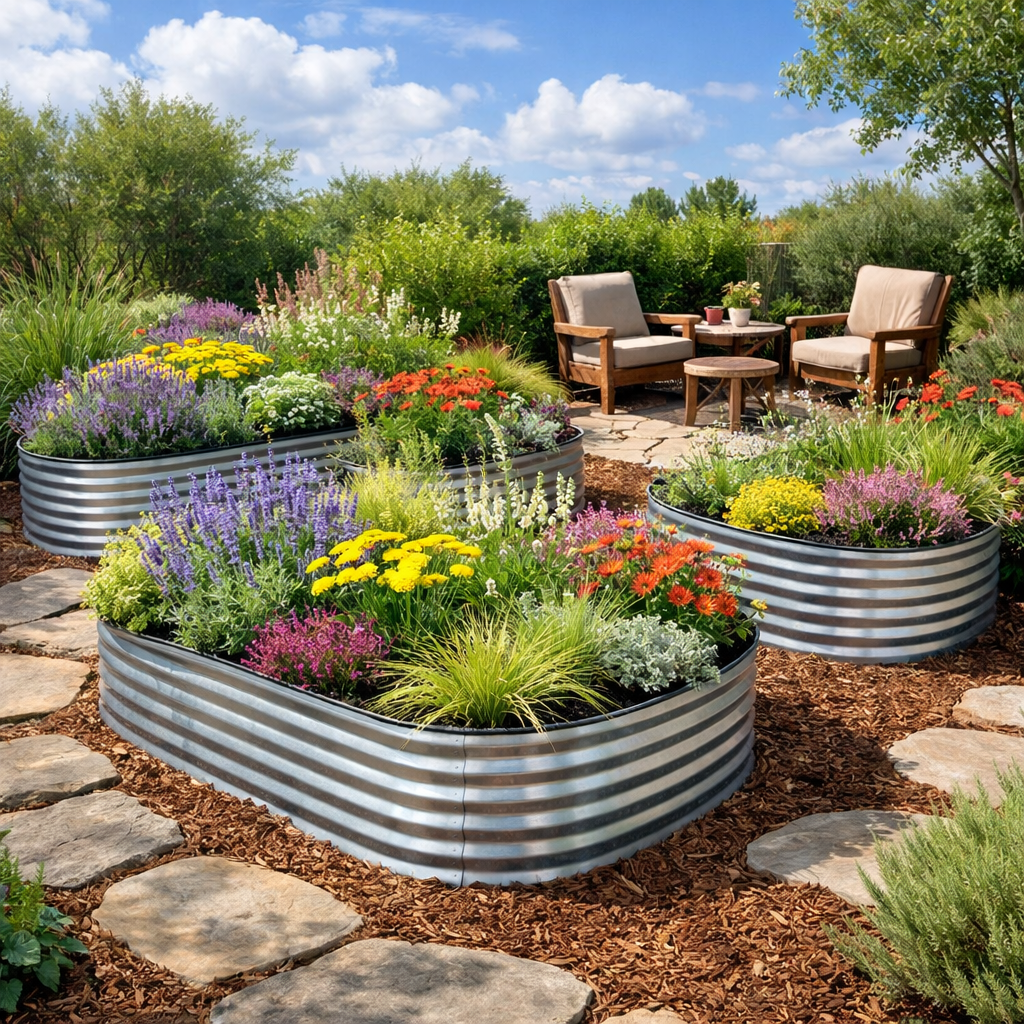
- Rectangular beds offer clean lines and easy access. Nothing is wasted. Every inch is reachable.
- Elevated planter boxes reduce bending and physical strain, turning gardening into a comfortable ritual rather than a physical burden.
- Modular systems allow expansion without redesign. Add, adjust, adapt — all without upheaval.
Materials matter too. Aluminium and galvanised steel provide durability with minimal upkeep, resisting rot and decay while remaining lightweight and long-lasting.
Choose once. Benefit for years.
Smart Soil Strategies for Minimal Upkeep
Soil is the engine beneath the surface. Build it wisely, and it will do the work for you.
A rich, organic foundation reduces intervention dramatically. Compost, aged manures, and organic matter create a self-sustaining ecosystem. Nutrients cycle naturally. Moisture is retained efficiently.
For an even more autonomous system, consider Hügelkultur layering — burying organic materials like wood beneath the soil. This creates a sponge-like structure that stores water and slowly releases nutrients, reducing irrigation and fertilisation needs over time.
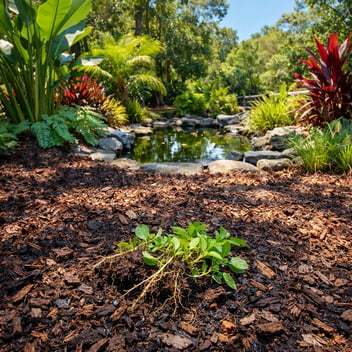
Add mulch. Always mulch.
Mulch is the quiet guardian — suppressing weeds, moderating temperature, and locking in precious moisture.
Plant Selection for Effortless Growth
Plants can either demand attention or reward neglect. Choose wisely.
- Drought-tolerant varieties endure inconsistent watering.
- Perennials return year after year, eliminating the need for constant replanting.
- Companion plants work in concert, naturally deterring pests and enhancing growth.
The magic lies in combinations. Dense, resilient planting mimics nature. It fills gaps. It blocks weeds. It stabilises the system.
Some plants even thrive when left alone — a testament to thoughtful selection over constant care.
Watering Systems That Work While You Rest
Watering is often the most time-consuming task. Automation changes everything.
- Wicking beds draw water upward from a reservoir, supplying moisture only when needed. This dramatically reduces watering frequency and maintains consistent soil hydration.
- Drip irrigation systems deliver water directly to roots, minimising waste and effort.
- Rainwater harvesting transforms storms into a resource, not a burden.
The goal is simple: water less often, but more effectively.
Design Features That Save Time
Design can eliminate entire tasks.
- Dense planting layouts reduce exposed soil, suppressing weeds naturally.
- Defined pathways and edging prevent encroachment and simplify movement.
- Layered planting creates visual interest while maximising productivity without increasing workload.
Even structural choices — such as raised edges and contained beds — reduce the spread of weeds and pests, simplifying ongoing care.
Maintenance Hacks for Busy Gardeners
Maintenance should feel incidental, not overwhelming.
- Refresh soil with compost seasonally rather than constantly fertilising.
- Prune selectively, not obsessively. Let plants express their natural form.
- Establish simple routines — quick checks rather than long sessions.
Raised beds inherently reduce labour. They limit weeds, improve access, and create optimal growing conditions from the outset.
The result is a garden that asks little, yet gives abundantly.
Conclusion
A low-maintenance garden is not an absence of care. It is the culmination of intelligent choices.
Raised planter beds offer structure. Soil provides resilience. Plants deliver harmony. Together, they create a system that thrives with minimal intervention.
For the busy gardener, this is liberation.
A garden that grows.
A space that restores.
An ecosystem that works — even when time is scarce.