Incorporating Native Trees into Your Garden for Shade and Beauty
 Trevor Dixon
Introduction
There is something almost poetic about a tree. Long before flowers bloom and after annuals fade, a tree remains. It anchors the landscape. It offers shelter, texture, and tranquillity. In South East Queensland, native trees possess an understated grandeur that makes them indispensable companions in the garden.
They cool summer afternoons. Invite birds to linger. Frame distant vistas. And perhaps most importantly, they create spaces where life simply feels better.
A thoughtfully chosen native tree is never merely decoration. It becomes part of the soul of the garden.
The Benefits of Native Trees in South East Queensland Gardens
Native trees possess a remarkable aptitude for thriving in the subtropical conditions of South East Queensland. Having evolved alongside the region's fluctuating weather patterns, they cope admirably with heat, humidity, drought, and intense rainfall.
Their canopies moderate temperatures naturally. Broad foliage intercepts harsh sunlight while reducing reflected heat from paving and walls. Shade is transformed from a luxury into a sanctuary.
Beyond comfort lies ecological value.
Flowering species sustain bees and nectar-feeding birds. Dense branches provide nesting sites. Fallen leaves enrich the soil. A single mature tree becomes an entire ecosystem in miniature.
Beautiful. Functional. Alive.
Choosing the Right Tree for Your Space
Selecting a tree requires foresight.
A compact courtyard demands restraint. A sprawling backyard invites ambition. Before planting, consider:
- Mature height
- Canopy width
- Proximity to buildings and driveways
- Available sunlight
- Soil drainage
Fortunately, South East Queensland offers native trees for every scale. Small ornamental species can thrive in modest spaces, while larger specimens create magnificent shade over decades.
Think beyond today. Imagine the garden twenty years from now.
Trees reward patience.
Top Native Trees for Shade and Beauty
Tuckeroo (Cupaniopsis anacardioides)
Reliable and resilient, Tuckeroo is one of the finest shade trees for South East Queensland gardens. Its rounded canopy creates dense shelter while glossy foliage remains attractive year-round.
Bright orange fruits attract birds, bringing animation to the landscape.
Even challenging sites fail to deter it.
Native Frangipani (Hymenosporum flavum)
Elegance personified.
Creamy yellow flowers release an intoxicating fragrance that drifts through warm evenings. The glossy foliage forms a refined canopy ideal for subtropical gardens.
As a specimen tree, few natives rival its sophistication.
Tulipwood (Harpullia pendula)
Graceful movement defines the Tulipwood.
Soft foliage dances in the breeze while clusters of orange fruit attract native birds. Its moderate size makes it particularly suited to suburban gardens where space is precious.
There is gentleness in its form. A quiet beauty.
Water Gum (Tristaniopsis laurina)
Water Gum combines attractive bark with lustrous foliage and a naturally rounded shape.
Its manageable proportions and versatility have made it a favourite among landscape designers. Whether planted beside patios or used as a feature tree, Water Gum brings enduring charm.
Lemon Myrtle (Backhousia citriodora)
Few trees engage the senses quite like Lemon Myrtle.
Crush a leaf and a burst of citrus perfume fills the air. Creamy flowers attract bees, while the foliage provides culinary possibilities for adventurous gardeners. It thrives in sunny to partly shaded positions.
Beauty with utility. A rare combination.
Designing with Native Trees
Trees provide structure. They define spaces without walls.
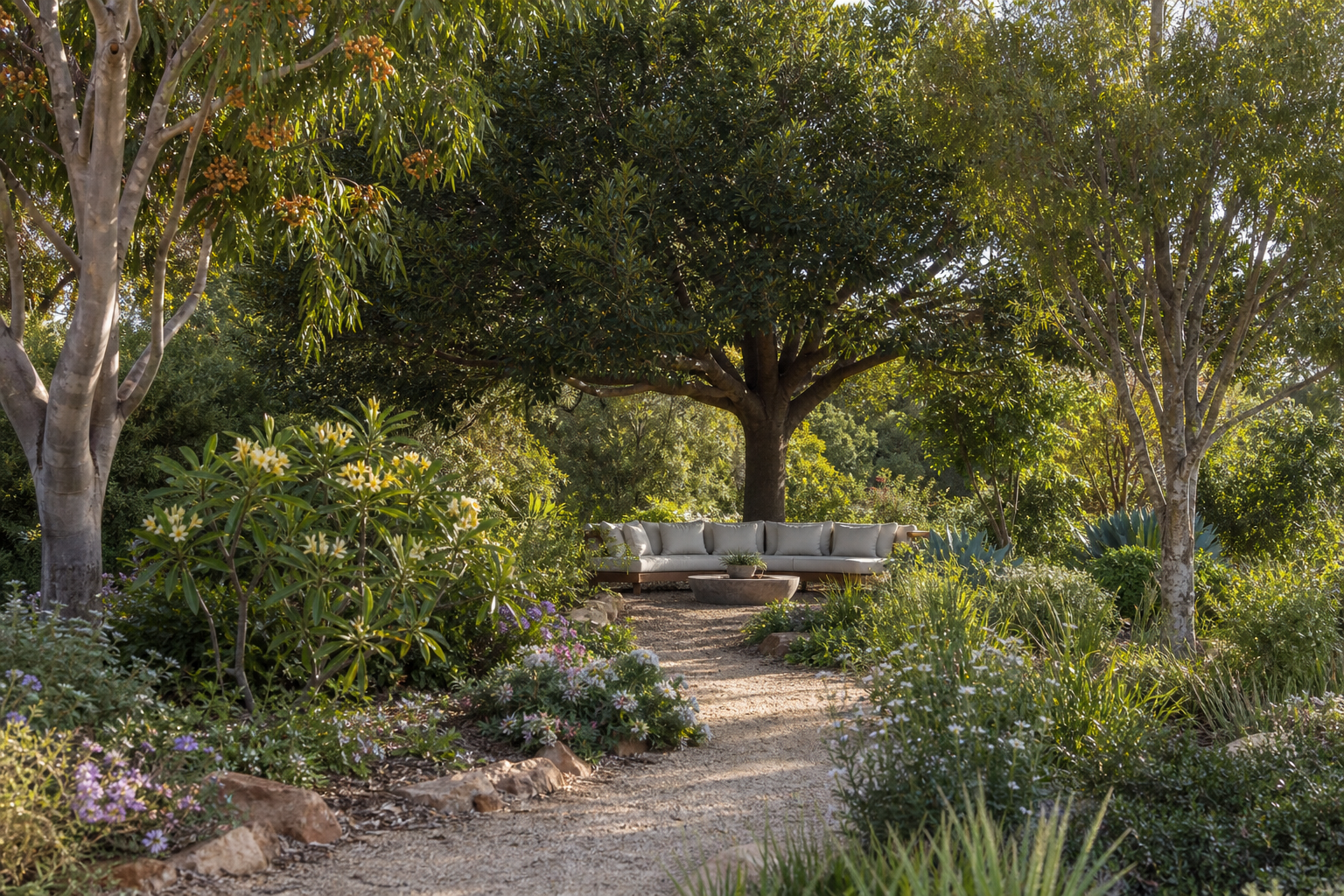
Position a specimen tree to create a focal point. Use several trees to establish outdoor rooms. Layer beneath them with shrubs, grasses, and flowering groundcovers.
Shade-loving plants flourish beneath the protective canopy. Paths become cooler. Seating areas become inviting.
Trees soften architecture and add a sense of permanence that no annual display can replicate.
The garden gains depth. Character. Atmosphere.
Planting and Establishment
Success begins underground.
Prepare the site carefully:
- Dig a hole twice the width of the root ball.
- Avoid excessive soil amendments.
- Position the root flare slightly above surrounding soil.
- Water deeply after planting.
Mulch generously but keep it clear of the trunk. This conserves moisture and regulates soil temperature.
Young trees require regular watering during establishment. Once settled, many native species become remarkably self-sufficient.
Patience during the first year yields rewards for generations.
Maintaining Healthy Native Trees
Native trees are generally low maintenance, but thoughtful care preserves their splendour.
Prune only to remove damaged or crossing branches. Allow the natural form to shine. Excessive pruning often diminishes beauty rather than enhancing it.
Healthy soil, proper mulching, and adequate water during prolonged dry periods usually provide everything a tree needs.
Strong trees seldom demand attention.
They simply grow.
Creating a Legacy for Future Generations
Planting a tree is an optimistic act.
The shade you enjoy tomorrow is the result of choices made years earlier. The birds that visit, the cooler afternoons, and the changing patterns of light beneath the canopy become memories woven into everyday life.
Native trees offer more than beauty. They offer continuity.
They connect homes with landscapes. Families with seasons. Gardens with the future.
And perhaps that is their greatest gift of all—a living legacy that grows richer with every passing year.