How to Upcycle Materials for Cost‑Effective Wicking Beds
 Trevor Dixon
Introduction
In a world overflowing with discarded containers, timber scraps and unused old garden wares lies an opportunity. Upcycling transforms cast‑off materials into flourishing, self‑watering beds. For gardeners mindful of budget and planet, marrying upcycling with the ingenious design of wicking beds becomes a symphony of sustainability and salvaged creativity. Wicking beds conserve water and reduce effort — combining that with reused materials multiplies the value.
The Essentials of a Wicking Bed — What Must Be Sound
Before delving into reclaimed junk, it helps to know the non‑negotiables. A true wicking bed requires a watertight reservoir — whether via a durable liner or naturally waterproof container. Water must sit in the base, ready to rise upward through capillary action into the soil.
Above that reservoir, a growing layer of soil must hold enough depth for root systems yet remain light and well‑draining so moisture can wick evenly.
These structural and hydrological fundamentals must be respected — even when materials are recycled.
Smart Sources for Upcycled Materials
There are many under‑appreciated treasures with potential:
-
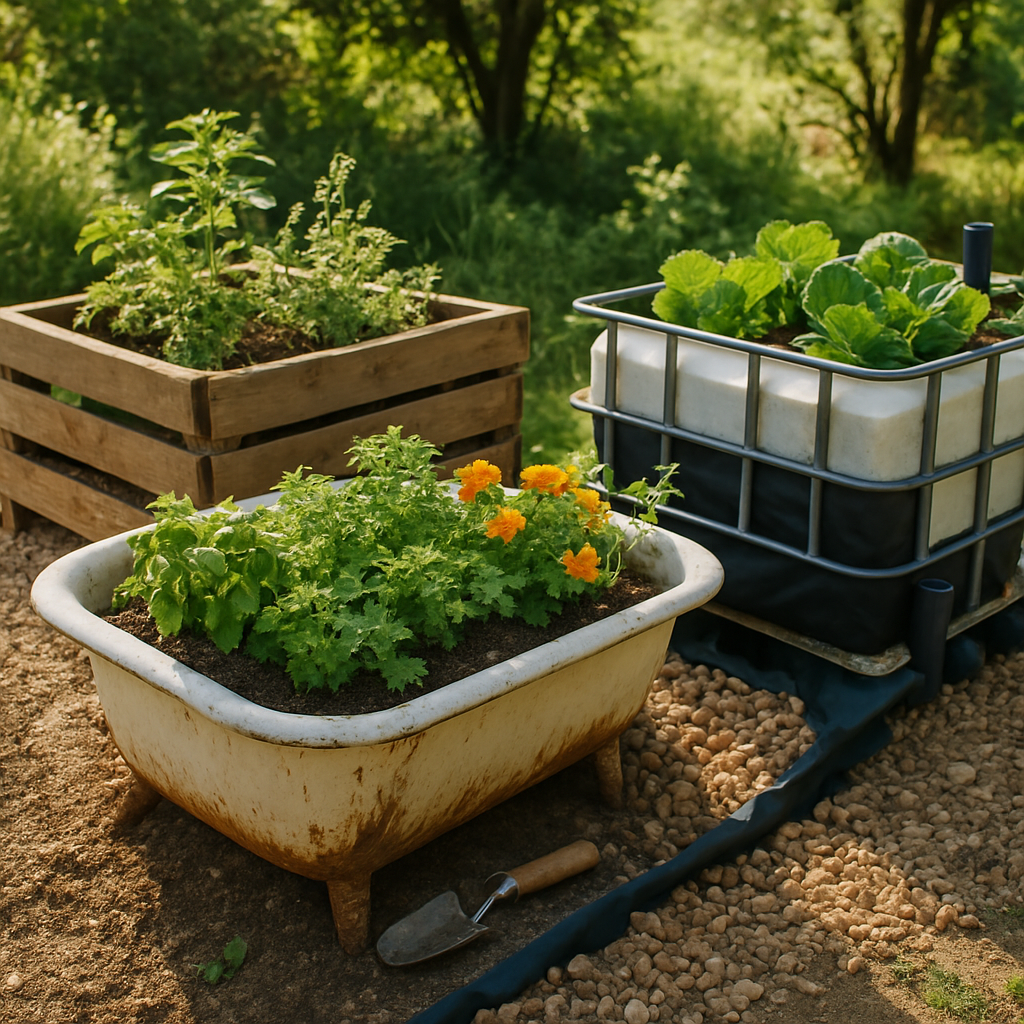
Salvaged containers — old plastic totes, half‑used drums, empty Intermediate Bulk Containers (IBCs), bathtubs, or even discarded large pots can form the body of a wicking bed. These often offer instant waterproof shells.
-
Reclaimed wood and pallets — scrap timber or pallet wood can be refashioned into frames for raised beds. Timber framed beds are easy to build and give a rustic charm while being structurally sound once lined.
-
Recycled aggregate and hardscape — broken bricks, pavers, gravel from old landscaping, or even rubble can serve as reservoir material, provided it’s clean and inert.
How to Evaluate and Prepare Recycled Materials
Upcycled doesn’t mean unvetted. Some caution is needed:
-
Check for contamination — if a container held chemicals or unknown liquids, avoid using it. Only repurpose containers that previously held benign materials like food, water, or general goods.
-
Ensure structural integrity — plastic tubs must lack cracks; wood must be free of rot; metal containers should resist rust and leaks. A weak structure under weight can buckle once soil and water are added.
-
Apply a liner or sealant when needed — even if the container appears waterproof, lining it with a pond liner or heavy-duty plastic adds a safety layer. This ensures longevity and protects soils and plant roots.
Step‑by‑Step DIY: Building an Upcycled Wicking Bed
-
Choose and prepare your container or frame — e.g. cut an IBC in half, refurbish an old bathtub, or build a pallet‑wood frame. Level the base; ensure access to sunlight and solid support.
-
Install the liner or waterproof membrane — lay heavy‑duty pond liner or plastic sheeting smoothly in the container, ensuring it reaches up the sides to the height of the planned reservoir.
-
Create the reservoir layer — fill the base with coarse aggregate, rubble, broken bricks or small gravel. This becomes the water reservoir that will wick moisture upward.
-
Add a separation layer — a piece of geotextile fabric or shade cloth atop the reservoir helps to keep soil from washing into the reservoir while still allowing water movement.
-
Fill with quality soil mix — use a light, loamy, organic‑rich soil. This must drain well and absorb moisture uniformly for best results.
-
Install inlet (and overflow) plumbing if desired — a vertical pipe reaching the soil surface allows easy refilling of the reservoir. An overflow outlet helps prevent waterlogging after heavy rain.
-
Test and top up — fill the reservoir with water; when water emerges from overflow, reservoir is full. Let soil settle, then plant. For the first week, water from above until roots establish.
Common Pitfalls & How to Avoid Them
Upcycling can misfire if poor materials or shortcuts are taken:
-
Containers with leaks or chemical residues — avoid anything that held hazardous or unknown substances. Always clean thoroughly.
-
Using very large stones or coarse rubble — if the reservoir medium has large voids, capillary action may be insufficient and plants won’t wick water properly. A fine gravel or small aggregate works better.
-
Structural failure under load — once filled with soil and water, the bed becomes heavy. Ensure frames or containers are robust enough to bear the weight.
Sustainability & Cost Benefits of Upcycling
By reusing materials, you reduce waste, save money, and lessen demand for new resources. Compared to buying new beds or materials, upcycled builds significantly cut costs. Many gardeners have built effective wicking beds from reclaimed tubs, IBCs or scraps for minimal spend.
Moreover, combining upcycling with the water‑efficient design of wicking beds yields a double boon: environmental stewardship and thrifty gardening.
Maintenance Tips for Upcycled Wicking Beds
-
Inspect lining and joints regularly — check for tears, leaks or degradation, especially if using older containers.
-
Flush reservoir occasionally — especially if using water with high mineral content, to avoid salt build-up.
-
Top up soil or compost annually — replenish nutrients and maintain good soil structure for root health.
Creative Upcycled Design Ideas
-
Old bathtub or stock trough wicking beds — shallow but wide and sturdy containers that make great raised beds.
-
IBC half‑beds — cut an IBC in half for two compact, durable wicking beds — ideal for veggie patches.
-
Pallet‑wood frames with liner — rustic aesthetic, easy to build, and customisable to desired size.
-
Tiered or modular beds — by stacking different recycled containers or crates, you can build vertical or multi‑level gardens to maximise space.
Conclusion & Encouragement
Upcycling materials to build wicking beds isn’t just a clever hack — it’s a statement of resourcefulness, ecological mindfulness, and gardening ingenuity. With a little creativity, care and planning, cast‑off containers and scrap wood can blossom into thriving, water‑wise gardens. Dive in, experiment boldly, and watch these repurposed objects transform into verdant, self‑sustaining beds that nurture both greens and earth.