How to Protect Your Veggies from Heatwaves in SEQ
 Trevor Dixon
Understanding Heatwaves in South East Queensland
South East Queensland gardeners know that summer can be relentless. Days exceeding 35 degrees often arrive in succession, accompanied by scorching winds, intense ultraviolet radiation and nights that offer little relief. These prolonged periods of extreme weather rapidly transform healthy vegetable gardens into landscapes of wilted foliage and exhausted plants.
Heatwaves place enormous physiological pressure on vegetables. Moisture evaporates faster than roots can absorb it, leaf temperatures soar, pollen viability declines and fruit production frequently stalls altogether.
Yet despite these formidable conditions, productive vegetable gardens remain entirely achievable. Success lies not in fighting the climate but in adapting to it with intelligent gardening practices.
Understanding how heat affects plants is the first step toward creating a resilient garden capable of thriving through even the harshest Queensland summers.
Choosing Heat-Resilient Vegetables
Plant selection significantly influences summer success.
Rather than forcing cool-climate vegetables through oppressive weather, embrace species naturally adapted to warmth. Sweet potatoes flourish in hot conditions, while okra produces prolifically throughout the hottest months. Snake beans, Lebanese cucumbers, eggplants, chillies and capsicums also perform exceptionally well once established.
Asian greens such as kang kong and Malabar spinach continue producing nutritious leaves even during prolonged heat.
Traditional lettuces may struggle, but alternatives including Warrigal greens, New Zealand spinach and perpetual spinach maintain impressive productivity.
Selecting vegetables that complement the season dramatically reduces stress while increasing harvests.
Nature often provides the simplest solutions.
Preparing Your Garden Before a Heatwave
Preparation begins beneath the surface.
Healthy soil acts like a reservoir, storing moisture and nutrients that sustain plants during difficult periods. Compost, aged manure and worm castings improve soil structure, increasing its capacity to retain water without becoming waterlogged.
Organic matter functions like a sponge.
It absorbs rainfall, gradually releasing moisture back to plant roots as temperatures climb.
Deep cultivation before planting encourages roots to penetrate further into the soil profile, allowing vegetables to access cooler, more stable moisture reserves unavailable to shallow-rooted plants.
A well-prepared garden enters a heatwave with confidence rather than vulnerability.
Smart Watering Techniques
Watering wisely is far more effective than simply watering more.
Early morning irrigation remains the gold standard. Plants absorb moisture before the day's heat intensifies, reducing evaporation losses while providing essential hydration for photosynthesis.
Deep watering encourages roots to travel downward, where soil remains cooler and consistently moist. Frequent light watering, by contrast, produces shallow roots that become highly susceptible to heat stress.
Drip irrigation systems deliver water directly to the root zone with remarkable efficiency, reducing waste while keeping foliage dry and less vulnerable to disease.
During severe heatwaves, an additional light evening watering may help stabilise soil temperatures without creating prolonged leaf wetness.
Consistency is everything.
Creating Shade Without Sacrificing Growth
Even sun-loving vegetables appreciate temporary protection during extreme conditions.
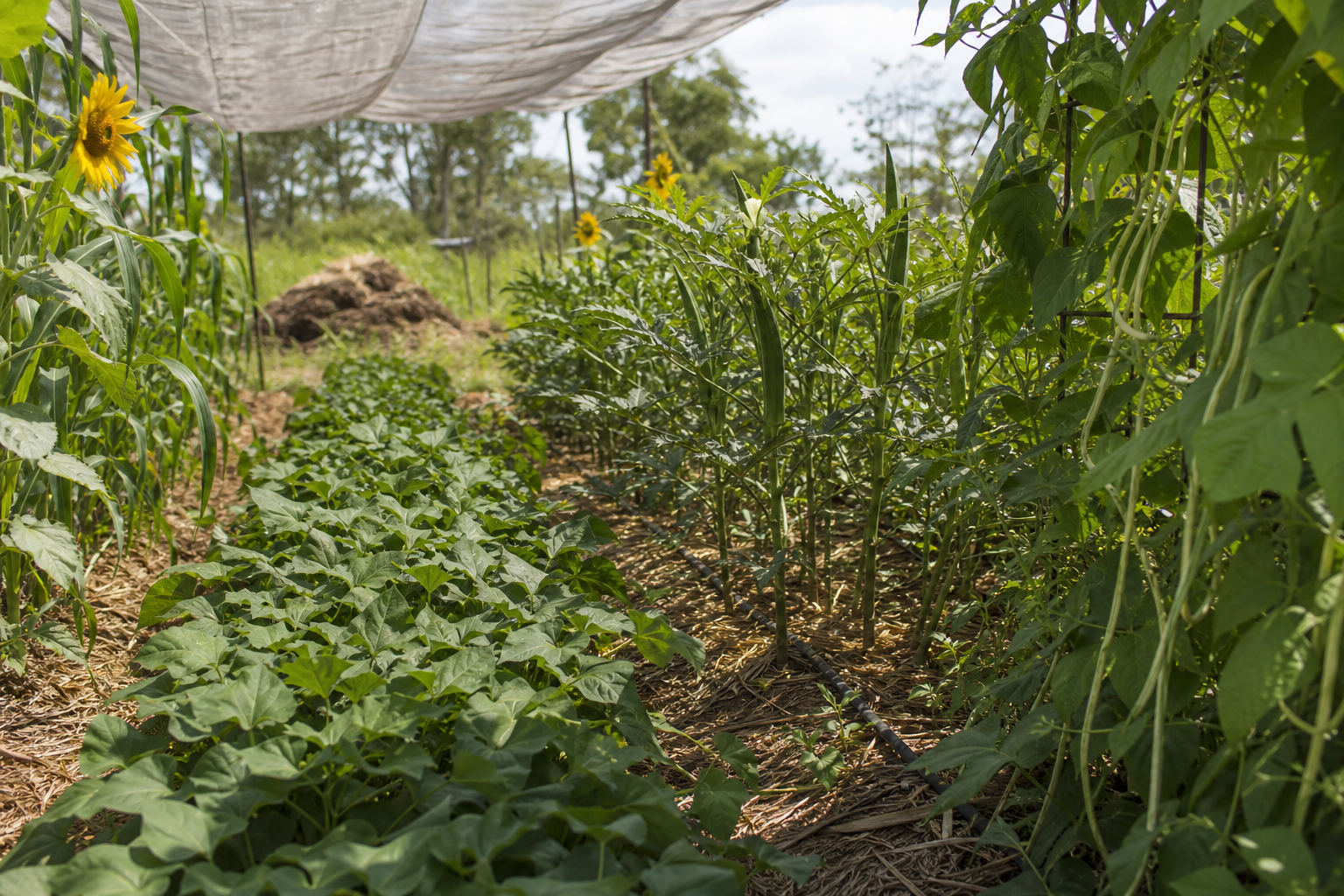
Thirty to fifty percent shade cloth provides an excellent balance, filtering intense sunlight while allowing sufficient illumination for healthy growth. This simple addition can reduce leaf temperatures by several degrees and dramatically decrease plant stress.
Portable frames constructed from lightweight PVC or timber enable shade cloth to be installed quickly whenever forecasts predict prolonged heat.
Natural shade also plays a valuable role.
Sunflowers, corn and climbing beans create living canopies that protect smaller vegetables from harsh afternoon sunlight while contributing additional harvests.
Thoughtful layering transforms the vegetable garden into its own microclimate.
Mulching to Keep Soil Cool
Mulch is one of the most valuable allies in a Queensland vegetable garden.
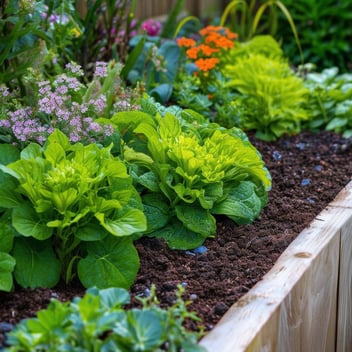
A generous layer of sugar cane mulch, lucerne, straw or composted bark dramatically reduces soil temperature while slowing moisture evaporation.
The difference is remarkable.
Bare soil can become dangerously hot beneath the summer sun, whereas mulched soil remains considerably cooler and biologically active.
Mulch also suppresses weeds, preventing unnecessary competition for valuable water and nutrients during stressful conditions.
As organic mulches gradually decompose, they enrich the soil with humus, improving structure and fertility for future growing seasons.
One application delivers benefits long after summer has ended.
Reducing Heat Stress Naturally
Plants possess remarkable resilience when supported appropriately.
Liquid seaweed solutions encourage stronger root systems while stimulating natural defence mechanisms that help vegetables tolerate environmental stress. Applied before and during heatwaves, these supplements often improve recovery and reduce transplant shock.
Avoid heavy fertiliser applications during extreme heat.
Rapid soft growth requires significant moisture and becomes increasingly vulnerable to scorching.
Maintaining good airflow between plants is equally important. Crowded foliage traps humidity, encouraging fungal diseases that further weaken stressed vegetables.
Healthy plants withstand adversity with surprising determination.
Recovering After the Heatwave
Every heatwave eventually passes.
The days immediately afterwards present an ideal opportunity to assess the garden carefully.
Remove only foliage that has become completely dead. Slightly scorched leaves continue producing energy and often protect developing shoots beneath them.
Continue deep watering while applying compost and gentle organic fertilisers to stimulate renewed growth.
Many vegetables recover far more quickly than expected.
Where losses have occurred, resist the temptation to immediately replant. Allow the soil to cool and stabilise before introducing new seedlings.
Patience frequently rewards the observant gardener.
Building a Heatproof Vegetable Garden for the Future
Climate patterns suggest that heatwaves will become increasingly common across South East Queensland.
Forward-thinking gardeners can prepare accordingly.
Incorporate permanent shade structures over the most vulnerable beds. Install rainwater tanks to improve water security during prolonged dry periods. Choose drought-tolerant varieties, enrich soil every season and continually increase organic matter.
Garden design itself influences temperature.
Trees positioned to provide afternoon shade, windbreaks that reduce drying winds and strategically located water features all contribute to cooler microclimates.
Over time, these cumulative improvements transform ordinary vegetable gardens into remarkably resilient ecosystems capable of producing generous harvests despite increasingly challenging conditions.
Growing Through the Heat
Heatwaves may test the resolve of even experienced gardeners, but they need not define the growing season. With healthy soil, intelligent watering, protective shade and careful planning, vegetables can continue producing throughout South East Queensland's hottest months.
The most successful gardens are rarely those blessed with perfect weather. They are the ones designed to adapt, endure and flourish regardless of what summer delivers. By working alongside the climate rather than against it, every heatwave becomes another opportunity to build a stronger, healthier and more productive vegetable garden.