How to Grow a Stunning Tropical Garden in SEQ
 Trevor Dixon
Introduction: The Allure of a Tropical Garden
There is something almost magical about a tropical garden. Lush greenery. Dramatic leaves. A sense of seclusion, depth, and exotic serenity. In South‑East Queensland, that magic isn’t just a dream — it’s a distinct possibility. The warm air, humid summers and mild winters lend themselves to vibrancy. Create your own oasis, and every morning you open the gate, you step into a lush, leafy retreat.
Tropical gardens aren’t only about bright flowers. They evoke mood: shadow and light playing among fronds. Verdant layers. A garden that feels alive. For SEQ gardeners, a tropical garden can become both sanctuary and celebration.
Understanding SEQ’s Climate and Soil for Tropical Success
The subtropical climate: warmth, humidity, rainfall patterns
SEQ is characterized by humid summers and mild winters, often with generous rainfall or heavy tropical downpours. This climate supports many tropical‑style plants — those accustomed to warmth, humidity, and soil that sees regular moisture.
Because of this, tropical bulbs, broad‑leaf ornamentals, palms and other warm‑climate plants flourish.
Soil considerations and drainage: avoiding waterlogging, choosing well‑drained sites
Despite regular rains, drainage is essential. Many tropical‑style plants dislike “wet feet.” Ensuring well‑draining soil or creating raised beds/terraces helps guard against waterlogged roots.
Mulching and organic soil improvement aid structure — making soil porous yet moisture‑retentive. This balance supports vigorous root systems and healthy plant growth.
Design Principles for a Tropical Garden
Layering: canopy, mid‑story, understory, ground‑cover for a rainforest vibe
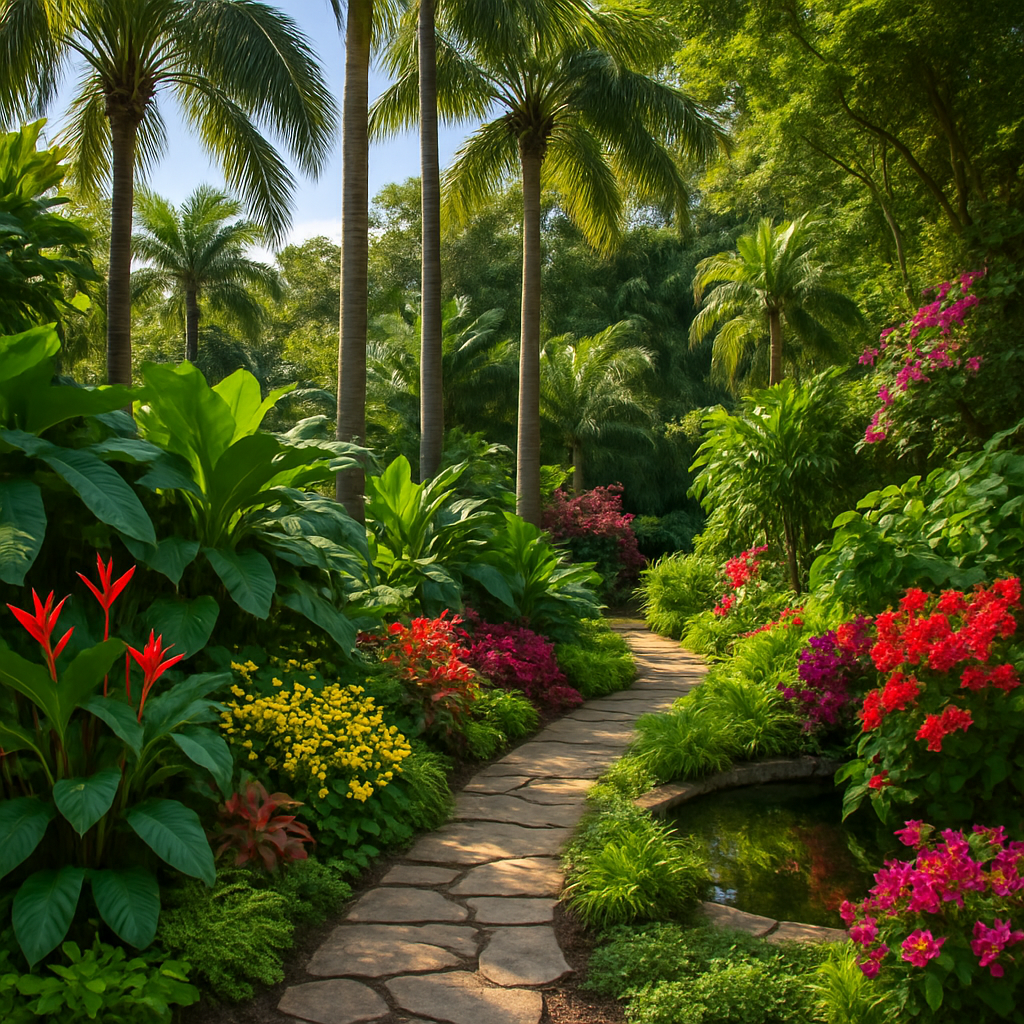
The magic of a tropical garden lies in depth. Tall palms or slender trees overhead. Mid‑story shrubs beneath. Broad‑leaf ornamentals creating mid‑level drama. Groundcovers or ferns carpeting the soil.
This stratified layering mimics rainforest architecture and for SEQ gardens, delivers shade, lushness, and visual complexity.
Foliage drama and texture: large leaves, bold shapes, varied leaf colours and textures
Tropical gardens often rely more on foliage than flowers. Large, bold leaves — glossy, textured, coloured, serrated — create atmosphere. Think broad‑leafed palms. Huge elephant‑ear leaves. Dramatic variegation. This foliage drama brings lushness even between flowering seasons.
Colour and contrast: using blooms, leaf colour variation, and structural contrast for visual impact
Flowers and leaf colour add punctuation — bursts of colour against green. Vivid blooms, bright flowering shrubs, and plants with colourful foliage enrich the tapestry. Contrasting textures and shapes — fine-leafed vs broad, upright vs sprawling — create visual intrigue.
Best Plant Types for a Tropical SEQ Garden
Palms and slender canopy trees — height, shade, vertical drama
Palms, tall slender trees and canopy-forming species give vertical structure. They frame spaces, cast dappled shade — ideal for establishing understorey plants beneath. For example, elegant palms suit SEQ’s subtropical climate.
Broad‑leaf ornamentals & lush foliage plants — dense, leafy understory
Plants with broad leaves, dense foliage and rainforest‑style leaf structure add richness. Think lush greens, layered leaves, moisture‑loving understory plants. These flourish under shade and humid conditions.
Tropical bulbs, groundcovers, and shrubs — filling gaps, creating lush undergrowth
Bulbs and small shrubs offer seasonal colour or evergreen lushness close to the ground. With proper drainage and position, many bulbs excel in SEQ’s warmth and humidity.
Groundcovers spread greenery, suppress weeds, retain soil moisture — essential for maintaining a jungle‑like floor.
Flowering natives and exotics that handle humidity and warmth
Some plants — both native and exotic — are adapted to humidity, heat, and occasional heavy rain. These deliver vivid flowers and thrive in SEQ. Choosing climate‑compatible species ensures long‑term success.
Top Plant Picks for a Tropical Garden in SEQ
-
Tall, structural palms or canopy trees — for vertical drama, shade, and structure.
-
Large‑leaf ornamentals such as broad‑leafed plants and foliage‑rich species for lushness.
-
Tropical‐style bulbs and flowering plants — for bursts of colour against deep greens.
-
Dense shrubs and groundcovers — to carpet the garden floor in rich greenery, suppressing weeds and retaining moisture.
These choices — combined judiciously — produce a layered, living tapestry that breathes tropical elegance.
Watering, Drainage & Soil Care for Humid Tropics
Water management — deep, infrequent watering; drip irrigation and rainwater harvesting
In humid climates like SEQ’s, watering strategy matters. Deep but less frequent watering helps develop strong root systems. Drip irrigation or soaker hoses deliver water directly to roots. Rainwater harvesting captures abundant rainfall for summer use.
Mulching and soil aeration — to retain moisture and prevent compaction
Mulch keeps soil cool, moist, and suppresses weeds — ideal for tropical gardens. It also enriches the soil as it breaks down. Aeration prevents compaction, improving root health and drainage.
Fertility and feeding — organic compost, light feeding that suits tropical plants
Tropical plants appreciate nutrient‑rich, organic soils. Compost and organic mulch feed the ecosystem gently. Light, balanced feeding encourages growth without overwhelming sensitive species.
Maintenance & Pest Management in a Tropical Environment
Pruning and shaping — controlling growth, encouraging healthy structure
Regular pruning keeps plants healthy, prevents overcrowding, and encourages air circulation — especially important in humid climates where fungal diseases thrive.
Shaping also maintains desired form: tall palms trimmed, understory shrubs managed, groundcovers contained.
Dealing with humidity‑related pests and fungal issues — vigilance, airflow, organic solutions
Humidity can promote pests and fungal diseases. Good airflow, avoiding water on foliage, and regular inspection helps. A holistic approach — clean garden, prune dead material, use organic controls — keeps threats at bay.
Seasonal care — wet‑season adjustments, summer heat, dry spells
During wet seasons, ensure drainage. In heat and humidity, monitor moisture and shade requirements. In drier spells, water deeply. Seasonal vigilance keeps the garden thriving year‑round.
Creating Ambience: Hardscape, Structure & Tropical Vibes
Paths, stepping stones, terraces — to give jungle‑garden structure
Curved paths, stone stepping-stones, terraces create exploration zones. They also protect soil from compaction, let water infiltrate naturally, and give structure to the wildness.
Water features, pots, and containers — enhancing tropical mood and flexibility
A small pond or water feature adds to the tropical ambience. Pots and containers allow flexibility — good for experimenting with plants, controlling soil drainage, and bringing green to patios or small spaces.
Shade, screening, and privacy planting — using dense foliage and layering strategically
Dense palms, tall shrubs and layered planting create privacy and shade — giving a secluded, rainforest‑like atmosphere. It’s both functional and aesthetic.
Sustainable & Climate‑Smart Gardening Practices
Choosing plants adapted to SEQ conditions
Selecting plants that are naturally tolerant of warmth, humidity, and occasional rain ensures resilience. Native or climate‑adapted species reduce maintenance and water needs.
Waterwise strategies and efficient irrigation
Using drip irrigation, rainwater harvesting, mulching and drought‑tolerant species keeps water usage efficient — important in summer heat or dry periods.
Low‑maintenance design to reduce interventions and encourage resilience
Once established, a well‑designed tropical garden can be low‑maintenance. Using hardy plants, layering for shade, and mulch helps create a self‑sustaining ecosystem.
Conclusion: Your Garden as a Subtropical Sanctuary
A tropical garden in South‑East Queensland isn’t a fantasy — it’s attainable. With the right plants, design philosophy, and care, your backyard can transform into a lush, verdant haven.
It becomes more than a garden: a living retreat, a place of refuge, a vibrant, green sanctuary. Tropical lushness, colour, shade, structure, and tranquillity — all within reach. Let your garden flourish.