Hardy Groundcovers for Rockeries in South East Queensland
 Trevor Dixon
Introduction
In the intricate choreography of a rockery garden, groundcovers play a subtle yet commanding role. They weave between stones. They soften edges. They cloak bare soil in living texture. In South East Queensland, where climate extremes can test even the most robust plantings, hardy groundcovers emerge as indispensable allies—quietly resilient, visually compelling, and profoundly practical.
Understanding South East Queensland Conditions
South East Queensland exists in a climatic sweet spot—subtropical, vibrant, and occasionally unforgiving. Summers arrive heavy with humidity and punctuated by intense rainfall. Winters, though mild, can bring dryness that lingers.
Rockery environments amplify these conditions. Elevated soils drain quickly. Surfaces heat rapidly. Nutrient levels often run lean. Groundcovers selected for this environment must not merely survive—they must adapt, anchor, and flourish with minimal intervention.
What Makes a Groundcover Truly Hardy
Hardiness is not a single trait. It is a constellation of characteristics working in harmony.
A truly hardy groundcover tolerates drought without wilting into submission. It spreads with intention, covering soil efficiently while resisting invasive tendencies. It anchors itself firmly, reducing erosion and stabilising loose substrates common in rockeries.
Equally important is its ability to compete. Weeds are opportunists. A dense, well-established groundcover forms a living barrier—one that suppresses unwanted growth while retaining precious soil moisture.
Top Hardy Groundcovers for Rockeries
Native Groundcovers That Thrive
Native species are inherently attuned to local conditions, making them exceptional performers.
- Myoporum parvifolium – A vigorous, trailing groundcover that forms dense mats of green or purple-tinged foliage. Highly drought-tolerant and excellent for erosion control.
- Scaevola aemula – A fan-flowered beauty that spills gracefully over rock edges, offering long-lasting blooms and exceptional resilience.
- Dichondra repens – A soft, kidney-leafed carpet ideal for shaded or semi-shaded rockeries, creating a cool, verdant underlayer.
Flowering Varieties for Seasonal Colour
Groundcovers need not be purely functional—they can be flamboyant.
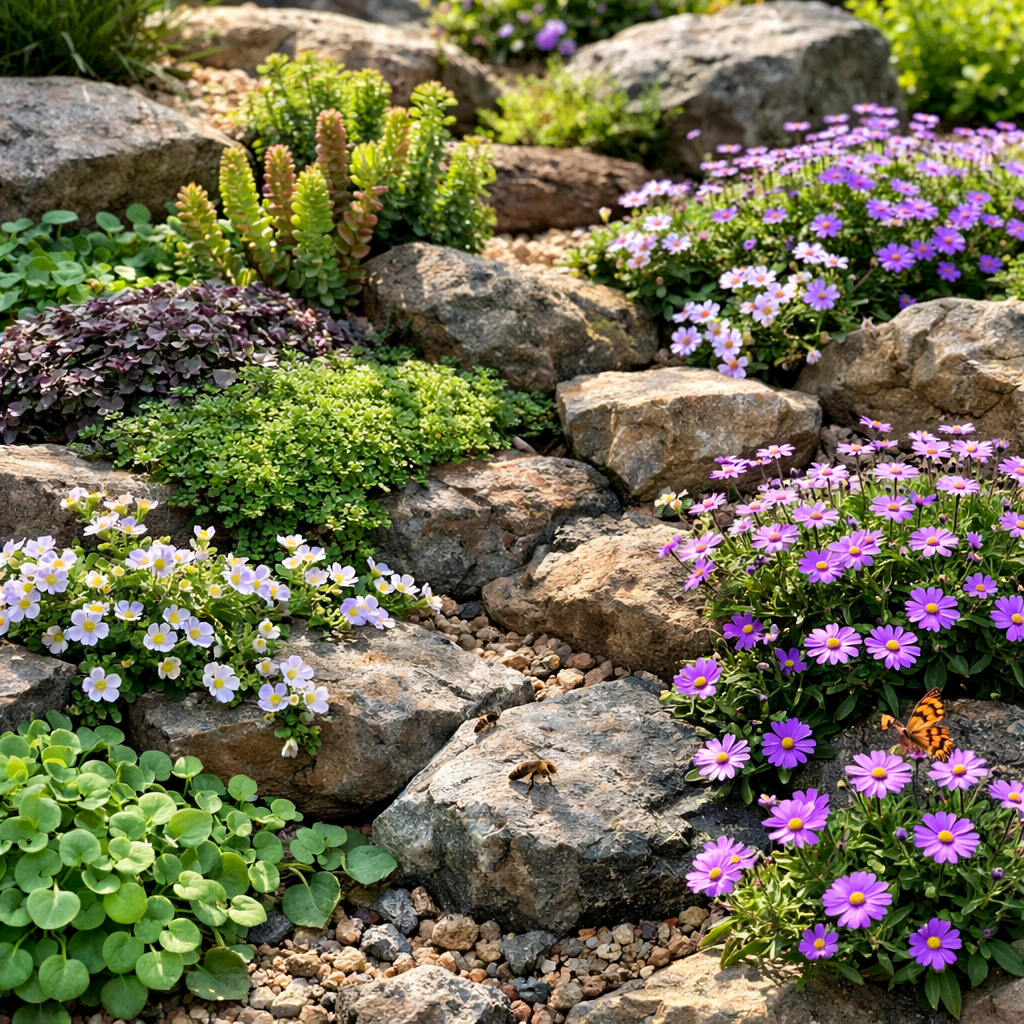
- Brachyscome multifida – Fine foliage paired with delicate purple daisy flowers that bloom prolifically through warmer months.
- Portulaca grandiflora – A sun-loving succulent groundcover that bursts into vibrant colour, even under relentless heat.
Foliage-Focused Options for Texture
Texture adds dimension. It invites the eye to linger.
- Sedum species – Succulent, low-growing forms that provide sculptural interest and exceptional drought tolerance.
- Ajuga reptans – A rich tapestry of coloured foliage—greens, bronzes, purples—accentuated by striking blue flower spikes.
Designing with Groundcovers in Rockeries
Groundcovers are the connective tissue of a rockery. Without them, the design feels fragmented. Disjointed.
Use them to soften transitions between large stones and planting pockets. Allow them to cascade over edges, blurring the boundary between structure and growth. Plant in drifts rather than isolated clusters to create a sense of continuity.
Layering is essential. Pair taller structural plants with spreading groundcovers beneath. Let textures contrast—fine against bold, glossy against matte. The result is a dynamic yet harmonious landscape.
Planting Techniques for Long-Term Success
Success begins beneath the surface.
Prepare the soil with a free-draining mix—blend native soil with coarse sand and organic matter. This ensures roots receive both oxygen and nutrients. Space plants thoughtfully. While groundcovers will spread, overcrowding at the outset restricts airflow and invites disease.
Water deeply during establishment. Then ease back. Encourage roots to delve downward, seeking moisture rather than relying on surface irrigation.
Maintenance Made Simple
Once established, hardy groundcovers demand little. That is their charm.
Trim occasionally to maintain boundaries and prevent overreach into pathways or neighbouring plants. Divide or thin dense mats every few years to rejuvenate growth. Remove weeds early—before they find footing.
Feed sparingly. Excess fertiliser can encourage soft, leggy growth at the expense of resilience. A light top-dressing of compost is often sufficient.
Ecological and Aesthetic Benefits
Beyond their visual contribution, groundcovers serve a deeper ecological purpose. They protect soil from erosion. They moderate temperature fluctuations. They provide habitat for beneficial insects and microfauna.
Aesthetically, they unify. They transform a collection of rocks and plants into a cohesive, living composition—one that evolves subtly with the seasons yet remains grounded in structure.
Conclusion
In the architecture of a rockery garden, groundcovers form the foundation. They are the silent performers—the ones that hold everything together while asking for very little in return.
Choose wisely. Plant thoughtfully. And allow these hardy, adaptive species to do what they do best—cover, connect, and quietly elevate the entire landscape.