Fragrant Trees to Delight Your Senses in South East Queensland
 Trevor Dixon
Introduction
A beautiful garden appeals to the eye, but a truly unforgettable landscape captivates every sense. Colour catches attention, texture invites touch, yet fragrance possesses a remarkable ability to evoke memories, calm the mind, and transform an ordinary outdoor space into a tranquil retreat. In South East Queensland, where warm subtropical conditions allow many scented species to flourish, gardeners are spoiled for choice.
Whether enjoying breakfast beneath a flowering canopy, entertaining friends on a summer evening, or simply wandering through the garden after rain, fragrant trees enrich every experience. Their perfume drifts on gentle breezes, creating a living sanctuary that feels luxurious throughout the year.
The Science Behind Fragrant Trees
Why Trees Produce Fragrance
The delightful aromas released by flowering trees serve a purpose far beyond pleasing gardeners. Fragrance is nature's invitation. It attracts pollinating insects, birds, and even bats that assist with reproduction. Every blossom is part of an intricate ecological relationship refined over millions of years.
Some trees release stronger scents during the evening, attracting nocturnal pollinators, while others produce fragrance during warm daylight hours when bees are most active.
How Scent Attracts Pollinators
Highly fragrant flowers become ecological magnets. Native bees, honeybees, butterflies, beetles, honeyeaters, and flying foxes all rely on flowering trees as valuable food sources. By planting fragrant species, homeowners contribute to healthier urban biodiversity while enjoying an ever-changing parade of wildlife.
Choosing the Right Fragrant Tree
Climate Compatibility
South East Queensland enjoys warm summers, mild winters and reliable rainfall. This climate supports an extraordinary range of fragrant native and exotic trees. Selecting species suited to local conditions ensures vigorous growth and abundant flowering with minimal intervention.
Always consider frost exposure, drainage, coastal winds and available sunlight before planting.
Mature Size and Placement
The smallest tree in the nursery rarely remains small forever.
Understanding mature height, canopy spread and root behaviour prevents future problems. Position fragrant trees where their perfume can be enjoyed—near entertaining areas, pathways, entrances, windows or outdoor seating.
Lemon Scented Myrtle (Backhousia citriodora)
Aromatic Foliage
Perhaps no Australian native rivals the intoxicating citrus aroma of Lemon Scented Myrtle. Simply brushing against the foliage releases an unmistakable burst of fresh lemon fragrance that lingers beautifully in the air.
Its leaves also serve culinary purposes, making this tree equally useful and ornamental.
Growing Requirements
Lemon Scented Myrtle thrives in fertile, well-drained soils with regular moisture during establishment. Once mature, it develops into an elegant evergreen specimen suitable for feature planting or screening.
Native Frangipani (Hymenosporum flavum)
Sweetly Perfumed Flowers
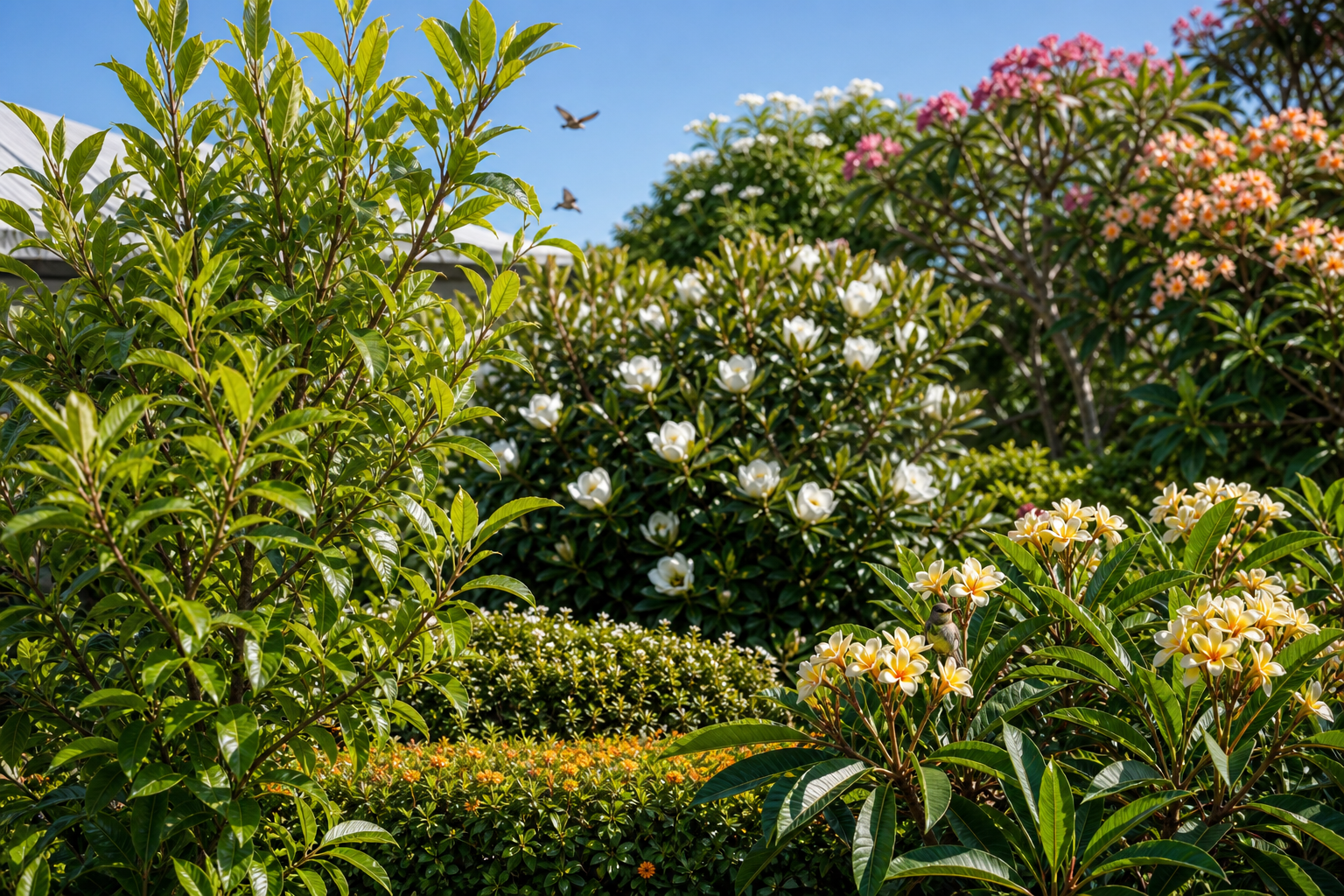
The Native Frangipani produces masses of creamy-yellow blossoms that gradually deepen in colour as they mature. Their sweet perfume is especially noticeable during spring evenings.
Unlike the traditional Frangipani, this Australian native remains evergreen, providing year-round structure.
Landscape Uses
Its upright habit makes it ideal beside driveways, courtyards and smaller suburban gardens where fragrance and shade are equally valued.
Magnolia Little Gem
Elegant Evergreen Beauty
Magnolia Little Gem has become a favourite throughout South East Queensland thanks to its glossy foliage and compact growth.
Large Fragrant Blooms
Gigantic creamy-white flowers release a luxurious perfume throughout spring and summer. Each bloom resembles fine porcelain and creates a spectacular contrast against the dark green foliage.
Frangipani (Plumeria rubra)
Tropical Fragrance
Few flowering trees evoke tropical holidays like the Frangipani. Its richly scented blossoms perfume the warm evening air and remain among the world's most recognisable flowers.
Colourful Flowering Varieties
Available in white, yellow, pink, crimson, apricot and multicoloured forms, Frangipanis provide months of spectacular flowering with relatively little maintenance.
Sweet Pittosporum (Pittosporum undulatum)
Highly Scented Spring Flowers
Clusters of creamy flowers release an unexpectedly rich honey fragrance that carries considerable distance on spring breezes.
Excellent Screening Tree
Dense evergreen foliage makes Sweet Pittosporum ideal for privacy while simultaneously filling the garden with seasonal perfume.
Orange Jessamine (Murraya paniculata)
Citrus Perfume
Every flush of tiny white flowers produces an intoxicating orange blossom fragrance that perfumes entire courtyards.
Compact Garden Appeal
Its naturally dense growth makes Orange Jessamine perfect for hedges, entranceways and formal gardens where scent can be appreciated daily.
Evergreen Michelia (Magnolia figo and hybrids)
Rich Floral Fragrance
Modern evergreen Michelias combine attractive glossy foliage with masses of delicately perfumed flowers.
Privacy and Screening
Many cultivars develop into dense evergreen screens, making them practical choices for contemporary landscapes.
Native Gardenia (Randia fitzalanii)
Beautiful White Flowers
Large white blossoms emit a gentle perfume while creating striking visual contrast against deep green foliage.
Wildlife Attraction
The flowers attract pollinators while the dense canopy offers shelter for small native birds.
Lemon Eucalyptus (Corymbia citriodora)
Refreshing Citrus Aroma
Even without flowers, the foliage releases refreshing lemon fragrance, especially after rainfall or warm afternoons.
Shade and Ornamental Value
Its elegant white trunk and graceful canopy create one of Australia's most beautiful feature trees.
Corkwood (Duboisia myoporoides)
Fragrant Blossoms
Small white flowers possess a subtle yet pleasant perfume that attracts numerous beneficial insects.
Native Rainforest Character
This rainforest species introduces softness and lushness into subtropical gardens while providing excellent habitat.
Ivory Curl Tree (Buckinghamia celsissima)
Creamy Flowers
Large cream flower spikes provide gentle fragrance while creating spectacular visual displays throughout summer.
Bird-Friendly Benefits
Rich nectar attracts honeyeaters, lorikeets and numerous beneficial pollinators.
Caring for Fragrant Trees
Soil Preparation
Healthy roots produce healthier flowers. Improve heavy clay soils with compost and gypsum where appropriate, while sandy soils benefit from generous organic matter and mulch.
Watering and Fertilising
Deep watering during establishment encourages extensive root development. Apply slow-release fertiliser during spring and replenish mulch annually to maintain soil health.
Designing a Fragrant Garden
Layering Scents
Combining multiple fragrant species creates evolving perfume throughout the seasons. Citrus notes from Lemon Myrtle complement the rich sweetness of Frangipani and the delicate elegance of Magnolia.
Seasonal Succession
Select trees that flower at different times to ensure fragrance remains a constant feature rather than a brief seasonal event.
Common Growing Mistakes
Incorrect Positioning
Planting fragrant trees too far from living spaces often wastes their greatest attribute. Place them where fragrance naturally drifts across patios, windows and pathways.
Overwatering and Poor Pruning
Excess moisture, poor drainage and heavy pruning can significantly reduce flowering performance and overall plant health.
Benefits Beyond Fragrance
Pollinators
Fragrant flowering trees become ecological hubs supporting bees, butterflies, birds and countless beneficial insects.
Shade and Biodiversity
Beyond their perfume, these trees moderate temperatures, improve air quality, provide habitat and enhance property value.
Frequently Asked Questions
Best Locations
Most fragrant trees perform best in full sun with good airflow, although several rainforest species appreciate filtered afternoon shade.
Maintenance Requirements
Once established, many recommended species require only seasonal pruning, annual mulching and occasional fertilising to remain healthy and floriferous.
Conclusion
A fragrant garden is more than a collection of beautiful plants—it is an immersive sensory experience. By selecting carefully chosen native and exotic trees suited to South East Queensland's subtropical climate, every season can bring new perfumes, vibrant wildlife and lasting beauty.
Whether the invigorating citrus notes of Lemon Scented Myrtle, the tropical sweetness of Frangipani, or the elegant perfume of Magnolia drifts across your garden, each tree contributes something unique. Together, they create an outdoor sanctuary where every breeze carries a reminder that the finest gardens are those that delight all the senses.