Flowering Bush Tucker Plants That Add Colour to Your Garden
 Trevor Dixon
Why Choose Flowering Bush Tucker Plants?
A truly memorable garden delights every sense. It captivates the eye with vibrant colour, perfumes the air with delicate fragrance, welcomes native wildlife, and rewards the gardener with edible harvests. Flowering bush tucker plants achieve all of this with remarkable elegance.
Unlike many ornamental species that serve only decorative purposes, flowering native food plants combine beauty with practicality. Their blossoms attract bees, butterflies, nectar-feeding birds, and beneficial insects, while their fruits, leaves, or flowers become ingredients for the kitchen. Many Australian native edible plants are also naturally adapted to local climates, making them resilient, water-wise additions to home gardens.
A garden can be breathtaking and productive at the same time.
Designing a Colourful Native Food Garden
Nature never relies on a single colour.
Instead, it layers textures, heights, flowering periods, and foliage tones to create landscapes that remain visually engaging throughout the year.
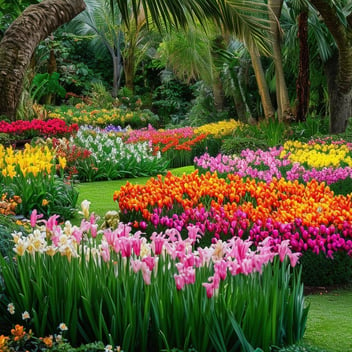
A successful flowering bush tucker garden follows this same philosophy. Position taller edible trees towards the rear, medium-sized flowering shrubs through the centre, and colourful groundcovers along borders and pathways. This layered approach mimics natural ecosystems while ensuring every level contributes beauty and productivity.
Seasonal succession is equally important. As one species finishes flowering, another begins, ensuring pollinators always have a food source and the garden never feels dormant.
The result is a landscape that constantly evolves.
Native Rosella: Vibrant Flowers with Culinary Appeal
Native Rosella (Hibiscus heterophyllus) is one of Australia's most spectacular edible flowering shrubs.
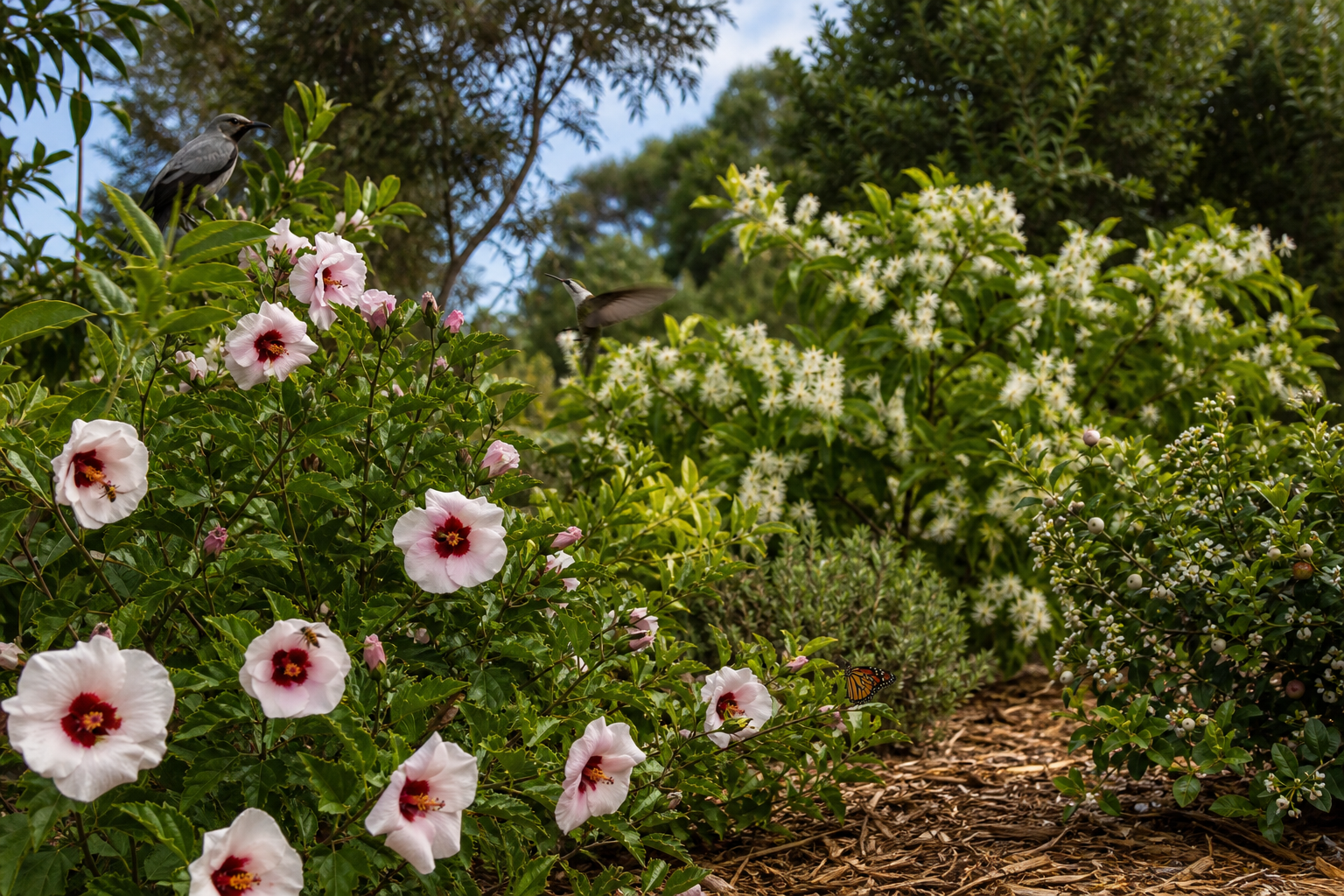
Its enormous blossoms range from creamy white to soft pink with dramatic crimson centres, creating a tropical display throughout the warmer months. The flowers themselves are edible, while the young leaves and flower buds can also be enjoyed in various dishes.
Growing happily in South East Queensland's subtropical climate, Native Rosella prefers full sun to partial shade and responds well to regular pruning after flowering.
Its blossoms attract nectar-feeding birds, while the shrub itself provides valuable shelter for wildlife.
Colour. Texture. Flavour.
Few plants offer such generous rewards.
Midyim Berry: Delicate Blooms and Sweet Rewards
At first glance, Midyim Berry (Austromyrtus dulcis) appears understated.
Then spring arrives.
Tiny white flowers emerge across its glossy foliage, followed by distinctive white berries decorated with delicate purple speckles. These attractive fruits possess a sweet flavour with hints of blueberry and spice, making them ideal for fresh eating or desserts. Native edible fruits such as Midyim Berry have become increasingly popular for their unique flavour profiles and resilience in Australian gardens.
As a compact shrub, Midyim Berry fits beautifully into smaller gardens, pathways, and containers while simultaneously attracting birds and pollinating insects.
It proves that subtle beauty can leave a lasting impression.
Native Hibiscus and Other Flowering Bush Foods
Many edible Australian natives produce blossoms worthy of any ornamental garden.
Native Hibiscus species create dramatic floral displays while contributing edible flowers and foliage. Lilly pilly varieties produce masses of soft cream flowers before developing colourful edible berries suitable for jams, sauces, and fresh eating.
These flowering species blur the traditional distinction between ornamental landscaping and productive gardening.
Why choose one when nature offers both?
Finger Lime and Lemon Myrtle in Bloom
Finger Lime (Citrus australasica) is famous for its sparkling citrus pearls, but its flowering display deserves equal admiration.
Small white blossoms appear throughout spring, attracting countless native pollinators before maturing into the distinctive elongated fruit that has become a favourite of chefs across Australia.
Lemon Myrtle (Backhousia citriodora) follows with elegant clusters of creamy white flowers accompanied by intensely fragrant foliage. While most gardeners treasure the leaves for their exceptional citrus aroma, the flowers themselves contribute considerable ornamental value.
These species remind gardeners that every harvest begins with a blossom.
Creating a Wildlife-Friendly Bush Tucker Garden
Flowering bush tucker plants create more than colourful landscapes.
They establish thriving ecosystems.
Nectar-rich flowers attract native bees, butterflies, honeyeaters, and beneficial insects that contribute to pollination and natural pest management. A diverse mix of flowering trees, shrubs, and groundcovers provides food, shelter, and nesting opportunities for wildlife throughout the seasons.
Grouping similar flowering species together creates highly visible feeding stations for pollinators, increasing visitation and improving fruit production.
Every bloom becomes an invitation.
Every visitor strengthens the garden.
Caring for Flowering Bush Tucker Plants
Healthy flowering begins with healthy plants.
Apply organic mulch generously to retain moisture, suppress weeds, and gradually enrich the soil. Water deeply during extended dry periods, particularly while plants are establishing.
Pruning immediately after flowering encourages fresh growth and often stimulates heavier blooming the following season. Feeding with slow-release fertilisers formulated for Australian native plants supports flowering without excessive leafy growth.
Observation is perhaps the most valuable gardening skill.
Notice when flowers emerge.
Watch which insects arrive.
Celebrate each new season.
A Garden That Blooms with Purpose
Flowering bush tucker plants offer something truly special.
They transform ordinary gardens into vibrant landscapes filled with colour, fragrance, movement, and flavour. Every blossom serves multiple purposes—feeding pollinators, producing edible harvests, supporting biodiversity, and celebrating Australia's extraordinary botanical heritage.
The result is far more than a beautiful garden.
It becomes a living tapestry where ornamental elegance and native abundance flourish side by side.