Edible Groundcovers: Beautify and Harvest Your Garden
 Trevor Dixon
Introduction
In a world where gardens often split between “pretty” and “practical,” edible groundcovers bridge the divide. They cloak your garden beds in verdant tapestry while also gifting you with leaves, herbs, fruit or flowers for the kitchen. Think of them as living mulch — beneficial to the soil and generous to your table. When chosen well, they transform barren soil into a living carpet that nurtures biodiversity and nourishes you.
The Advantages of Edible Groundcovers
Soil protection and erosion prevention
Groundcovers root swiftly and spread low and wide. Their networks of shallow roots clasp the soil tightly. This guards against erosion — especially on slopes or areas vulnerable to heavy rain. Instead of bare earth washing away, you get a living shield that holds soil where it belongs.
Weed suppression and moisture conservation
Once groundcovers form a dense mat, they leave little room for weeds to germinate. That means less weeding for you. Their leafy canopy also shades the soil, reducing evaporation. Moisture is retained, soil temperature stabilised — a boon in warm, dry spells.
Continuous harvest and biodiversity support
Every edible groundcover introduces a food layer inside your garden. Herbs release fragrance; edible greens supply fresh flavour; flowering species draw pollinators. The garden becomes more than ornamental. It becomes functional, sustainable — alive and abundant.
Traits to Look for in a Good Edible Groundcover
-
Low‑growing / mat-forming habit — plants should spread horizontally, not tower upward, to cushion soil and suppress weeds.
-
Edible leaves, stems, flowers or fruit — the harvestable aspect transforms a bed into a pantry.
-
Adaptability to climate and soil — good edible groundcovers tolerate a range of conditions and thrive without fuss.
Top Edible Groundcovers to Try
Creeping Thyme (Thymus spp.)
An aromatic, low‑growing herb that weaves its way across rockeries, borders or gaps between stepping stones. Its tiny leaves and delicate flowers can flavour dishes, teas or infuse oil. Drought‑tolerant and hardy — an excellent perennial groundcover for kitchens and gardens alike.
Oregano (Origanum vulgare)
Robust, fragrant, and spreading generously, oregano does double duty as a culinary herb and a living carpet. Leaves for sauces, roasts or stews; a green carpet underfoot — all while choking out weeds and stabilising soil.
Nasturtium
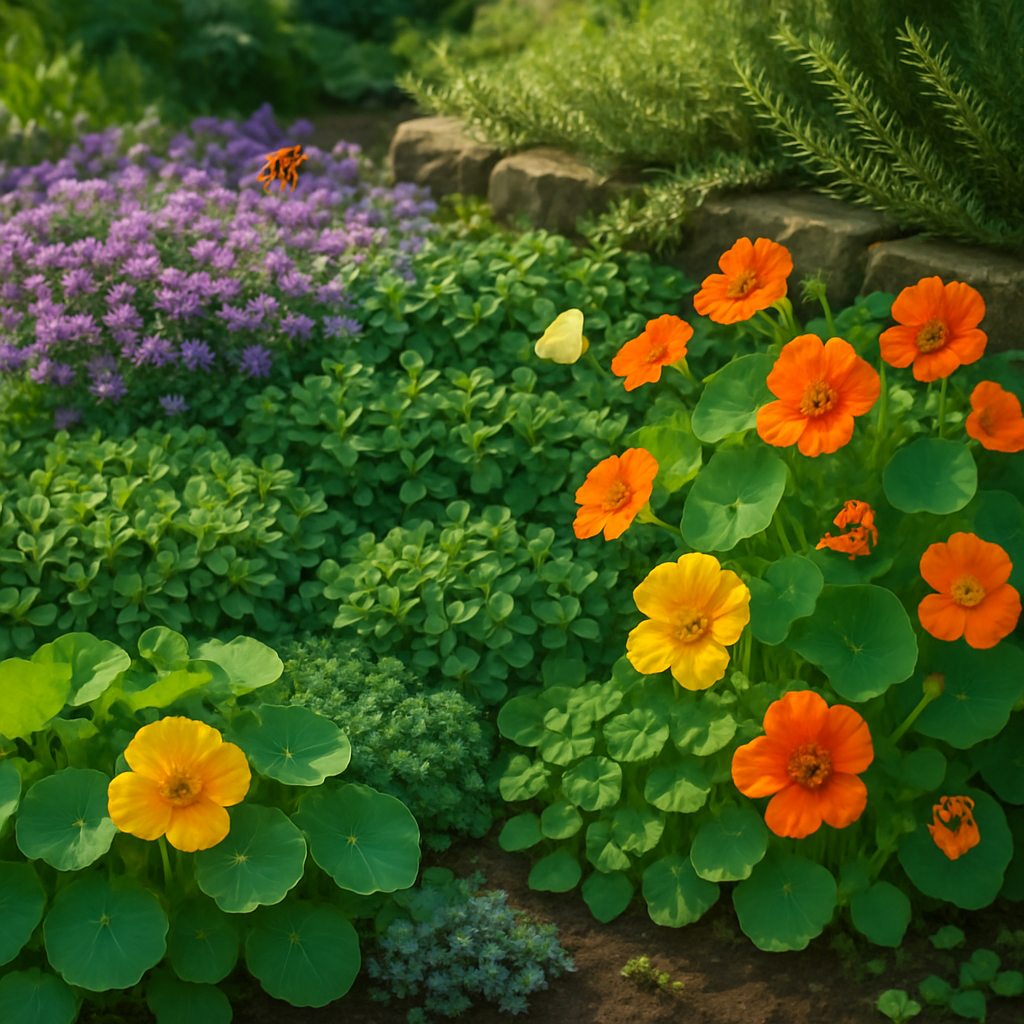
Bright, peppery, edible leaves and cheery blooms make nasturtiums a star choice for edible landscaping. They self‑seed with abandon, creating colourful groundcover and adding zest to salads. Additionally, their trailing habit suppresses weeds and helps preserve moisture.
New Zealand Spinach (Tetragonia tetragonioides)
When conventional leafy greens balk under heat or drought, New Zealand spinach marches on. Its succulent leaves, tolerant of warm weather, make it a superb edible groundcover — offering fresh greens through harsh seasons.
Wild / Alpine Strawberry (Fragaria spp.)
Low to the ground, spreading via runners, wild strawberries create a soft, edible carpet that delights with tiny, sweet berries. Perfect between stepping stones or at garden edges — edible groundcover that tastes like summer.
Sissoo Spinach (Alternanthera sessilis)
Also known as Brazilian spinach, this tropical green thrives in warm climates and spreads with vigour. Leaves and tender stems cook up like spinach; roots often root wherever stems touch soil. A living mulch and salad source — excellent for subtropical gardens.
Creeping Rosemary (Salvia rosmarinus 'Prostratus')
Hardy and aromatic, creeping rosemary offers fragrant, evergreen foliage that doubles as a culinary herb. It thrives in well‑drained soil and full sun — making it ideal for dry, sunny slopes or rockeries, where it can spread and season your dishes.
Planting and Managing Edible Groundcovers
Site preparation and soil needs
Begin with clean soil — clear weeds and debris. Loosen the soil surface and add a layer of compost or organic matter. Well‑draining soil helps prevent root rot, especially for Mediterranean herbs like oregano or thyme.
Spacing, propagation and planting tips
Many edible groundcovers spread via runners or self‑seeding. Plant them a little closer than you might for ornamentals. Encourage their spread by pinning stems or keeping soil moist during the establishment period.
Watering, fertilising and maintenance
While many groundcovers are resilient once established, they benefit from regular watering during dry stints in their first few months. Light feeding with compost helps boost growth. Regular harvesting and gentle trimming maintain density and encourage fresh growth.
Integrating Edible Groundcovers into Garden Design
Using groundcovers between pavers, border edges and pathways
Why leave gaps filled with weeds when you can slip in creeping thyme, wild strawberry or creeping rosemary between stones? They soften hardscape, suppress weeds, and release delicious aromas underfoot.
Combining with shrubs, vegetables and fruit trees for layered yield
Stack your garden vertically: low‑growing edible carpets beneath fruit trees or shrubs — above them, taller plants. Groundcovers serve as living mulch, retaining moisture and enriching soil under deeper‑rooted plants.
Creating a living mulch or edible lawn alternative
Instead of conventional turf, an edible groundcover lawn of creeping thyme, strawberry or oregano offers fragrance, flavour and a soft surface — reducing mowing while enhancing your garden’s utility.
Cautions and Considerations
Managing spread and invasiveness
Some groundcovers — like nasturtiums or mint — can self‑seed or spread aggressively. Containment strategies such as edging or frequent trimming help prevent them from overruning other plantings.
Harvesting without harming the mat
Pick leaves, flowers or fruit gently. Avoid uprooting or trampling — the strength of a groundcover lies in its continuous, intact carpet.
Balancing use for harvest and groundcover function
If you harvest heavily, allow recovery time for regrowth. Overharvesting can weaken the groundcover’s ability to suppress weeds or stabilise soil.
Conclusion
Edible groundcovers offer a compelling fusion of function and beauty. They transform vacant soil into thriving, productive carpets — feeding both soil and stomach. From herbs draping over rocky edges to leafy greens carpeting garden beds, these living mulches enrich gardens in countless ways. Plant a few, tend them lightly, and watch as your garden becomes a lush, edible tapestry.