Companion Planting: A Natural Defense Against Pests in SEQ
 Trevor Dixon
Introduction
South East Queensland gardeners enjoy one of Australia's longest growing seasons. Vegetables, herbs, flowers and tropical ornamentals flourish throughout much of the year, creating vibrant landscapes filled with life.
Unfortunately, pests enjoy these conditions just as much.
Aphids, whiteflies, caterpillars, mealybugs and countless other insects find abundant food in subtropical gardens. Rather than relying solely on pesticides, many experienced gardeners embrace a far older and more sustainable strategy—companion planting.
Companion planting is the practice of growing different species together so they support one another through pest deterrence, attracting beneficial insects, improving soil health, or acting as trap crops. While it is not a cure-all, increasing plant diversity can help reduce pest pressure and create a healthier, more balanced garden ecosystem.
The Science Behind Companion Planting
Companion planting works because gardens function as ecosystems rather than isolated collections of plants.
Biodiversity Confuses Pests
Large blocks of identical plants are easy for insects to locate.
Mixed plantings interrupt visual and scent cues, making it more difficult for specialist pests to find their preferred hosts. Diversity also reduces the rapid spread of pests and diseases that often occurs in monocultures.
Attracting Beneficial Insects
Many flowering herbs and ornamentals produce nectar and pollen that attract natural predators.
Ladybirds, hoverflies, lacewings and parasitic wasps all rely on flowering plants for food during parts of their life cycle. Once established, these beneficial insects feed on aphids, caterpillars, whiteflies and other destructive pests.
Improving Plant Health Naturally
Some companion plants contribute nitrogen, suppress weeds, improve moisture retention or simply create a more resilient growing environment.
Healthier plants are naturally better equipped to tolerate occasional pest activity.
Best Companion Plants for Pest Control
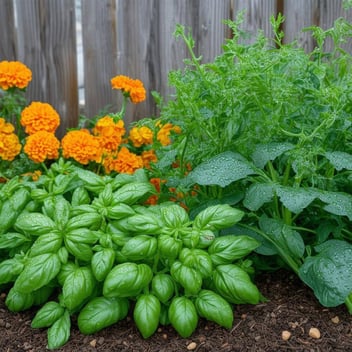
Marigolds
Marigolds remain one of the most popular companion plants.
Their aromatic foliage can help discourage certain insect pests while their colourful flowers attract pollinators and beneficial insects. Some species may also assist in reducing certain soil-borne pests.
Nasturtiums
Nasturtiums serve as excellent trap crops.
Aphids and some caterpillars are often attracted to nasturtiums instead of nearby vegetables, allowing gardeners to concentrate pest control on sacrificial plants rather than food crops.
Basil
Planted near tomatoes, basil is widely valued for attracting pollinators and beneficial insects while helping to confuse certain pest species through its aromatic foliage.
Dill and Coriander
When allowed to flower, these herbs become magnets for hoverflies and parasitic wasps whose larvae prey upon aphids and caterpillars.
Their delicate flowers provide nectar throughout the growing season.
Chives and Garlic
Members of the allium family produce strong scents that may help mask neighbouring crops from some insect pests while contributing valuable biodiversity.
Sweet Alyssum
Tiny flowers produce enormous ecological benefits.
Sweet alyssum attracts hoverflies, lacewings and numerous predatory insects that help maintain natural pest control throughout the vegetable garden.
Matching Companion Plants with Common SEQ Crops
Tomatoes
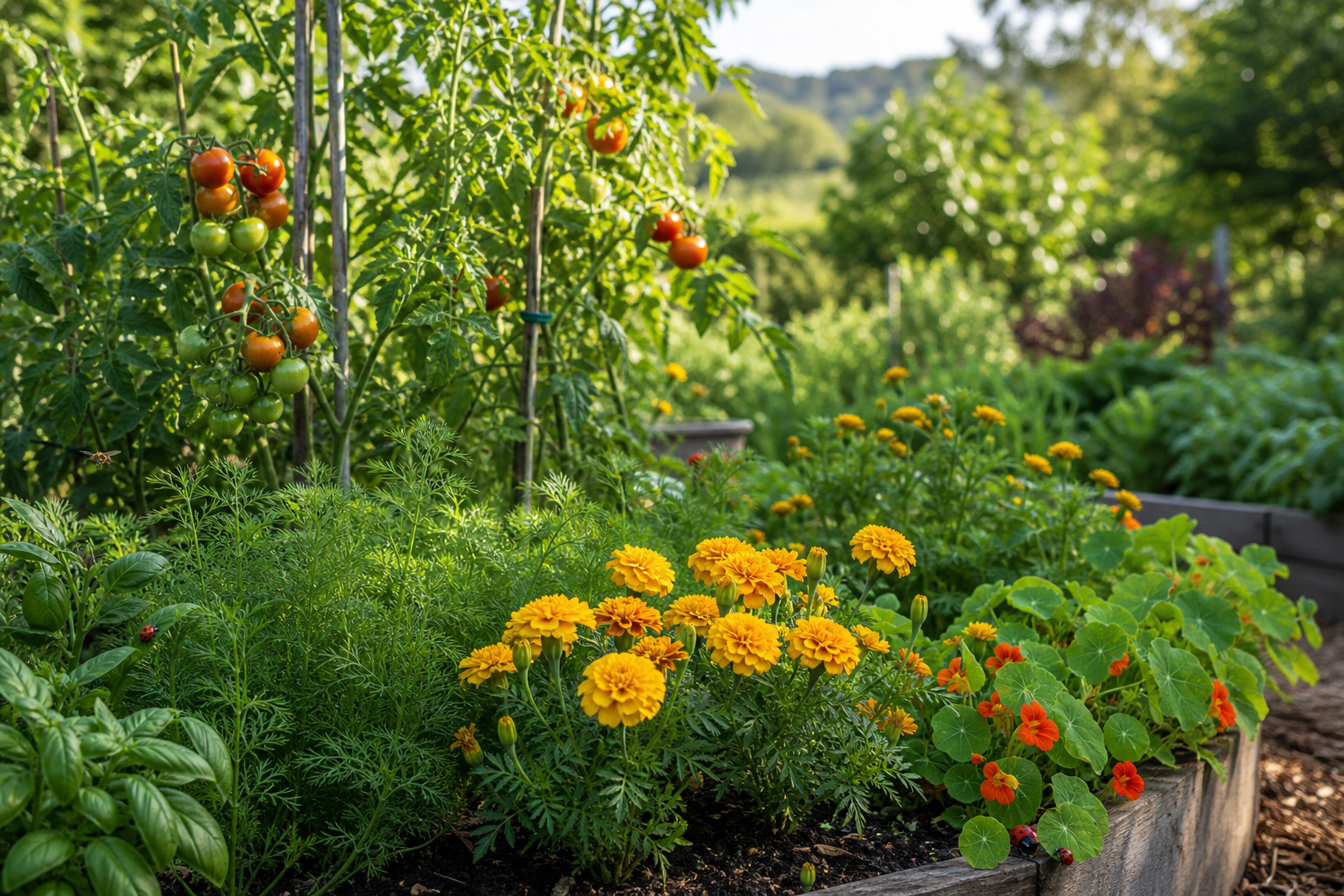
Excellent companions include:
- Basil
- Marigolds
- Sweet alyssum
- Borage
Together they encourage pollinators and beneficial insects while increasing biodiversity.
Brassicas
Brassicas benefit from nearby herbs such as dill and coriander that attract predators of cabbage caterpillars.
Nasturtiums may also function as sacrificial trap crops.
Cucumbers
Cucumbers pair well with nasturtiums and flowering companions that attract pollinators while shading surrounding soil.
Beans
Beans enrich surrounding soil through nitrogen fixation, benefiting neighbouring leafy vegetables and other nutrient-demanding crops.
Fruit Trees
Underplanting with flowering herbs creates continuous food sources for pollinators and predatory insects while suppressing weeds beneath the canopy.
Beneficial Insects Your Garden Should Welcome
A successful companion planting system supports an army of natural pest controllers.
Ladybirds
Both adults and larvae consume astonishing numbers of aphids throughout their lives.
Lacewings
Their larvae are often called aphid lions because of their voracious appetite for soft-bodied insects.
Hoverflies
Adult hoverflies pollinate flowers while their larvae feed heavily on aphids and other pests.
Native Bees
Although they do not control pests directly, native bees improve pollination and increase productivity throughout vegetable gardens.
Parasitic Wasps
Tiny yet highly effective, these remarkable insects lay eggs within pest insects, naturally reducing populations before outbreaks occur.
Common Companion Planting Mistakes
Companion planting works best when combined with good horticultural practices.
Common mistakes include:
- Planting incompatible species together
- Ignoring mature plant size
- Overcrowding beds
- Forgetting sunlight requirements
- Pairing plants with conflicting water needs
Companion planting cannot compensate for poor soil, inadequate irrigation or unhealthy plants.
Creating a Companion Planting Layout
Design is just as important as plant selection.
Mix vegetables with herbs and flowers rather than creating large monocultures.
Border vegetable beds with flowering insectary plants.
Include trap crops where pest pressure is highest.
Vary plant heights to maximise sunlight while creating diverse habitats for beneficial insects.
This layered approach produces a more stable and resilient ecosystem.
Seasonal Companion Planting Tips for SEQ
Spring
Introduce flowering companions before pest populations build.
Summer
Maintain mulch, ensure consistent watering and keep flowering herbs blooming to sustain beneficial insects through peak pest activity.
Autumn
Plant cool-season vegetables alongside companion herbs to support predator populations as new crops establish.
Winter
Continue flowering succession wherever possible. Even during Queensland winters, many beneficial insects remain active on mild days.
Building a Self-Regulating Garden
The ultimate objective is not eliminating every insect.
Healthy gardens contain both pests and predators.
Over time, companion planting encourages ecological equilibrium where beneficial insects naturally suppress damaging pest populations. This reduces dependence on pesticides while improving pollination, soil health and overall biodiversity. Companion planting is most effective as part of an integrated gardening approach rather than as a standalone solution.
Conclusion
Companion planting transforms the garden into something greater than the sum of its individual plants.
Flowers attract predators. Herbs confuse pests. Legumes enrich the soil. Groundcovers suppress weeds. Together they create a living system that supports healthier, stronger plants throughout South East Queensland's long growing season.
While companion planting is not a magic solution, it offers a practical, sustainable way to reduce pest pressure, encourage biodiversity and cultivate a thriving garden where nature becomes your most valuable gardening partner.