Attracting Native Wildlife with Indigenous Perennials
 Trevor Dixon
Introduction
A thriving garden is far more than a collection of beautiful plants. It is a living ecosystem. Every flower visited by a bee, every berry enjoyed by a bird, and every tuft of grass sheltering a small skink contributes to a vibrant web of life that extends well beyond the garden fence.
One of the most rewarding ways to create such a landscape is by planting indigenous perennials. These enduring plants have evolved alongside local wildlife over thousands of years, developing intricate relationships that provide food, shelter and breeding habitat for countless native species.
Unlike many exotic ornamentals, indigenous perennials are perfectly attuned to local conditions. They flourish in the climate, require fewer resources, and create landscapes that are as environmentally valuable as they are visually captivating.
Understanding Indigenous Perennials
The terms native and indigenous are often used interchangeably, yet they carry distinct meanings.
A native plant occurs naturally somewhere within Australia. An indigenous plant is even more specific—it originates naturally within your local region. This distinction is significant because local wildlife has adapted to these plants over millennia.
Indigenous perennials possess characteristics that make them exceptional garden performers. They are naturally resilient to local weather patterns, adapted to regional soils, and generally require less irrigation and fertiliser than introduced species.
More importantly, they support biodiversity in ways that many ornamental plants simply cannot.
Why Native Wildlife Depends on Indigenous Plants
Every indigenous perennial contributes something unique to the surrounding ecosystem.
Flowering species provide nectar and pollen for native bees, butterflies, hoverflies and honeyeaters. Different plants flower throughout the year, ensuring a continuous supply of food even during lean seasons.
Dense grasses and groundcovers create refuge for reptiles, frogs and beneficial insects. Small mammals find protection beneath foliage, while birds collect leaves, fibres and grasses to build intricate nests.
Many indigenous plants also host caterpillars and insect larvae. Although some gardeners view these creatures as pests, they are essential food sources for insect-eating birds and form a crucial link within the food chain.
By planting indigenous perennials, even a modest suburban garden becomes an ecological stepping stone that connects fragmented habitats across urban landscapes.
Top Indigenous Perennials for Wildlife Gardens
Lomandra longifolia
Few Australian perennials are as versatile as Lomandra longifolia. Its dense, arching foliage provides shelter for small reptiles and insects, while birds frequently gather its fibrous leaves for nest construction.
Exceptionally hardy and drought tolerant, it thrives in full sun and partial shade.
Dianella caerulea
Commonly known as Blue Flax Lily, Dianella caerulea combines ornamental beauty with ecological value.
Soft blue flowers attract native pollinators before giving way to brilliant blue berries enjoyed by birds. Its strappy foliage remains attractive throughout the year, making it ideal for borders and understorey planting.
Viola hederacea
This charming native violet forms a lush green carpet beneath trees and shrubs.
Its delicate white and purple flowers attract tiny pollinating insects, while the dense foliage provides moist shelter for frogs and beneficial invertebrates.
Myoporum parvifolium
One of Australia's finest native groundcovers, Myoporum parvifolium spreads gracefully across slopes, retaining walls and garden beds.
Masses of small white flowers become magnets for bees and other beneficial insects throughout the flowering season.
Themeda triandra
Kangaroo Grass introduces movement, texture and habitat.
Its elegant seed heads sway with every breeze while supporting numerous native insects that become food for birds and reptiles.
Chrysocephalum apiculatum
Known as Common Everlasting, this resilient perennial produces brilliant golden flowers over extended periods.
The blooms attract bees, butterflies and hoverflies, while their long-lasting colour brightens native gardens year-round.
Bulbine bulbosa
Native Leek offers striking yellow flowers that emerge above slender foliage.
These blooms provide valuable nectar for native bees and butterflies during spring and early summer.
Native Daisies
Australian daisies such as Brachyscome and Xerochrysum species create dazzling displays while supporting countless pollinating insects.
Their extended flowering periods ensure wildlife always has access to food.
Designing a Wildlife-Friendly Garden
Successful wildlife gardens mimic natural ecosystems.
Begin by creating layers.
Groundcovers provide habitat close to the soil. Mid-sized perennials fill the middle layer, while taller shrubs and trees offer canopy cover.
This vertical diversity accommodates many different species simultaneously.
Aim to include plants that flower during different seasons.
Spring nectar is important.
Summer blooms sustain growing populations.
Autumn flowers prepare wildlife for winter.
Even winter-flowering species become invaluable when food is scarce.
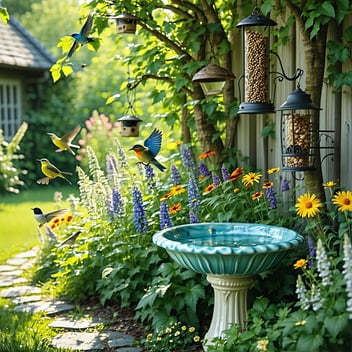
Adding shallow water sources dramatically increases wildlife activity.
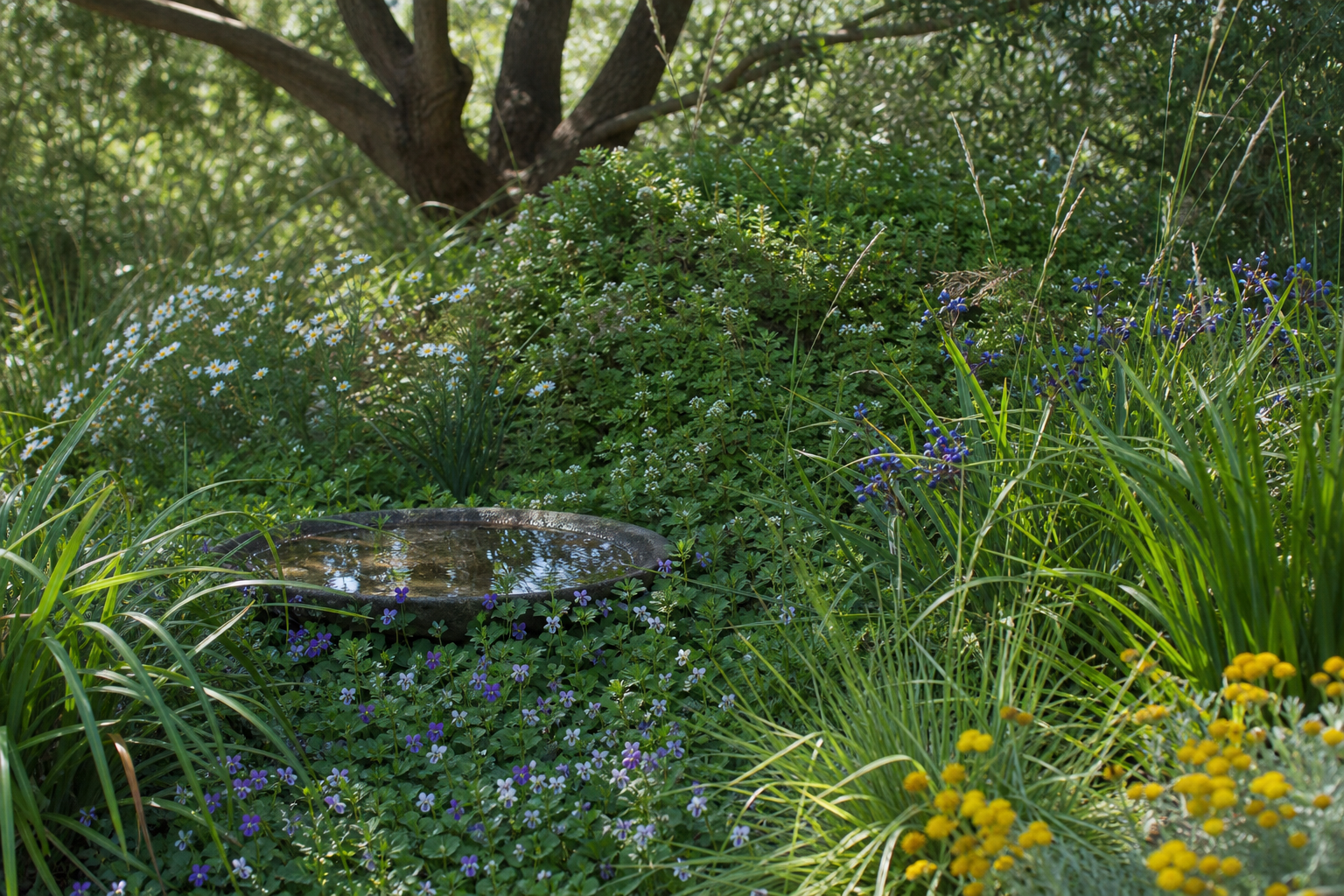
A simple bird bath, small pond or water bowl with rocks for insects to land upon can become the busiest location in the entire garden.
Retaining fallen leaves beneath plants also provides habitat for insects and naturally enriches the soil.
Caring for Indigenous Perennials
One of the greatest advantages of indigenous perennials is their relatively modest maintenance requirements.
Prepare soil by incorporating compost where necessary, although many indigenous species perform remarkably well in poorer soils.
Water consistently during establishment.
Once roots have developed, many species require only occasional supplementary irrigation during prolonged dry periods.
Apply organic mulch to retain moisture, suppress weeds and improve soil structure over time.
Avoid excessive fertilising.
Many indigenous plants have evolved in nutrient-poor soils and excessive fertiliser may encourage weak, unnatural growth.
Where pests occur, favour natural solutions.
Ladybirds, lacewings, predatory wasps and insect-eating birds often restore balance without chemical intervention.
Wildlife You Can Expect to Attract
As indigenous perennials mature, the diversity of wildlife increases.
Native stingless bees gather nectar from flowering plants.
Blue-banded bees buzz energetically between blossoms.
Butterflies flutter through sunny garden beds searching for nectar and host plants.
Honeyeaters arrive to feed on flowering grasses and perennials.
Wrens forage beneath dense groundcovers.
Blue-tongue lizards patrol garden beds hunting insects and snails.
Even frogs may establish themselves if moisture and shelter are consistently available.
The garden gradually becomes a sanctuary where every season reveals new visitors.
Common Mistakes to Avoid
A common mistake is assuming all Australian native plants provide equal ecological value.
Indigenous species generally offer greater benefits because local wildlife has evolved alongside them.
Another mistake is maintaining the garden too meticulously.
Removing every fallen leaf, pruning immediately after flowering, or cutting back grasses before birds have harvested seed can reduce habitat quality.
Chemical pesticides should also be avoided wherever possible.
They rarely discriminate between pests and beneficial insects, disrupting the ecological balance that indigenous gardens naturally encourage.
Finally, resist the temptation to plant only one or two species.
Greater plant diversity supports greater wildlife diversity.
Conclusion
Every indigenous perennial planted represents an investment in the future of Australia's remarkable biodiversity.
Collectively, these plants transform gardens into living ecosystems where birds sing, butterflies dance, bees forage and reptiles quietly bask beneath protective foliage.
The rewards extend far beyond aesthetics.
An indigenous garden becomes more resilient, more sustainable and infinitely more alive.
Whether beginning with a single native daisy or redesigning an entire landscape, each indigenous perennial contributes to restoring habitat, supporting wildlife and reconnecting gardens with the natural heritage of the local environment.
In doing so, every garden becomes more than a beautiful place—it becomes part of a thriving ecological legacy.