Attracting Birds to Your Garden with Native SEQ Trees
 Trevor Dixon
Introduction
A garden alive with birds is something extraordinary. It hums. It flickers. It sings. In South East Queensland, this transformation is not a matter of luck—it is a matter of choice. By planting the right native trees, a quiet yard can become a thriving sanctuary, rich with movement and melody. Native trees are not just decorative elements; they are ecological invitations, calling birds back to where they belong.
Why Native Trees Attract More Birds
Native trees and birds share a long evolutionary history. They have grown together, adapted together, depended on each other for survival. This relationship is the secret behind a bird-filled garden.
Native plants provide nectar, seeds, fruit, and—critically—insects, which are a vital protein source for many birds . Exotic plants, while sometimes visually striking, often fail to support the complex food web birds rely on.
When native trees flourish, insects follow. When insects flourish, birds arrive. It is a simple, elegant chain—one that begins with the right planting choices.
Understanding Bird Needs in the Garden
Birds are not merely visitors; they are residents seeking four essentials:
- Food — nectar, berries, seeds, and insects
- Water — for drinking and bathing
- Shelter — dense foliage for protection
- Nesting sites — branches, hollows, and safe cover
Dense shrubs and trees provide protection from predators, while flowering species attract insects that feed insectivorous birds . Large trees with hollows can even offer nesting sites for parrots and lorikeets.
The most successful bird-friendly gardens mimic natural ecosystems. They are layered. Complex. Alive.
Top Native Trees to Attract Birds in SEQ
Eucalyptus Species
Towering and iconic, eucalypts are ecological powerhouses. Their blossoms produce abundant nectar, attracting honeyeaters, lorikeets, and other nectar-feeding birds. They also provide seeds, shelter, and nesting hollows over time .
Acacia (Wattle)
Golden blooms. Fine foliage. A feast for wildlife. Wattles produce seeds loved by finches and parrots while simultaneously attracting insects that feed other bird species .
Lilly Pilly
Glossy foliage and colourful berries make Lilly Pilly a magnet for birds. The fruit draws in species seeking sustenance, while the dense canopy offers excellent protection and nesting opportunities.
Banksia
Bold, architectural flowers loaded with nectar. Banksias are irresistible to nectar-feeding birds and small mammals, making them a cornerstone of bird-attracting gardens .
Melaleuca and Callistemon
Bottlebrush-like flowers burst with nectar, attracting honeyeaters and pollinators. Their dense structure also provides shelter and nesting space.
Designing a Bird-Friendly Garden Layout
Structure matters. A flat, sparse garden will rarely teem with life. Birds crave complexity.
- Tall canopy trees create shelter and nesting zones
- Mid-layer shrubs provide protection and food
- Groundcovers and grasses offer seeds and insect habitat
Layering these elements mimics natural bushland ecosystems and dramatically increases bird activity .
Clusters of planting—rather than isolated specimens—create safe corridors where birds can move, feed, and rest without exposure.
Enhancing Your Garden Beyond Trees
Trees are the backbone. But a complete bird habitat needs more.
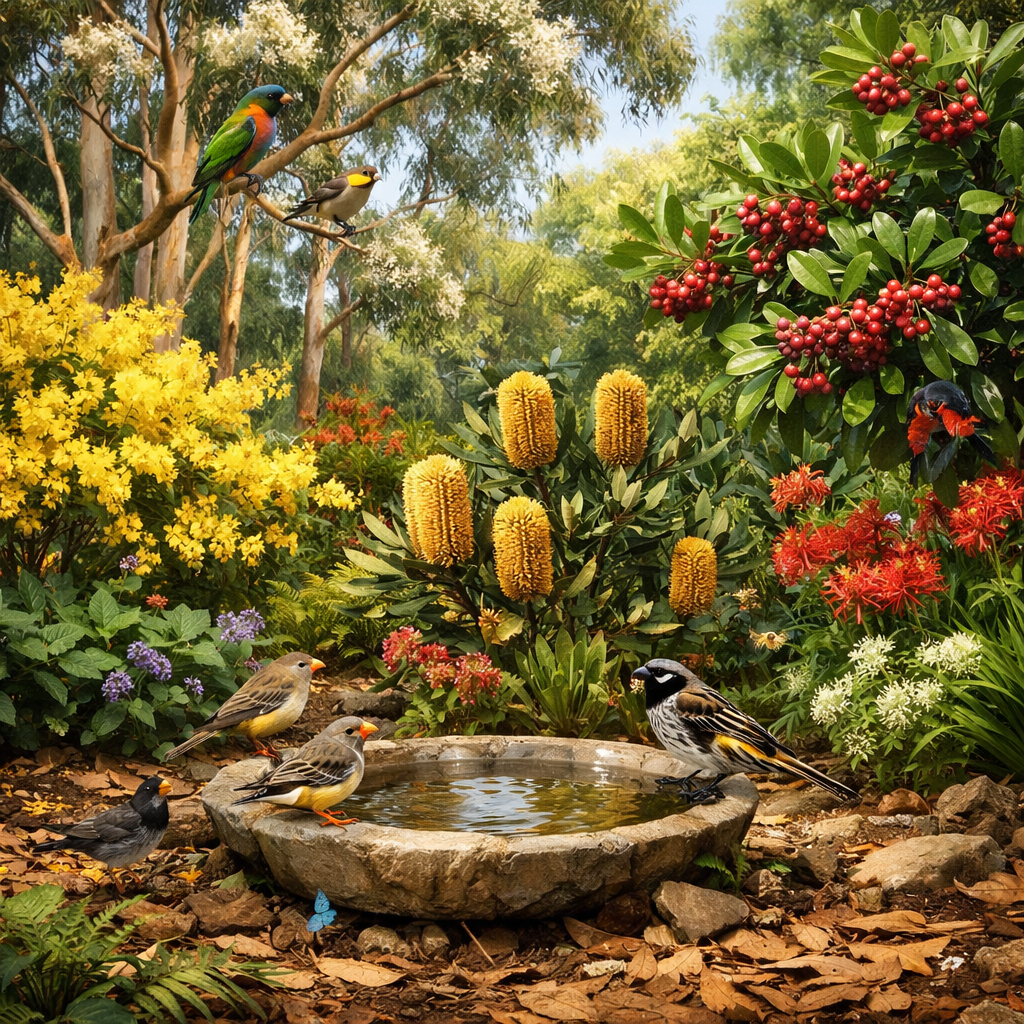
- Water sources: shallow bird baths refreshed regularly attract a wide variety of species
- Leaf litter and mulch: encourage insects, which in turn attract birds
- Natural materials: fallen branches and bark provide nesting resources
Avoid pesticides. They strip away the insect life birds depend on. A slightly wild garden is not neglect—it is generosity.
Seasonal Considerations for Continuous Bird Activity
A truly vibrant garden offers food across all seasons.
- Spring: flowering trees for nectar
- Summer: fruiting species
- Autumn: seed-producing plants
- Winter: shelter and remaining food sources
By selecting a mix of species with staggered flowering and fruiting times, the garden becomes a year-round refuge rather than a seasonal stopover.
Common Mistakes to Avoid
- Over-reliance on exotics — often limited ecological value
- Monoculture planting — lack of diversity reduces resilience
- Sparse structure — insufficient shelter deters smaller birds
- Overly tidy gardens — removing natural debris eliminates food sources
Gardens designed purely for aesthetics often miss the deeper opportunity: to become living ecosystems.
Conclusion
Attracting birds to your garden is not about chance—it is about intention. Native SEQ trees provide the nourishment, shelter, and ecological harmony birds need to thrive.
Plant thoughtfully. Layer generously. Let the garden soften and evolve.
In time, the reward is unmistakable—a landscape filled with wings, colour, and song. A garden no longer silent, but alive.