Are Your Garden Plants Safe? Toxic Species in SEQ to Avoid
 Trevor Dixon
Introduction
South East Queensland is home to some of Australia's most spectacular gardens. Vibrant flowering shrubs, lush tropical foliage, colourful climbers, and majestic shade trees flourish throughout the region's subtropical climate. Every season introduces another display of botanical brilliance.
Yet hidden beneath this natural splendour is an often-overlooked reality.
Many popular garden plants contain toxic compounds capable of causing serious illness in people, pets, and wildlife. Some irritate the skin with only the slightest touch. Others can affect the heart, nervous system, liver, or digestive tract after accidental ingestion. Even experienced gardeners are often surprised to discover that familiar ornamentals rank among the most poisonous plants commonly grown throughout South East Queensland.
Knowing which species deserve extra caution is one of the simplest ways to create a safer outdoor environment without sacrificing beauty.
Why Toxic Plants Are Common in South East Queensland
South East Queensland provides ideal growing conditions for an enormous range of tropical and subtropical species.
Long summers encourage vigorous growth. Mild winters allow many ornamentals to thrive year-round. Reliable rainfall and fertile soils create perfect conditions for both native and introduced plants.
Unfortunately, these same conditions also favour many highly toxic species.
Over decades, ornamental plants from South America, Africa, Asia, and the Pacific have become established throughout the region. Many remain popular because of their colourful flowers, resilience, and drought tolerance. Their toxic properties often remain unnoticed until an accident occurs.
Awareness, rather than alarm, is the key to responsible gardening.
The Most Common Toxic Plants Found in SEQ Gardens
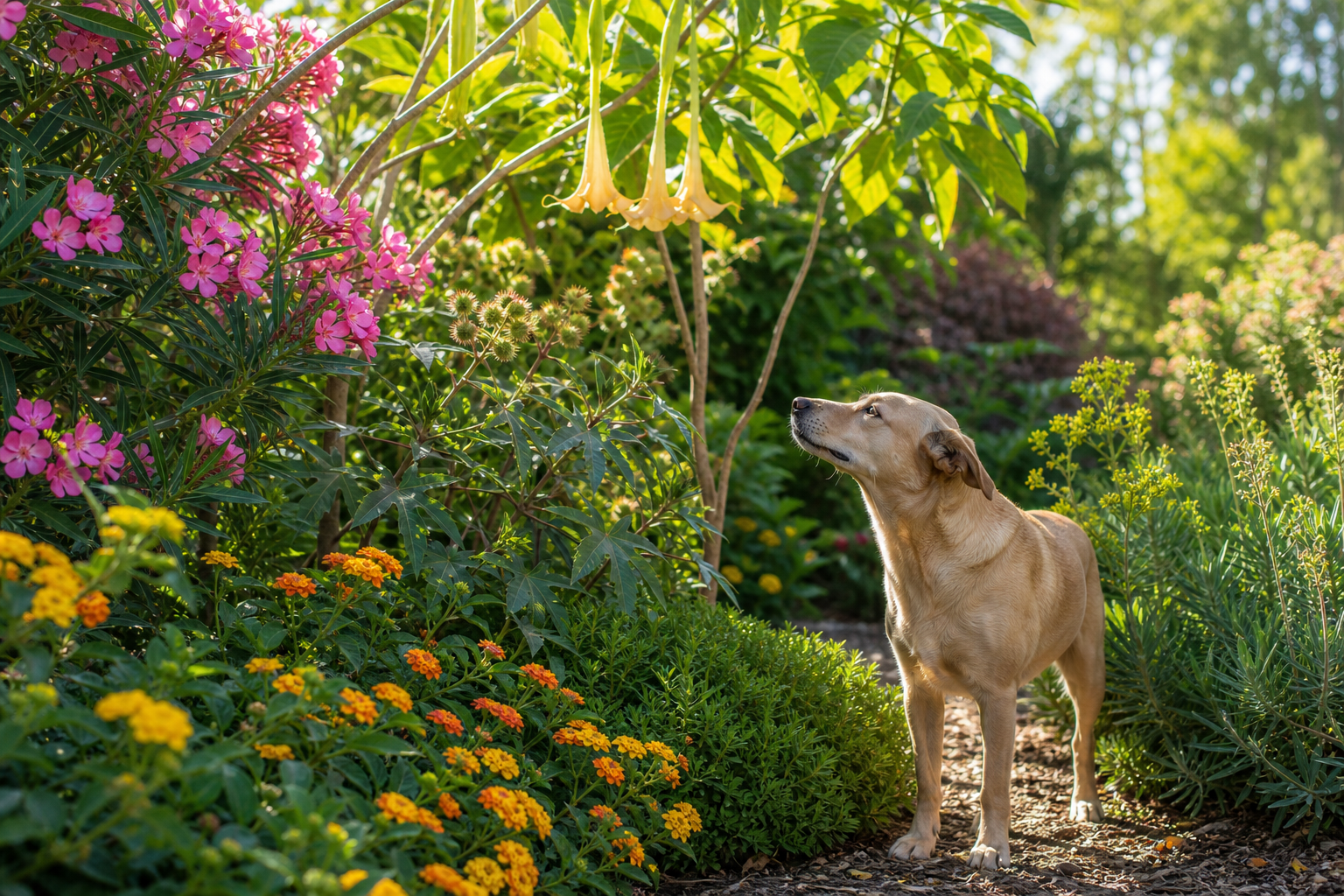
Oleander (Nerium oleander)
Oleander has become synonymous with colourful suburban landscapes. It flowers prolifically and tolerates drought, heat, and poor soils.
Despite its popularity, every part of the plant is poisonous.
Its cardiac glycosides interfere with normal heart function and can cause nausea, vomiting, irregular heartbeat, dizziness, and potentially fatal complications following ingestion.
Even the sap may irritate sensitive skin.
Angel's Trumpet (Brugmansia spp.)
With enormous trumpet-shaped flowers cascading from graceful branches, Angel's Trumpet is undeniably spectacular.
It is also one of the most dangerous ornamentals grown in home gardens.
The entire plant contains tropane alkaloids capable of affecting the central nervous system. Symptoms may include confusion, hallucinations, dilated pupils, rapid heartbeat, and respiratory distress.
Its intoxicating beauty hides an impressive chemical defence system.
Lantana (Lantana camara)
Lantana produces cheerful clusters of flowers in shades of yellow, orange, pink, red, and purple.
Behind the colour lies toxicity.
The leaves and unripe berries contain compounds that can damage the liver and cause severe illness in livestock and pets. As an added concern, lantana is also one of Queensland's most invasive environmental weeds.
Mother of Millions (Bryophyllum spp.)
Few plants spread as efficiently as Mother of Millions.
Tiny plantlets develop along each leaf edge, rapidly colonising nearby garden beds and bushland.
Unfortunately, the plant contains bufadienolides—cardiac toxins capable of causing heart failure in grazing animals and poisoning domestic pets.
Its remarkable reproductive ability makes early removal essential.
Castor Oil Plant (Ricinus communis)
Bold foliage and striking seed capsules give the Castor Oil Plant a dramatic architectural presence.
Inside its attractive seeds resides ricin, among the most potent naturally occurring plant toxins.
Accidental ingestion can produce severe gastrointestinal symptoms, internal organ damage, and life-threatening complications.
Dumb Cane (Dieffenbachia spp.)
Frequently grown indoors and beneath shaded patios, Dumb Cane is valued for its impressive foliage.
The danger lies within microscopic calcium oxalate crystals embedded throughout the leaves.
Chewing the plant releases these needle-like crystals into soft tissues, causing immediate burning pain, swelling, excessive drooling, and difficulty swallowing.
Green Cestrum (Cestrum parqui)
Often overlooked because of its modest appearance, Green Cestrum is one of Queensland's most poisonous shrubs.
It produces clusters of greenish-yellow flowers followed by dark berries.
Consumption can result in severe liver damage, particularly in livestock, but it also poses risks to domestic animals and humans.
Yellow Oleander (Cascabela thevetia)
Yellow Oleander dazzles with brilliant golden flowers that bloom throughout much of the year.
Unfortunately, it contains toxic cardiac glycosides similar to those found in common oleander.
Its attractive seeds are especially hazardous if swallowed.
How Toxic Plants Harm People and Animals
Plant toxins vary enormously.
Some attack the cardiovascular system, disrupting normal heart rhythms.
Others interfere with nerve function, producing hallucinations, tremors, seizures, or paralysis.
Certain species primarily irritate the skin, eyes, or digestive tract through corrosive sap or microscopic crystals.
Pets are particularly vulnerable because they investigate unfamiliar plants with their mouths. Children are similarly at risk, often attracted by colourful flowers or berries.
Understanding how these toxins work helps explain why even seemingly harmless ornamentals deserve respect.
Recognising the Warning Signs
Symptoms of plant poisoning can appear rapidly or develop gradually depending on the species involved.
Common warning signs include:
- Nausea and vomiting
- Excessive drooling
- Abdominal pain
- Skin redness or blistering
- Swelling of the lips, mouth, or throat
- Irregular heartbeat
- Dizziness or confusion
- Difficulty breathing
- Tremors or seizures
- Sudden weakness or collapse in pets
Never ignore these symptoms if toxic plant exposure is suspected.
Prompt medical or veterinary treatment can make a significant difference.
Creating a Safer South East Queensland Garden
Safety begins with awareness.
Walk through your garden regularly and identify every plant growing on your property. Replace highly toxic species in areas used by children and pets.
Wear gloves when pruning or removing unfamiliar plants.
Wash hands thoroughly after gardening.
Avoid burning toxic plant material, as smoke from some species can contain harmful compounds.
Teaching children never to eat berries, flowers, or leaves from the garden provides another valuable layer of protection.
Small precautions create enormous peace of mind.
Beautiful and Safe Alternatives
Fortunately, creating a stunning landscape does not require toxic ornamentals.
Consider replacing hazardous species with safer alternatives such as:
- Native Violet (Viola hederacea)
- Blue Flax Lily (Dianella caerulea)
- Lomandra (Lomandra longifolia)
- Bottlebrush (Callistemon spp.)
- Lilly Pilly (Syzygium spp.)
- Kangaroo Paw (Anigozanthos spp.)
- Native Hibiscus (Alyogyne spp.)
- Swamp Lily (Crinum pedunculatum)
These plants thrive in South East Queensland conditions while providing year-round colour, habitat for wildlife, and greater confidence for families.
Conclusion
A thriving garden should inspire curiosity, relaxation, and enjoyment—not concern.
By understanding which toxic species commonly grow throughout South East Queensland, gardeners can make informed choices that protect children, pets, visitors, and local wildlife. Identifying hazardous plants, practising safe handling techniques, and selecting beautiful alternatives allows every outdoor space to remain both visually stunning and reassuringly safe.
The most successful gardens are not simply those filled with colour and texture. They are gardens designed with knowledge, foresight, and care, where beauty flourishes alongside peace of mind.