Advanced Composting: Aeration and Layering for SE Qld Gardens
 Trevor Dixon
Introduction
Composting is one of gardening's oldest practices, yet mastering it is a lifelong pursuit. While many gardeners are content to let nature slowly transform organic waste into usable compost, those seeking faster results and superior soil health soon discover that two techniques make all the difference—proper aeration and intelligent layering.
In Southeast Queensland's warm, humid climate, decomposition occurs rapidly when conditions are favourable. However, without sufficient airflow and a well-balanced structure, even the best compost pile can become slow, smelly or waterlogged. Learning to optimise aeration and layering elevates composting from a simple recycling habit into a highly efficient biological process.
Understanding the Science of Composting
Every compost heap is a living ecosystem.
Billions of bacteria, fungi and other microscopic organisms work continuously to break down organic materials into stable humus. These organisms require four essential ingredients:
- Carbon
- Nitrogen
- Oxygen
- Moisture
When these elements remain in balance, microbial activity accelerates, generating heat that rapidly decomposes organic matter into rich compost. Compost is essentially produced by balancing greens, browns, oxygen and water.
Why Aeration Is Essential
Most beneficial compost organisms are aerobic, meaning they require oxygen to survive.
When oxygen becomes limited, anaerobic microorganisms take over. Instead of producing pleasant earthy aromas, they generate unpleasant odours while dramatically slowing decomposition.
Well-aerated compost offers numerous advantages:
- Faster decomposition
- Higher internal temperatures
- Reduced odours
- Fewer pest issues
- More complete breakdown of materials
If your compost smells sour, resembles wet sludge or remains cold despite fresh ingredients, inadequate aeration is often the underlying cause. Regular turning introduces fresh air and speeds decomposition.
Layering for Faster Compost Production
Layering is much more than stacking materials.
Each layer creates an environment that supports microbial diversity while maintaining airflow throughout the compost pile.
A well-constructed pile generally consists of alternating layers of:
- Nitrogen-rich green materials
- Carbon-rich brown materials
This arrangement prevents dense clumping, distributes moisture evenly and ensures microorganisms always have access to the resources they need.
The result is a hotter, more productive compost heap.
Creating the Perfect Carbon-to-Nitrogen Balance
Carbon fuels microbial energy.
Nitrogen supports microbial reproduction.
Too much nitrogen creates wet, odorous compost.
Too much carbon slows decomposition dramatically.
For most home compost systems, approximately two parts brown materials to one part green materials provides an excellent starting point. This ratio supports rapid composting while maintaining adequate airflow.
Common browns include:
- Dry leaves
- Shredded cardboard
- Straw
- Small twigs
- Paper
Common greens include:
- Vegetable scraps
- Fresh grass clippings
- Coffee grounds
- Fresh garden prunings
Aeration Techniques for SE Qld Gardens
Regular Turning
Turning remains the simplest and most effective aeration technique.
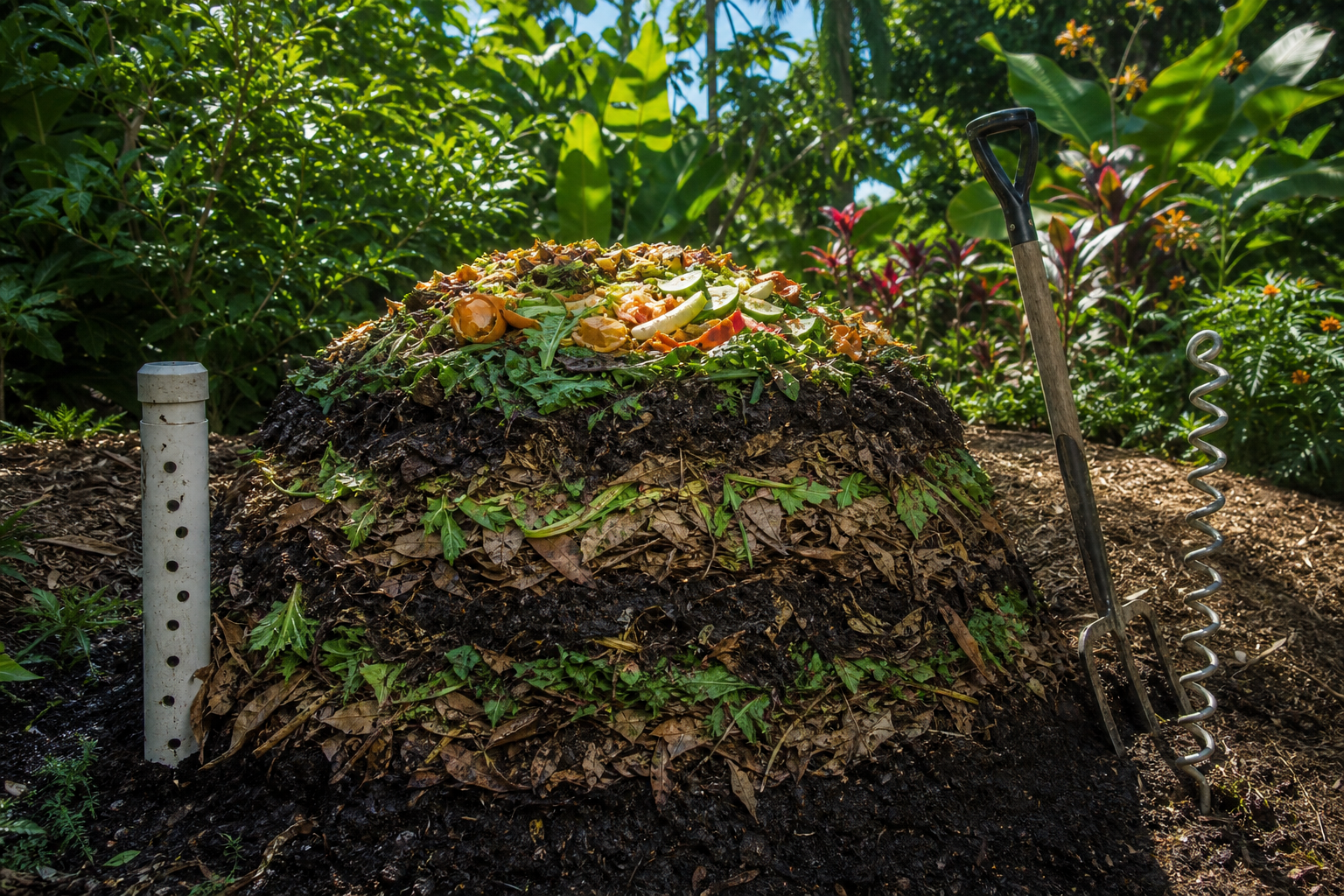
Using a garden fork every one to two weeks introduces oxygen, redistributes moisture and exposes undecomposed material to the hot centre of the pile.
Compost Aerators
Spiral compost aerators make turning easier, particularly in enclosed bins.
Passive Ventilation
Adding coarse sticks or woody material at the base creates natural air channels.
PVC pipes with ventilation holes can also improve airflow in larger compost systems.
These techniques are particularly valuable during SE Qld's humid summers when moisture can easily displace oxygen.
Layering Materials Successfully
Successful compost begins with thoughtful construction.
Start with a layer of coarse sticks or small branches to improve drainage and airflow.
Follow with alternating layers approximately 5–10 centimetres thick:
- Brown material
- Green material
- Light watering
- Repeat
Adding a thin layer of mature compost or garden soil occasionally introduces beneficial microorganisms that help accelerate decomposition. Beginning with coarse materials and alternating greens and browns while keeping the pile moist is recommended for effective composting.
Managing Moisture in a Subtropical Climate
Moisture is a delicate balancing act.
SE Qld's intense summer rainfall can quickly saturate compost heaps, excluding oxygen and encouraging anaerobic conditions.
Conversely, prolonged hot weather may dry compost to the point where microbial activity nearly stops.
Aim for moisture comparable to a wrung-out sponge.
During wet weather:
- Cover exposed heaps
- Improve drainage
- Increase brown materials
During dry periods:
- Add water gradually
- Cover the pile to reduce evaporation
- Continue turning to distribute moisture evenly
Shade is generally preferable to full sun, as it reduces excessive drying while microbes—not sunlight—generate the composting heat.
Troubleshooting Advanced Compost Systems
Bad Odours
Usually caused by excessive nitrogen or poor aeration.
Solution: Add dry carbon materials and turn thoroughly.
Slow Decomposition
Often caused by insufficient nitrogen, limited oxygen or dry conditions.
Solution: Add fresh greens, moisten the pile and aerate.
Excess Moisture
Heavy rainfall can create saturated compost.
Solution: Add shredded cardboard, dry leaves or straw while increasing airflow.
Pest Problems
Food scraps left exposed may attract unwanted visitors.
Solution: Cover fresh kitchen waste with brown materials immediately.
Harvesting Premium Compost
Finished compost has unmistakable characteristics.
It is:
- Dark brown to black
- Crumbly
- Earthy smelling
- Cool to the touch
- Free of recognisable food scraps
Allow finished compost to cure for several weeks before applying it to gardens.
Store it beneath cover where it remains slightly moist until required.
Properly matured compost continues to support microbial life while improving soil structure, fertility and water retention.
Conclusion
Advanced composting is not about working harder.
It is about working smarter.
By mastering aeration and layering, SE Qld gardeners can dramatically accelerate decomposition, minimise common composting problems and produce exceptionally high-quality compost throughout the year.
Every turn of the fork introduces fresh oxygen.
Every carefully balanced layer creates an ideal environment for beneficial microbes.
Together, these simple yet powerful techniques transform ordinary garden waste into living, nutrient-rich compost that strengthens soils, conserves water and supports healthier, more productive gardens season after season.