Aboriginal Uses of South East Queensland’s Native Flora
 Trevor Dixon
Introduction: A Living Connection Between People and Plants
For tens of thousands of years, Aboriginal peoples have lived in profound harmony with the landscapes of South East Queensland. Every forest, riverbank, wetland, and coastal heath carried meaning. Plants were never viewed as isolated organisms but as essential participants in an interconnected living system.
Native flora provided nourishment, medicine, shelter, tools, fibre, ceremony, and spiritual guidance. This extraordinary knowledge evolved through countless generations of careful observation, seasonal awareness, and respect for Country. Queensland alone is home to more than 14,700 native plant species, making it one of Australia's richest botanical regions.
The landscape was not simply occupied.
It was understood.
Knowledge Passed Through Generations
Aboriginal botanical knowledge was never confined to written texts. Instead, it was preserved through oral traditions, practical teaching, ceremonies, and daily life. Children learned by walking alongside Elders, observing flowering cycles, animal behaviour, weather patterns, and the subtle indicators that revealed when particular plants were ready to harvest.
Every season brought different opportunities.
Some plants flowered after rain. Others produced edible fruits only during particular temperature cycles. Certain medicinal species were harvested only when their active compounds were believed to be strongest.
This knowledge represented an intricate ecological calendar that allowed communities to live sustainably within their environment. Researchers continue to document Queensland Aboriginal medicinal plants while recognising that much traditional knowledge remains protected by Indigenous custodians.
Medicinal Uses of Native Plants
Traditional bush medicine formed an essential part of daily life. Aboriginal peoples used leaves, bark, sap, roots, flowers, seeds, and even smoke to support health and wellbeing.
Many remedies were prepared simply.
Leaves might be crushed into poultices for wounds. Bark could be soaked in water to create washes. Aromatic foliage was heated to produce steam for respiratory relief. Strongly scented plants were sometimes worn around the neck or head to ease cold symptoms. Ashes from certain trees were applied to skin conditions, while decoctions of leaves and stems were prepared for a variety of ailments.
Healing extended beyond treating symptoms.
Physical wellbeing was inseparable from spiritual, cultural, and environmental balance.
Native Plants as Food and Daily Sustenance
South East Queensland's native flora supplied an astonishing diversity of foods throughout the year.
Lilly pilly fruits, native raspberries, finger limes, native ginger, quandongs, macadamias, edible ferns, yam-like tubers, nectar-rich flowers, and numerous seeds contributed to balanced diets adapted to seasonal availability. Indigenous Australians have used native bush foods for more than 40,000 years, with harvesting practices closely aligned to seasonal abundance and ecosystem health.
Sweet drinks were prepared by soaking Banksia flower spikes in water or collecting nectar from flowering bottlebrushes. Tree gums and naturally occurring sugary exudates also provided valuable energy sources.
Food was never separated from ecology.
Harvesting today ensured abundance tomorrow.
Plants for Tools, Fibre, and Shelter
The usefulness of native flora extended far beyond nutrition and medicine.
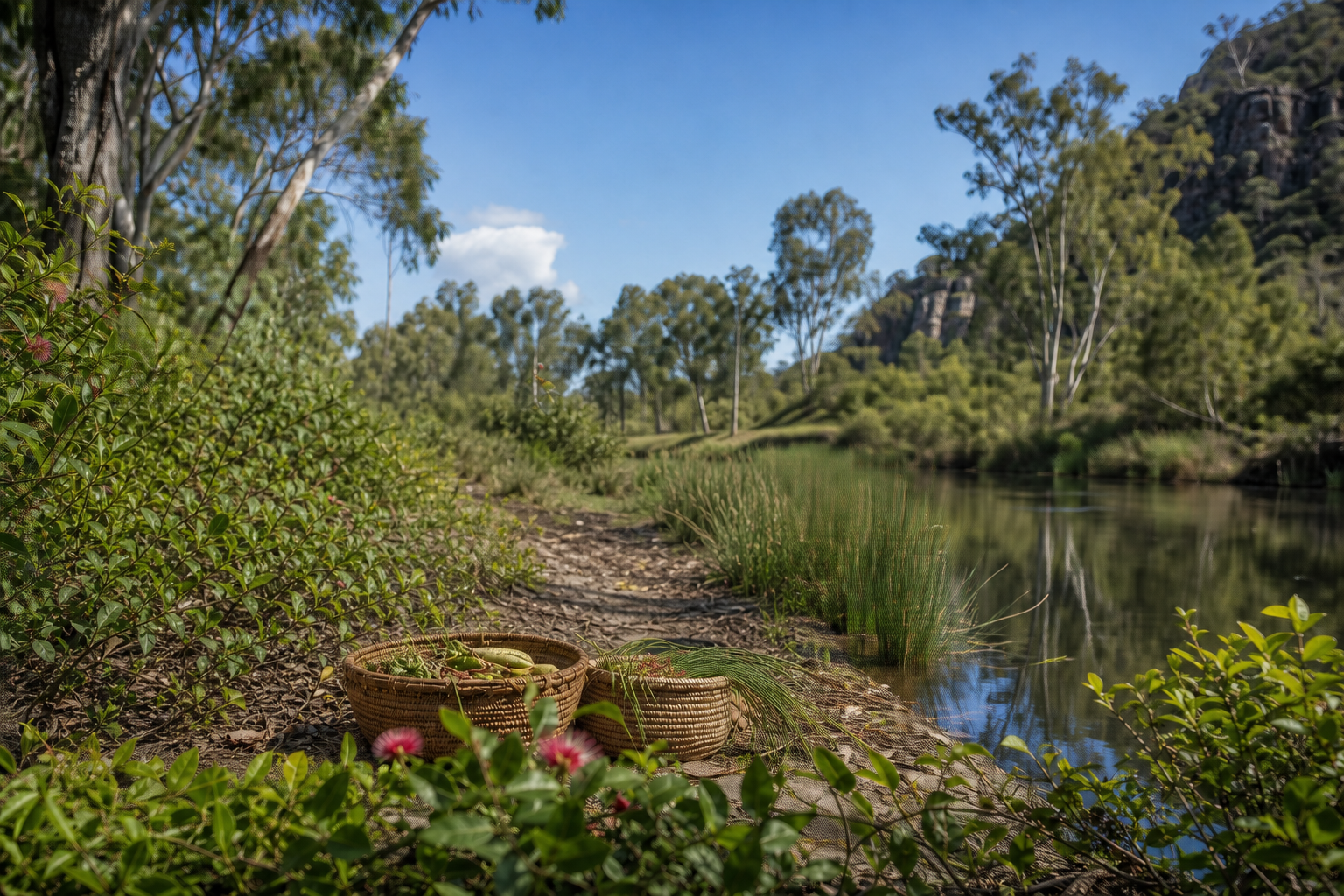
Hardwoods from wattles and eucalypts became spears, digging sticks, clubs, shields, and carrying implements. Tough fibres from Lomandra leaves were woven into baskets, fishing nets, and cordage. Resins from grass trees served as remarkably effective natural adhesives for attaching stone blades to wooden handles. Bark was fashioned into containers, canoes, shelters, and protective coverings.
Nothing was wasted.
Every plant offered multiple possibilities, each understood through generations of careful experimentation and observation.
This remarkable efficiency reflected a sophisticated understanding of material science long before modern engineering.
Spiritual and Cultural Significance of Native Flora
Plants occupied an important place within Aboriginal spirituality and cultural identity.
Many species featured in ceremonies, storytelling, initiation practices, and cultural obligations connected to caring for Country. Harvesting was guided by respect rather than ownership, recognising that people formed one part of a much larger ecological community.
Knowledge of plants was inseparable from knowledge of animals, waterways, weather, and seasonal cycles.
Country itself became the classroom.
The plants became teachers.
This worldview fostered sustainable resource management that maintained ecological balance over thousands of years.
Lessons for Modern Gardeners
Modern gardeners have much to learn from these enduring traditions.
Choosing native species reduces irrigation requirements, supports local wildlife, and improves resilience to South East Queensland's subtropical climate. Rather than seeking complete control over the garden, Indigenous approaches encourage working with natural systems instead of against them.
Medicinal plants such as Lemon Myrtle, Tea Tree, Native Ginger, and Old Man's Weed demonstrate how beauty, biodiversity, and practical value can coexist within the same landscape.
Respect remains fundamental.
Traditional knowledge belongs to the communities who have nurtured it for countless generations. Learning should always be accompanied by acknowledgement and cultural sensitivity.
Conservation and the Future of Traditional Plant Knowledge
As native habitats face increasing pressure from urban development, invasive species, and climate change, preserving Indigenous plant knowledge becomes more important than ever.
Conservation is not simply about protecting individual species.
It is about protecting relationships.
Collaborative research, Indigenous-led conservation programs, cultural education, and habitat restoration all contribute to safeguarding this remarkable heritage. Queensland researchers have documented more than 135 medicinal plant species used by Aboriginal peoples, while recognising that much traditional knowledge remains intentionally protected by Traditional Owners.
The future of native flora depends upon listening to those who have understood these landscapes the longest.
Honouring an Enduring Legacy
Aboriginal uses of South East Queensland's native flora reveal an extraordinary depth of ecological knowledge that continues to inspire scientists, horticulturists, conservationists, and gardeners alike.
These plants nourished communities.
They healed injuries.
They provided shelter.
They built tools.
They carried stories.
Most importantly, they demonstrated that humanity flourishes when it lives in partnership with the natural world rather than in opposition to it.
That lesson remains as relevant today as it was thousands of years ago.
Every native plant growing quietly across South East Queensland carries not only biological significance but also a living legacy of knowledge, resilience, and respect for Country.